

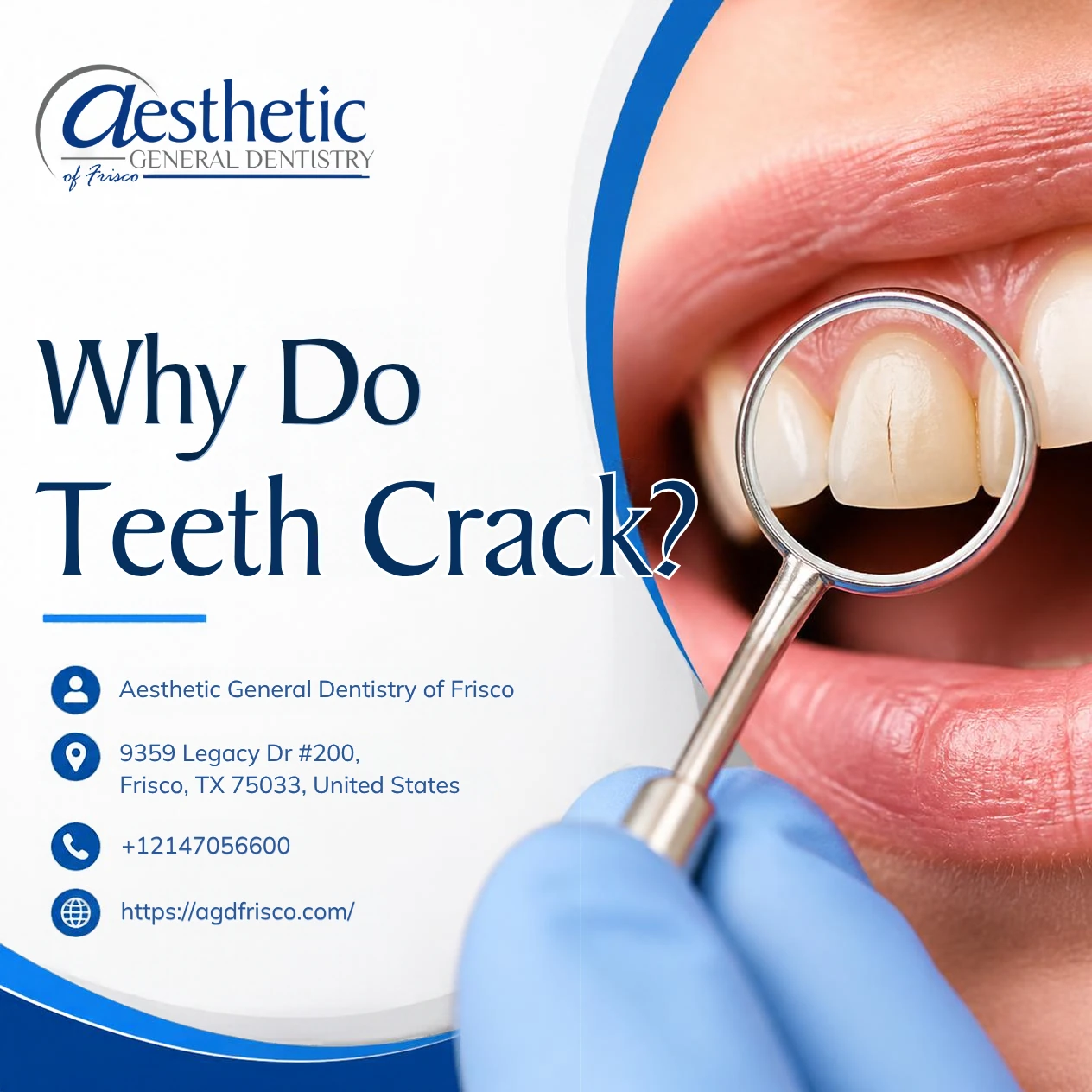
Teeth can crack when they are exposed to more force than the tooth structure can tolerate. Hard foods, teeth grinding, large fillings, injuries, repeated chewing forces, and gradual wear can all increase the risk.
A cracked tooth does not always look obviously damaged, and symptoms can vary depending on where the crack is located and how deep it extends. Some cracks cause sharp pain when biting, while others create temperature sensitivity or intermittent discomfort. Because similar symptoms can occur with several dental problems, a dental examination is the best way to determine whether a tooth is actually cracked and what treatment may be needed.
Why Do Teeth Crack?
Natural teeth are strong, but they are not indestructible.
A tooth can develop a crack when repeated stress or a sudden force exceeds the strength of the enamel and underlying dentin.
Common causes include:
- Biting hard foods or objects
- Teeth grinding or clenching
- Large or older fillings
- Sports injuries
- Falls or accidents
- Chewing ice
- Using teeth to open packages
- Repeated stress from an uneven bite
- Age-related wear
- Previous dental treatment that has removed a significant amount of tooth structure
Some cracks happen suddenly. For example, biting unexpectedly on an unpopped popcorn kernel may cause immediate damage.
Others develop gradually after years of chewing, grinding, or stress around a large filling.
Not Every Crack Is the Same
Dentists may see several types of cracks or fractures.
These can range from small surface lines in the enamel to deeper fractures extending toward the root.
The location and depth of the crack have a major effect on whether the tooth can be restored.
That is why visible appearance alone cannot determine how serious the problem is.
Can Biting Hard Foods Crack a Tooth?
Yes. Hard foods can sometimes crack a tooth, particularly if the tooth has already been weakened.
Foods and objects that may create significant force include:
- Ice
- Hard candy
- Popcorn kernels
- Hard nuts
- Fruit pits
- Bones
- Very hard bread crusts
- Seeds with hard shells
The problem is often concentrated pressure.
When you bite something extremely hard with one part of a tooth, the force may be focused into a small area instead of being spread evenly across the chewing surface.
Unexpected Hard Objects Are Especially Risky
A person may adjust their bite when they know a food is hard.
Unexpected objects are different.
For example, biting down on an unpopped popcorn kernel hidden among softer popcorn can create a sudden force before you have time to react.
The same can happen with a bone fragment or fruit pit.
Does One Hard Bite Always Crack a Tooth?
No.
Healthy teeth tolerate substantial chewing forces.
However, the risk may be higher if the tooth already has:
- A large filling
- Previous cracks
- Significant wear
- Decay
- A root canal
- A large restoration
- Weak areas from previous damage
Repeatedly chewing ice or similarly hard objects can also increase cumulative stress.
How Do Large Fillings Weaken Teeth?
A large filling can sometimes leave less natural tooth structure available to absorb chewing forces.
When decay is removed, the missing portion of the tooth is replaced with restorative material.
Small fillings generally leave most of the tooth intact.
Larger fillings may replace a significant portion of the chewing surface.
Natural Tooth Structure Supports the Cusps
The raised portions of back teeth are called cusps.
When a filling becomes very large, there may be less natural tooth structure connecting and supporting those cusps.
Chewing force can then cause one portion of the tooth to flex independently.
Over time, this can contribute to cracking.
Older Fillings Can Develop Problems
Fillings can wear, chip, or develop gaps over time.
The surrounding tooth can also weaken.
A dentist may monitor a large filling during routine examinations for signs such as:
- Cracks around the restoration
- Broken cusps
- Decay around the edges
- Changes in the filling
- Pain when chewing
Finding a weakened area before it fractures may allow treatment to be planned before the tooth breaks more extensively.
Can Teeth Grinding Cause Cracks?
Yes. Grinding and clenching can contribute to tooth cracks because they repeatedly place heavy forces on the teeth.
This habit is often called bruxism.
Some people grind during sleep and do not realize they are doing it.
Others clench during the day, especially when concentrating or experiencing stress.
What Does Grinding Do to Teeth?
Repeated grinding forces can contribute to:
- Flattened biting surfaces
- Small enamel fractures
- Chipped teeth
- Cracked fillings
- Cracked crowns
- Tooth sensitivity
- Jaw soreness
- Headaches
The damage often develops gradually rather than after one episode.
How Can You Tell if You Grind Your Teeth?
Possible signs include:
- Worn or flattened teeth
- Jaw fatigue
- Morning headaches
- Tooth sensitivity
- Chipped restorations
- Tender chewing muscles
- A partner noticing nighttime grinding
These signs do not prove that grinding is occurring, so a dentist should evaluate the pattern of wear and symptoms.
Can a Night Guard Prevent Cracks?
A night guard may help some patients who grind or clench.
The appliance is designed to distribute or manage forces and protect tooth surfaces.
However, a night guard does not eliminate every possible cause of cracking.
A dentist should first evaluate the bite, existing restorations, and signs of grinding before recommending one.
Does Age Make Teeth More Likely to Crack?
Teeth may become more likely to develop cracks as they accumulate years of wear, dental treatment, and chewing forces.
This does not mean teeth automatically become fragile simply because someone gets older.
Instead, older teeth may have experienced more:
- Fillings
- Chewing cycles
- Grinding
- Enamel wear
- Temperature changes
- Dental procedures
- Small areas of structural stress
Restored Teeth May Need More Attention Over Time
A tooth with a large filling placed years ago may still function well, but the surrounding natural structure can change over time.
Dental examinations allow these areas to be monitored before symptoms appear.
Age Is Only One Risk Factor
Younger people can also crack teeth through sports injuries, chewing hard objects, grinding, or trauma.
A patient’s bite, restorations, habits, and tooth structure may matter more than chronological age alone.
What Are the Signs of a Cracked Tooth?
A cracked tooth can produce several different symptoms.
One of the challenges is that pain may come and go.
Possible signs include:
- Sharp pain when biting
- Pain when releasing the bite
- Sensitivity to cold
- Sensitivity to heat
- Sensitivity to sweets
- Intermittent discomfort
- Pain that seems difficult to locate
- A rough or sharp edge
- A visible line or broken area
- Gum swelling near one tooth
Why Does Biting Hurt?
Chewing can cause sections of a cracked tooth to flex slightly.
That movement may irritate the sensitive inner tissues.
Some people notice pain when they bite down, while others feel it when releasing pressure.
Can a Cracked Tooth Have No Symptoms?
Yes.
Small cracks may be discovered during a routine dental examination before they cause noticeable discomfort.
Not every visible line is serious either.
Fine enamel lines, sometimes called craze lines, can occur without extending deeply into the tooth.
A dentist needs to evaluate the location and depth before determining whether treatment is necessary.
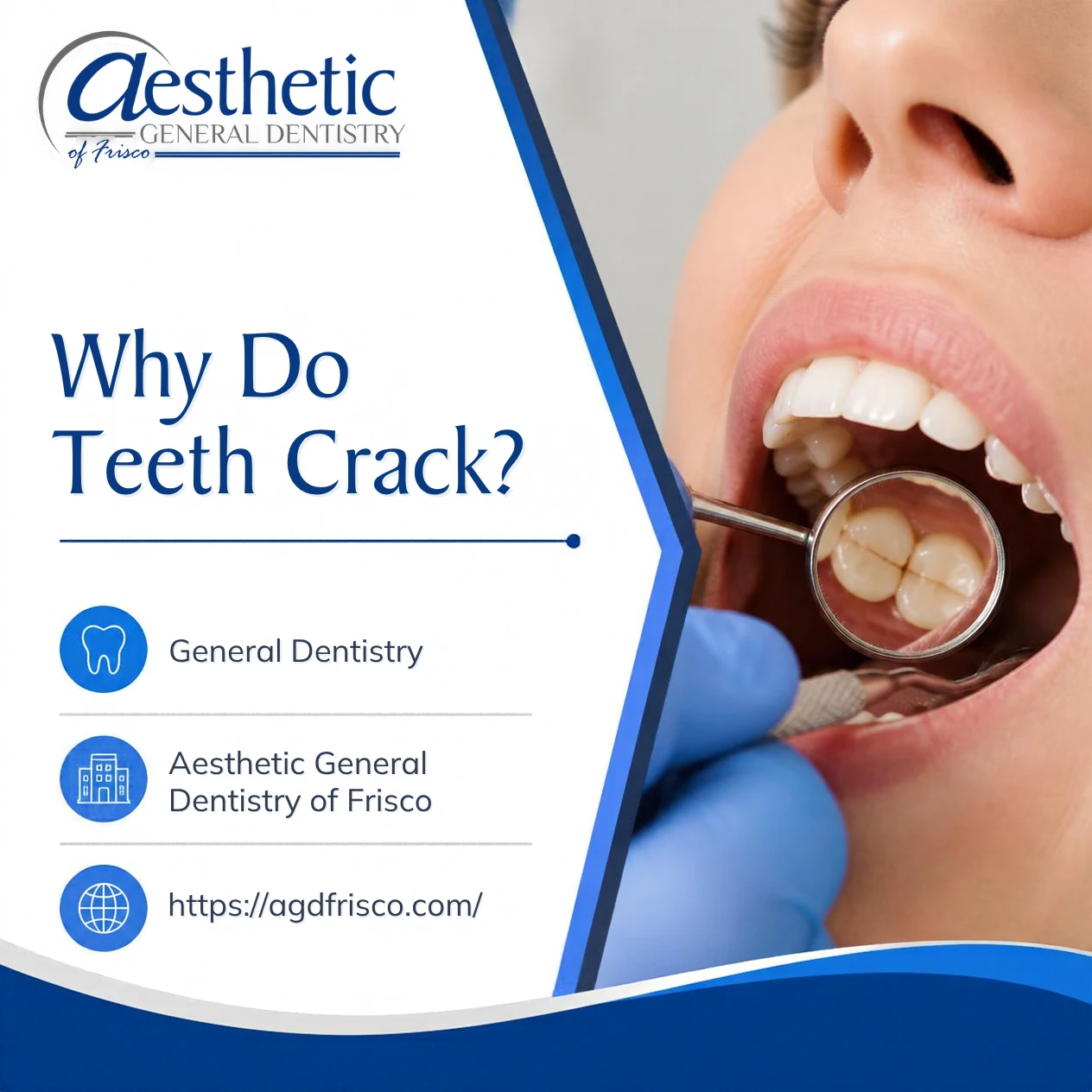
Can a Cracked Tooth Heal on Its Own?
No. A cracked tooth does not heal by growing new enamel or dentin across the fracture.
Unlike bone, tooth structure does not naturally fuse back together after cracking.
However, not every crack continues to cause problems.
Very shallow enamel lines may remain stable and need only monitoring.
Deeper cracks may require treatment to protect the tooth and reduce the risk of further damage.
Why Early Evaluation Matters
Chewing forces can sometimes allow a crack to extend.
A small crack involving one cusp may be easier to restore than a fracture that later extends toward the root.
That does not mean every crack will worsen, but prompt evaluation gives the dentist a chance to assess the risk.
How Are Cracked Teeth Treated?
Treatment depends on:
- Crack depth
- Crack location
- Amount of healthy tooth remaining
- Condition of the dental pulp
- Gum and bone support
- Existing restorations
- Symptoms
- Whether the crack extends below the gumline
Possible treatments include monitoring, bonding, a filling, a crown, root canal treatment, or extraction.
Minor Surface Damage
Small chips or limited cracks may sometimes be repaired with bonding or another conservative restoration.
Larger Structural Cracks
If a substantial portion of the tooth has weakened, a crown may be recommended to cover and reinforce the remaining structure.
Cracks Affecting the Dental Pulp
Inside every tooth is the pulp, which contains nerves and blood vessels.
If a crack reaches the pulp and causes irreversible inflammation or infection, root canal treatment may be needed.
The tooth may then require a crown or another restoration for protection.
Cracks Extending Too Deeply
Some cracks extend beneath the gumline or through the root in a way that makes predictable restoration difficult.
In these cases, extraction may be necessary.
When Is a Dental Crown Used for a Cracked Tooth?
A dental crown is often considered when enough tooth structure remains to preserve the tooth but the tooth needs greater protection from chewing forces.
A crown covers the visible portion of the tooth.
This can help hold weakened portions together and distribute biting pressure more evenly.
A Crown May Be Recommended When
- A large filling has weakened the tooth
- A cusp has fractured
- A crack involves a significant portion of the chewing surface
- The tooth has undergone root canal treatment
- The dentist believes the remaining structure needs reinforcement
Will a Crown Make the Crack Disappear?
No.
The crack itself does not heal.
The purpose of the crown is to stabilize and protect the tooth.
Whether a crown is appropriate depends on how far the crack extends.
A crack that reaches too deeply into the root may not have a predictable long-term outcome even with a crown.
When Might a Cracked Tooth Need to Be Extracted?
Extraction may be necessary when a tooth cannot be predictably restored.
This can happen when a fracture extends:
- Deep below the gumline
- Through the root
- Into areas where the tooth cannot be sealed or restored
- Through too much of the remaining tooth structure
Vertical Root Fractures
A vertical root fracture extends along the root of a tooth.
These fractures can sometimes be difficult to detect and may cause localized gum problems or recurrent infection.
Depending on the location and tooth involved, extraction may be required.
Severely Split Teeth
If a crack completely separates a tooth into independent sections, saving the entire tooth may not be possible.
The treatment depends on the tooth, fracture pattern, and supporting bone.
Extraction Is Not Automatically Required
A visible crack does not mean the tooth needs to be removed.
Many cracked teeth can be treated successfully when enough healthy structure remains.
A dental examination, and sometimes X-rays or other diagnostic testing, is needed before making that decision.
How Can You Help Prevent Teeth From Cracking?
Not every cracked tooth can be prevented, but reducing unnecessary stress can lower the risk.
Avoid Chewing Ice
Ice is hard enough to damage both natural teeth and dental restorations.
Let it melt rather than crushing it with your teeth.
Be Careful With Very Hard Foods
Avoid biting directly onto:
- Popcorn kernels
- Hard candy
- Bones
- Fruit pits
- Very hard nuts
Cutting hard foods into smaller pieces may also reduce concentrated pressure.
Do Not Use Teeth as Tools
Avoid using your teeth to:
- Open packaging
- Tear plastic
- Crack nutshells
- Remove bottle caps
- Hold hard objects
These activities expose teeth to forces they were not designed to handle.
Address Grinding and Clenching
If you grind your teeth, discuss it with your dentist.
A custom night guard may be recommended in some situations.
Daytime clenching awareness may also help reduce repeated stress.
Wear a Mouthguard During Sports
A properly fitted athletic mouthguard can help protect the teeth during activities where facial impacts are possible.
Replace Failing Dental Work
Older or damaged fillings and crowns should be evaluated when problems develop.
Replacing a failing restoration before a larger fracture occurs may protect the remaining tooth.
Keep Up With Routine Dental Exams
Small cracks, worn fillings, and weakened cusps may not hurt at first.
Regular dental visits give the dentist an opportunity to monitor areas that are more vulnerable to fracture.
Do Not Ignore Pain When Biting
Cracked teeth can be difficult to identify because the symptoms may be intermittent and the fracture may not be visible.
Pain when biting, sensitivity to hot or cold, a newly broken edge, or discomfort that keeps returning should be evaluated rather than repeatedly ignored.
The earlier a damaged tooth is examined, the more treatment options may be available.
Some cracks may need only monitoring or a small repair. Others may require a crown, root canal treatment, or, when the tooth cannot be predictably restored, extraction.
The appropriate treatment depends on the specific fracture, not simply the symptoms.
If you suspect a cracked tooth, avoid chewing hard foods on that area and arrange a dental examination so the cause of the discomfort can be identified.
FAQs
What does a cracked tooth feel like?
A cracked tooth may cause sharp pain when biting, pain when releasing pressure, or sensitivity to hot and cold. Symptoms can come and go, and similar symptoms can have other causes.
Can a dentist see every tooth crack on an X-ray?
No. Some cracks are too small or positioned in ways that make them difficult to see on standard dental X-rays. Dentists may use a combination of examination, bite testing, magnification, transillumination, and imaging.
Is a cracked tooth an emergency?
It depends on the symptoms and extent of damage. Significant pain, swelling, visible fracture, or trauma should be evaluated promptly. Seek urgent care for severe swelling, uncontrolled bleeding, or significant facial injury.
Can a small tooth crack get worse?
It can. Repeated chewing forces may allow some cracks to extend, although not every surface crack progresses. A dentist can evaluate whether monitoring or treatment is appropriate.
Can a cracked tooth be saved?
Many cracked teeth can be preserved with treatments such as bonding, a crown, or root canal treatment. Teeth with deep root fractures or severe structural damage may not be restorable.
Does a cracked tooth always hurt?
No. Some cracks cause no symptoms and are discovered during routine dental examinations.
Can grinding crack healthy teeth?
Grinding can place significant repeated forces on teeth and may contribute to cracking, wear, and damaged restorations over time.
Why does my tooth hurt only when I bite something hard?
Biting pain may occur with a cracked tooth, but it can also have other causes. A dental examination is needed to determine why the tooth hurts.
Can a crown prevent a cracked tooth from getting worse?
A crown may help stabilize certain cracked or weakened teeth by covering and reinforcing the remaining structure. Whether it is appropriate depends on the location and depth of the crack.
What should I do if part of my tooth breaks off?
Save the broken piece if possible, avoid chewing on that side, and contact a dentist. Do not attempt to repair the tooth with household adhesives.