


If you have ever wondered, “Why do my gums bleed when I brush?”, one common explanation is irritation or inflammation of the gum tissue. Plaque buildup and early gingivitis are frequent causes, but gums may also bleed because of aggressive brushing, changes in flossing habits, or other oral and general health factors.
Occasional minor bleeding does not always mean you have serious gum disease. However, bleeding that happens regularly, continues despite good oral hygiene, or occurs with swelling, tenderness, gum recession, or loose teeth should be evaluated by a dentist.
Why Do My Gums Bleed When I Brush?
Gums can bleed during brushing when the tissue around the teeth becomes irritated, inflamed, or injured. One of the most common reasons is plaque accumulating along the gumline.
Plaque is a sticky film containing bacteria that continuously develops on the teeth. When it is not removed effectively through brushing and cleaning between the teeth, it can irritate the gums and contribute to gingivitis, the earliest stage of gum disease. Redness, swelling, tenderness, and gums that bleed easily are common signs of gingivitis.
Bleeding may also occur if you brush with excessive pressure or suddenly begin flossing areas that have not been cleaned regularly. Because several factors can cause bleeding gums, a dentist is the appropriate person to determine what is happening if the problem persists.
What Are the Most Common Causes of Bleeding Gums?
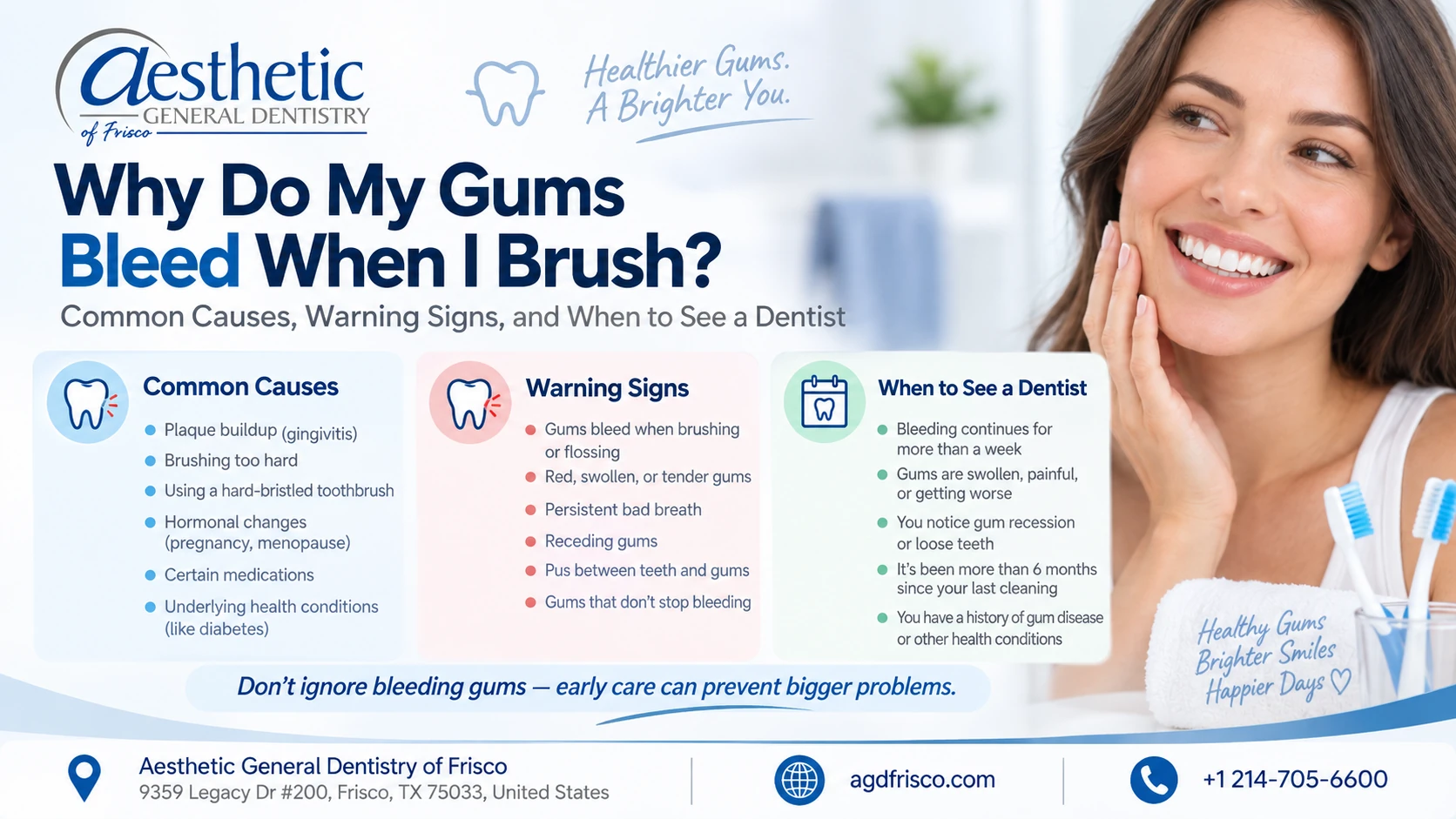
There is no single cause of bleeding gums. Some common possibilities include:
- Plaque accumulating around the gumline
- Gingivitis or more advanced gum disease
- Brushing with too much pressure
- Using a toothbrush with bristles that irritate the gums
- Beginning or changing a flossing routine
- Improper or forceful flossing technique
- Hormonal changes, including those that occur during pregnancy
- Certain medications or health conditions that affect bleeding or gum health
The National Institute of Dental and Craniofacial Research also identifies factors such as tobacco use, diabetes, genetics, certain illnesses, medications, and hormonal changes as factors associated with gum disease.
Because bleeding gums can have different causes, ongoing bleeding should not be self-diagnosed based on one symptom alone.
Can Brushing Too Hard Make Your Gums Bleed?
Yes. Brushing too aggressively can irritate or injure delicate gum tissue and may contribute to bleeding.
Brushing harder does not necessarily clean your teeth better. The goal is to remove plaque consistently without damaging the gums.
Use gentle pressure and move the toothbrush carefully along your teeth and gumline. A toothbrush with soft bristles is generally appropriate for routine oral hygiene. If you use an electric toothbrush, avoid pressing it forcefully against your teeth.
If your gums repeatedly bleed even after improving your brushing technique, another issue, such as gum inflammation, may be contributing to the problem.
Can Plaque and Gingivitis Cause Bleeding Gums?
Yes. Plaque-related gingivitis is one of the most common explanations for gums that bleed easily.
When plaque remains around the teeth and gumline, bacteria can irritate the surrounding gum tissue. The gums may become:
- Red
- Puffy or swollen
- Tender
- More likely to bleed during brushing or flossing
Gingivitis caused by plaque buildup is an early form of gum disease and can often be reversed with improved daily oral hygiene and appropriate professional dental care.
Plaque can also harden into tartar, sometimes called calculus. Unlike soft plaque, tartar cannot be completely removed with ordinary brushing or flossing and requires professional dental instruments.
How Can You Care for Bleeding Gums at Home?
Good daily oral hygiene remains important when your gums are bleeding.
Basic steps may include:
- Brush your teeth twice a day with fluoride toothpaste.
- Brush gently rather than scrubbing the gumline.
- Clean between your teeth regularly with floss or another interdental cleaner.
- Avoid snapping or forcing floss into your gums.
- Replace a toothbrush when its bristles become worn.
- Avoid tobacco products.
- Maintain regular dental examinations and professional cleanings.
When flossing, gently guide the floss between the teeth and curve it around each tooth rather than forcing it directly into the gum tissue.
Do not rely on home care alone if the bleeding continues, becomes heavier, or occurs with other concerning symptoms.
Should You Keep Brushing If Your Gums Bleed?
In most situations, you should continue cleaning your teeth rather than avoiding the bleeding area completely.
Stopping brushing around irritated gums can allow additional plaque to accumulate, which may make plaque-related gum inflammation worse. Instead, use gentle brushing technique and continue cleaning between your teeth carefully.
If you recently started flossing regularly after not doing so for some time, you may notice some initial gum bleeding. However, persistent bleeding deserves attention rather than being assumed to be a normal response to brushing or flossing.
If brushing causes significant pain, heavy bleeding, or other unusual symptoms, contact a dentist for guidance.
When Are Bleeding Gums a Sign of Gum Disease?
Bleeding can be an early symptom of gum disease, especially when it occurs regularly and is accompanied by other changes.
Signs that may occur with gum disease include:
- Red or swollen gums
- Tender or sore gums
- Frequent bleeding during brushing or flossing
- Persistent bad breath
- Gums pulling away from the teeth
- Teeth appearing longer because of gum recession
- Changes in how teeth fit together
- Loose teeth
- Pain or difficulty when chewing
Gum disease can progress beyond gingivitis into periodontitis, which affects the tissues and bone supporting the teeth.
Bleeding alone cannot confirm which stage of gum disease, if any, is present. A dental examination is needed to evaluate the gums properly.
Can Professional Teeth Cleanings Help Bleeding Gums?
Professional dental cleanings can be particularly helpful when plaque and tartar buildup are contributing to gum inflammation.
Daily brushing and cleaning between your teeth can remove plaque, but tartar is hardened material that cannot be removed effectively with a regular toothbrush or floss. A dentist or dental hygienist uses professional instruments to remove these deposits.
During a dental visit, the dental team may also:
- Examine the gum tissue
- Look for areas of inflammation or recession
- Measure the spaces between the gums and teeth when appropriate
- Review your brushing and interdental cleaning technique
- Recommend treatment based on the condition of your gums
Someone with early gingivitis may require different care from someone with more advanced periodontal disease, so treatment recommendations depend on the findings of the examination.
When Should You See a Dentist for Bleeding Gums?
Consider scheduling a dental evaluation if your gums bleed repeatedly rather than only after an isolated brushing or flossing incident.
You should also contact a dentist if bleeding occurs with symptoms such as:
- Persistent gum swelling
- Significant gum tenderness or pain
- Gum recession
- Ongoing bad breath or an unpleasant taste
- Pus or swelling around a tooth
- Changes in your bite
- Loose teeth
- Bleeding that does not improve despite consistent oral hygiene
Very sore or severely swollen gums, loose teeth, unusual mouth lumps, or other significant oral changes may require more prompt dental attention.
A dentist can examine the gums and teeth and determine whether the bleeding is related to brushing technique, plaque-related inflammation, periodontal disease, or another issue.
How Can You Prevent Bleeding Gums?
Preventing bleeding gums often starts with controlling plaque and avoiding unnecessary irritation to the gum tissue.
A consistent routine can include:
Brush twice daily. Use fluoride toothpaste and clean gently along the gumline.
Clean between your teeth. Floss, interdental brushes, or another dentist-recommended interdental cleaner can reach areas that toothbrush bristles cannot clean effectively.
Use gentle technique. More pressure does not automatically mean cleaner teeth.
Keep dental appointments. Routine examinations allow your dentist to monitor changes in your gums and identify problems before they become more difficult to manage.
Schedule professional cleanings as recommended. Professional care is necessary for removing tartar that cannot be removed through brushing or flossing at home.
Avoid tobacco. Tobacco use is an important risk factor for periodontal disease and can interfere with healing.
The right preventive routine can vary based on your oral health, restorations, medical history, and individual risk factors, so follow recommendations from your dentist or dental hygienist.
FAQs
Is It Normal for My Gums to Bleed When I Brush?
Occasional minor bleeding can happen, particularly if the gums have been irritated or you recently changed your brushing or flossing habits. However, gums that bleed frequently should not simply be considered normal. Persistent bleeding may be associated with gum inflammation or another condition that should be evaluated.
Why Do My Gums Bleed When I Floss?
Gums may bleed during flossing because they are inflamed or because the floss is being used too forcefully. If you recently started cleaning between your teeth regularly, temporary bleeding may occur. Use a gentle technique and speak with your dentist if bleeding continues.
Can Gingivitis Go Away?
Plaque-related gingivitis is an early form of gum disease that can often be reversed with effective brushing, regular cleaning between the teeth, and appropriate professional dental care. More advanced periodontal disease requires professional treatment.
How Do I Know If Bleeding Gums Are Serious?
Bleeding may deserve more immediate attention when it is frequent, unexplained, or accompanied by significant swelling, pain, gum recession, persistent bad breath, loose teeth, or other noticeable changes. A dental examination is the best way to determine the cause.
Will a Dental Cleaning Stop My Gums From Bleeding?
A professional cleaning may help when plaque and tartar buildup are contributing to gum inflammation. However, bleeding gums can have several causes, and additional treatment may be needed depending on what your dentist finds during the examination.
Should I Stop Flossing If My Gums Bleed?
Generally, you should continue cleaning between your teeth carefully rather than abandoning the area altogether. Use gentle technique and avoid forcing floss into the gums. If bleeding persists or becomes significant, have your gums evaluated by a dentist.