

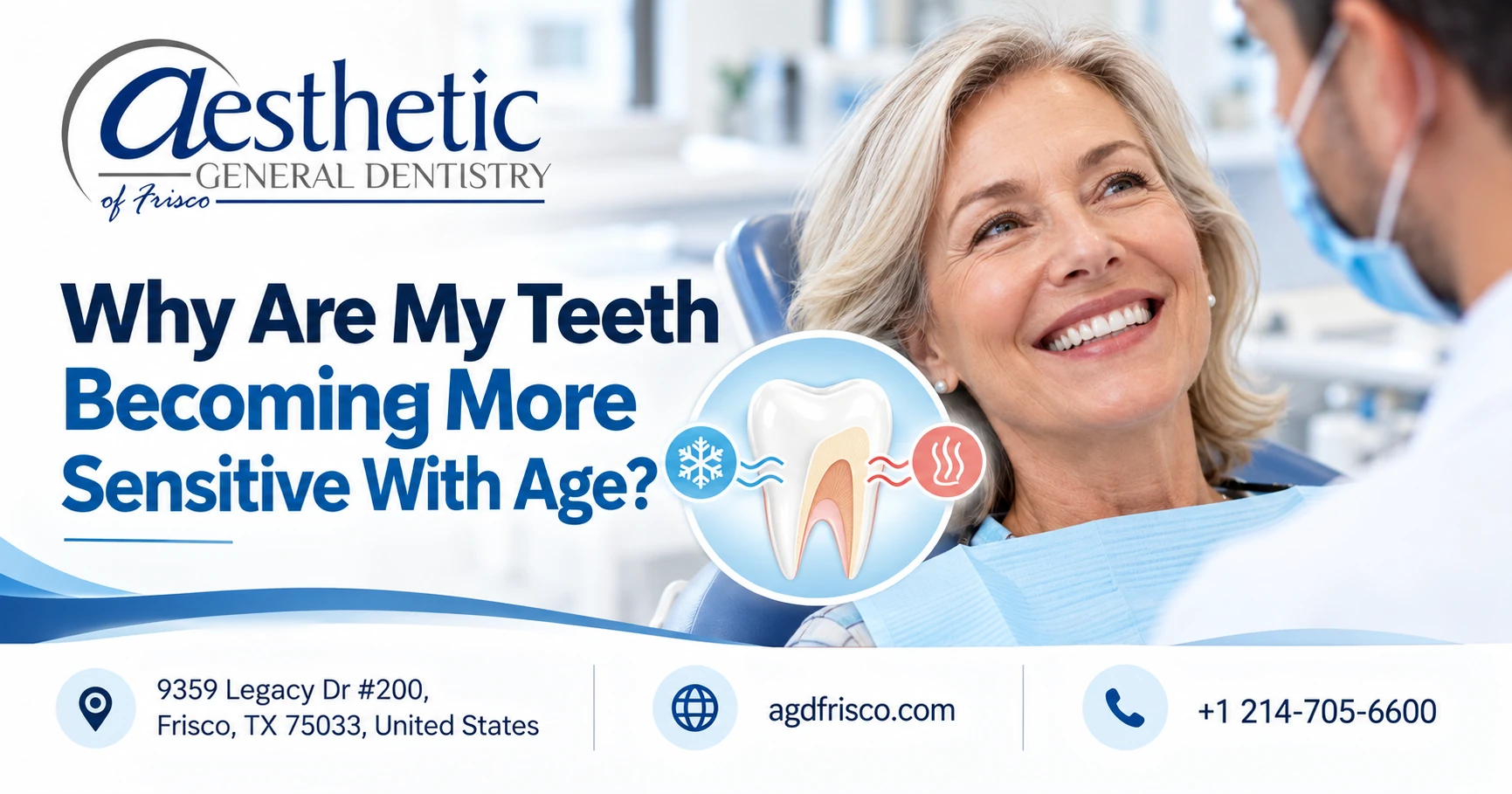
Teeth can become more sensitive with age because protective enamel may gradually wear, gums can recede and expose tooth roots, and dental problems such as cavities, cracks, or gum disease may become more common over time. Sensitivity is not simply something everyone has to accept as part of getting older.
If cold water, hot coffee, sweets, or brushing suddenly make a tooth hurt, the reason can vary considerably from one person to another. At Aesthetic General Dentistry, we recommend paying attention to changes in sensitivity rather than assuming age alone is responsible. Understanding the common causes can help you protect your teeth and recognize when a dental examination is appropriate.
Why Do Teeth Become More Sensitive With Age?
Tooth sensitivity usually occurs when the more sensitive inner portions of a tooth become less protected from temperature, pressure, or certain foods and drinks.
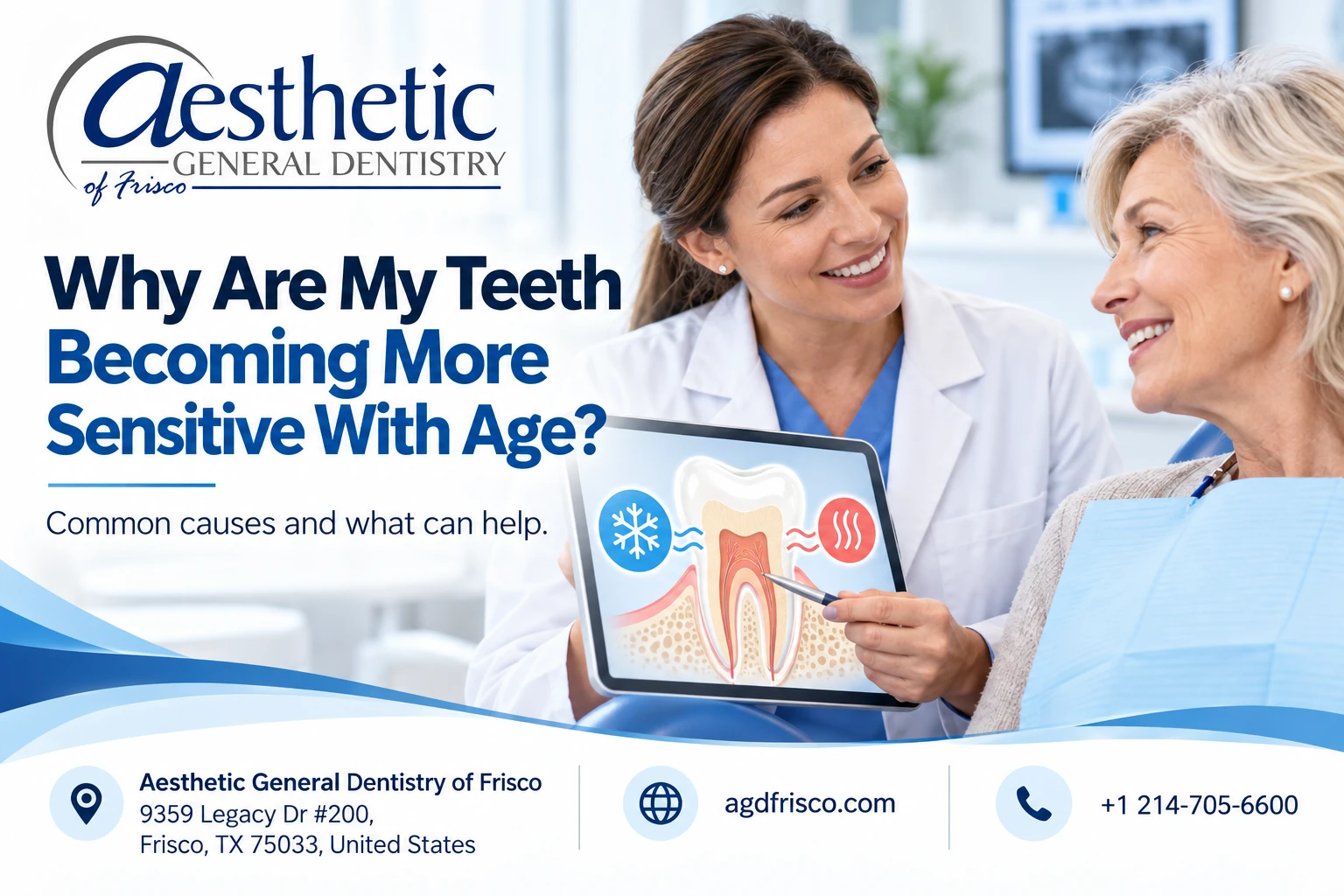
A healthy tooth has several layers. Enamel protects the visible crown of the tooth, while cementum helps protect the root below the gumline. Beneath those outer layers is dentin.
Dentin contains microscopic channels that communicate with the inner portion of the tooth. When dentin becomes exposed, hot, cold, sweet, acidic, or physical stimulation can sometimes trigger a short, sharp sensation.
Several changes that can accumulate over the years may increase the likelihood of exposed or irritated dentin.
These include:
- Gum recession
- Gradual enamel wear
- Tooth grinding or clenching
- Cavities
- Cracks or fractures
- Worn fillings or restorations
- Gum disease
- Frequent exposure to acidic foods and beverages
- Aggressive brushing
That does not mean aging itself directly causes sensitive teeth.
Some people maintain comfortable, healthy teeth well into later adulthood, while younger patients can also develop sensitivity. What often changes with age is the amount of time teeth have been exposed to everyday wear, dental restorations, dietary acids, bite forces, and changes in the gums.
How Does Gum Recession Cause Tooth Sensitivity?
Gum recession is one of the most common reasons teeth can begin feeling more sensitive.
When gums recede, the gumline moves away from its previous position and exposes part of the tooth root.
Unlike the crown of a tooth, the root is not protected by thick enamel. Instead, it has a thinner protective covering. Once that area becomes exposed or worn, the underlying dentin can become more responsive to temperature and touch.
You may notice sensitivity when:
- Drinking cold water
- Eating ice cream
- Breathing cold air through your mouth
- Brushing near the gumline
- Eating something sweet
- Receiving professional dental cleaning around an exposed root
Why Do Gums Recede?
Gum recession can have several possible contributors.
These may include:
- Gum disease
- Brushing with excessive pressure
- Using a hard-bristled toothbrush
- Tooth position
- Thin gum tissue
- Grinding or clenching
- Long-term inflammation around the gums
- Normal changes in the supporting tissues over time
It is important not to assume that recession is caused by brushing alone.
A dentist can evaluate the gumline, measure gum health, and look for contributing factors before recommending treatment.
Can Receding Gums Grow Back?
Receded gum tissue generally does not simply return to its original position on its own.
However, treatment may help control the cause of recession, reduce sensitivity, and protect the exposed root.
Depending on the situation, recommendations may range from changes in brushing technique and desensitizing products to periodontal treatment or gum grafting.
Can Worn Enamel Make Teeth More Sensitive?
Yes. Enamel helps insulate the more sensitive layers inside a tooth.
When enamel becomes thinner or damaged, the underlying dentin may respond more strongly to hot, cold, sweet, or acidic substances.
Enamel does not regenerate in the same way that skin or bone heals. That makes prevention especially important.
What Causes Enamel to Wear Down?
Enamel loss can occur through several different mechanisms.
Acid erosion can gradually dissolve mineral from the tooth surface. Common sources of repeated acid exposure include:
- Soft drinks
- Sports drinks
- Citrus fruits and juices
- Sour candies
- Frequent vinegar-containing foods
- Certain acidic beverages
Stomach acid can also affect enamel in people who experience frequent acid reflux or vomiting.
Mechanical wear may occur from grinding, clenching, or aggressive brushing.
The result can be thinner enamel and increased dentin exposure.
Does Normal Chewing Wear Down Enamel?
Teeth naturally experience some wear throughout life.
The amount varies depending on a person’s bite, diet, oral habits, grinding, dental work, and other factors.
Minor wear does not automatically cause sensitivity.
Sensitivity becomes more likely when protective tooth structure has been lost enough to expose dentin or when another dental problem is present.
How Do Cavities and Cracks Contribute to Sensitivity?
Sensitivity is not always caused by ordinary wear or gum recession.
A cavity or crack can also cause a tooth to react to temperature, sweets, or biting pressure.
Cavities
Tooth decay damages the structure of the tooth.
As a cavity becomes deeper, it may move closer to the dentin and eventually the pulp, where the tooth’s nerves and blood vessels are located.
A cavity may cause:
- Sensitivity to sweets
- Cold sensitivity
- Temperature sensitivity that becomes more noticeable
- Pain when chewing
- A visible dark spot or hole
However, cavities do not always cause symptoms early on.
That is one reason regular dental examinations remain important even when teeth feel normal.
Cracked Teeth
Teeth can develop small cracks from years of chewing, large fillings, grinding, injuries, or biting hard foods.
Cracks can be difficult to identify without an examination.
Symptoms may include:
- Sensitivity to cold
- Pain when biting
- Pain as you release your bite
- Intermittent discomfort
- Sensitivity that seems difficult to pinpoint
Not every crack requires the same treatment.
The location, depth, and extent of the crack affect what treatment may be appropriate.
If one particular tooth suddenly becomes sensitive, especially when biting, it is worth having it checked rather than assuming the problem is age-related sensitivity.
Can Gum Disease Make Tooth Sensitivity Worse?
Yes. Gum disease may contribute to sensitivity because it can affect the gums and supporting tissues around the teeth.
In its early stage, gum disease begins with inflammation of the gums.
As periodontal disease progresses, it can contribute to gum recession and changes in the bone and tissue supporting the teeth.
When more root surface becomes exposed, sensitivity may increase.
Possible signs of gum disease can include:
- Bleeding when brushing or flossing
- Swollen or tender gums
- Persistent bad breath
- Gum recession
- Teeth that appear longer
- Changes in tooth spacing
- Loose teeth in more advanced cases
Sensitivity alone does not mean someone has gum disease.
Many different problems can cause sensitive teeth.
However, sensitivity combined with bleeding, recession, swelling, or other gum changes should be evaluated by a dentist.
What Everyday Habits Can Increase Sensitivity Over Time?
Some everyday habits can gradually contribute to enamel wear, gum recession, or exposed dentin.
Changing these habits may help reduce the risk of sensitivity becoming worse.
Brushing Too Hard
Brushing aggressively does not necessarily clean teeth better.
Using too much pressure may irritate the gums and contribute to wear near the gumline.
A soft-bristled toothbrush is appropriate for most people.
Rather than scrubbing, use gentle, controlled movements and follow the brushing technique recommended by your dental team.
Using Abrasive Toothpaste Excessively
Some whitening or highly abrasive toothpastes may increase surface wear when used aggressively or too frequently.
If your teeth are already sensitive, ask your dentist whether a desensitizing toothpaste would be more appropriate.
Frequently Sipping Acidic Drinks
Frequency matters.
Sipping soda, sports drinks, citrus beverages, or other acidic drinks over several hours repeatedly exposes enamel to acid.
If you consume acidic beverages, limiting how frequently your teeth are exposed may help.
Water is generally a better option for routine hydration.
Brushing Immediately After Acid Exposure
After acidic foods or drinks, the tooth surface can temporarily be more vulnerable.
Rinsing with water and waiting before brushing may be preferable to immediately scrubbing the teeth after strong acid exposure.
Grinding or Clenching
Grinding places repeated stress on teeth.
Over time, it may contribute to:
- Enamel wear
- Small cracks
- Flattened tooth surfaces
- Chipping
- Jaw discomfort
Many people grind their teeth during sleep without realizing it.
A dentist may recognize wear patterns during an examination and determine whether further evaluation or a protective appliance is appropriate.
Using Teeth as Tools
Opening packaging, holding objects, cracking hard foods, or biting nonfood objects can place unnecessary stress on enamel.
Even a small crack can eventually lead to sensitivity.
How Can You Prevent Tooth Sensitivity From Getting Worse?
Preventing worsening sensitivity starts with protecting enamel, gums, and exposed root surfaces.
Several practical habits can help.
Brush Gently
Use a soft-bristled toothbrush and avoid heavy pressure.
If you use an electric toothbrush, some models include pressure sensors that can help identify excessive brushing force.
Use Fluoride Toothpaste
Fluoride helps strengthen tooth structure and can make teeth more resistant to decay.
Some toothpastes are specifically formulated for sensitivity and contain ingredients that help reduce sensitivity signals or protect exposed dentin.
These products often require consistent use rather than a single application.
Clean Between Your Teeth
Daily interdental cleaning helps remove plaque between teeth and along the gumline.
For many people, that means flossing. Interdental brushes, water flossers, or other devices may be recommended depending on the spaces between the teeth and individual gum health.
Limit Repeated Acid Exposure
You do not necessarily have to eliminate every acidic food.
Instead, pay attention to frequency.
Repeatedly sipping or snacking on acidic products throughout the day can be harder on enamel than having them as part of a meal.
Address Grinding
If you frequently wake with jaw soreness, headaches, or signs of tooth wear, discuss these symptoms with your dentist.
A custom night guard may be useful for some patients, although an examination is needed to determine whether one is appropriate.
Keep Up With Dental Visits
Regular dental care makes it easier to identify small problems before they cause more significant symptoms.
A dentist can monitor:
- Gum recession
- Enamel wear
- Cavities
- Cracks
- Old fillings
- Bite changes
- Gum health
This is particularly important when sensitivity is changing over time.
What Treatments Are Available for Sensitive Teeth?
Treatment depends entirely on why the tooth is sensitive.
There is no single treatment that works for every patient.
Desensitizing Toothpaste
For exposed dentin or generalized sensitivity, a desensitizing toothpaste may help.
These products contain ingredients designed to reduce the transmission of sensitivity through dentin or help block exposed pathways.
Consistent use is usually important.
Fluoride Treatment
Professional fluoride products may help strengthen tooth surfaces and reduce sensitivity in certain cases.
A dentist may also recommend a higher-fluoride home product for some patients.
Dental Bonding
When exposed root surfaces or areas of lost tooth structure are contributing to sensitivity, bonding material may sometimes be used to cover and protect the area.
Whether bonding is appropriate depends on the location and cause of the problem.
Fillings
If sensitivity is caused by a cavity, the decayed portion of the tooth may need to be removed and restored.
The type of restoration depends on the size and location of the decay.
Crowns or Other Restorations
A tooth that has significant structural damage, a large existing restoration, or certain types of cracks may need more extensive restorative treatment.
A crown may sometimes be recommended to strengthen and protect a compromised tooth.
Gum Treatment
When periodontal disease or significant gum recession is involved, treatment may focus on the supporting tissues around the teeth.
Depending on the condition, this may involve periodontal cleaning, ongoing periodontal maintenance, or consultation regarding gum grafting.
Root Canal Treatment
Severe or prolonged sensitivity can occasionally indicate inflammation or infection involving the dental pulp.
When the pulp cannot recover, root canal treatment may be necessary to preserve the tooth.
This is not the typical treatment for mild sensitivity, but it illustrates why identifying the cause matters before simply treating the symptom.
When Should You See a Dentist About Tooth Sensitivity?
Occasional mild sensitivity may not always signal a serious problem.
However, new, persistent, worsening, or severe sensitivity deserves attention.
Schedule a dental evaluation if:
- Sensitivity continues for more than a short period
- One particular tooth becomes increasingly sensitive
- Pain lingers after hot or cold exposure
- You experience pain while biting or chewing
- A tooth appears cracked or damaged
- Your gums are bleeding or receding
- You notice swelling
- You have a visible cavity
- Sensitivity interferes with eating or drinking
- An old filling or crown feels different
- Symptoms suddenly change
Persistent Pain Is Different From Brief Sensitivity
A quick sensation after drinking something cold may have a different cause from pain that continues long after the stimulus is removed.
Lingering or spontaneous pain can sometimes indicate a deeper problem within the tooth.
It should be evaluated rather than repeatedly covered with sensitivity products.
Seek Prompt Care for Swelling or Significant Pain
Dental pain accompanied by facial swelling, significant gum swelling, fever, drainage, or difficulty swallowing requires prompt professional attention.
These symptoms can be associated with infection and should not be treated as routine sensitivity.
Can Sensitive Teeth Be a Sign of a Bigger Dental Problem?
Sometimes.
Sensitivity may be caused by relatively straightforward issues such as mild gum recession or exposed dentin, but it can also be associated with cavities, cracks, periodontal disease, failing restorations, or problems affecting the dental pulp.
That is why treating every sensitive tooth with toothpaste alone is not always enough.
The location and pattern of the sensitivity provide useful clues.
For example:
- Sensitivity affecting many teeth may suggest generalized enamel wear or recession.
- Sensitivity limited to one tooth may require evaluation for decay, a crack, or restoration problems.
- Sensitivity accompanied by bleeding gums may justify a closer look at periodontal health.
- Pain triggered by biting may point toward a different issue than simple cold sensitivity.
These are possibilities rather than diagnoses.
An examination, and sometimes dental X-rays or other testing, may be needed to determine what is actually happening.
Do Not Assume Increasing Sensitivity Is Just Part of Getting Older
Teeth can become more sensitive over time, but increasing sensitivity should not automatically be dismissed as normal aging.
Changes in gums, enamel, dental restorations, bite forces, cavities, cracks, and periodontal health can all influence how a tooth responds to cold, heat, sweets, or pressure.
At Aesthetic General Dentistry, we focus first on identifying why a tooth is sensitive. Once the cause is understood, treatment can be matched to the actual problem instead of simply masking the symptom.
For some patients, the solution may be as straightforward as adjusting brushing habits or using a desensitizing toothpaste. Others may benefit from fluoride treatment, bonding, periodontal care, or restorative treatment.
If your teeth have recently become more sensitive, the symptoms are getting stronger, or one particular tooth is bothering you, a dental examination can help determine the next appropriate step.
FAQs
Is tooth sensitivity a normal part of aging?
It can become more common over time, but it should not automatically be considered normal. Gum recession, enamel wear, cavities, cracks, and other dental changes can all cause sensitivity and may need attention.
Why are my teeth suddenly sensitive to cold?
Cold sensitivity can have several possible causes, including gum recession, exposed dentin, enamel wear, cavities, cracks, or dental restoration problems. Sudden or persistent sensitivity should be evaluated by a dentist.
Can sensitive toothpaste permanently fix sensitivity?
Sensitive toothpaste can help many people manage symptoms, especially when exposed dentin is involved, but it does not repair cavities, cracks, gum disease, or other underlying problems.
Can brushing too hard cause sensitive teeth?
Yes. Excessive brushing pressure may contribute to gum recession and tooth wear near the gumline, which can expose sensitive areas.
Why does only one tooth feel sensitive?
Sensitivity limited to one tooth may occur for several reasons, including decay, a crack, an exposed root, or an issue with a filling or crown. A dental examination is the best way to identify the cause.
Can gum recession make teeth sensitive even without cavities?
Yes. Recession can expose the root surface, where there is less protection than on the enamel-covered crown of the tooth.
Can teeth grinding cause sensitivity?
Grinding and clenching can contribute to enamel wear, cracks, and other stress on the teeth. These changes may lead to sensitivity in some patients.
When is tooth sensitivity considered serious?
Sensitivity deserves prompt evaluation when it is severe, worsening, persistent, associated with biting pain, accompanied by swelling, or followed by pain that lingers after hot or cold exposure.