

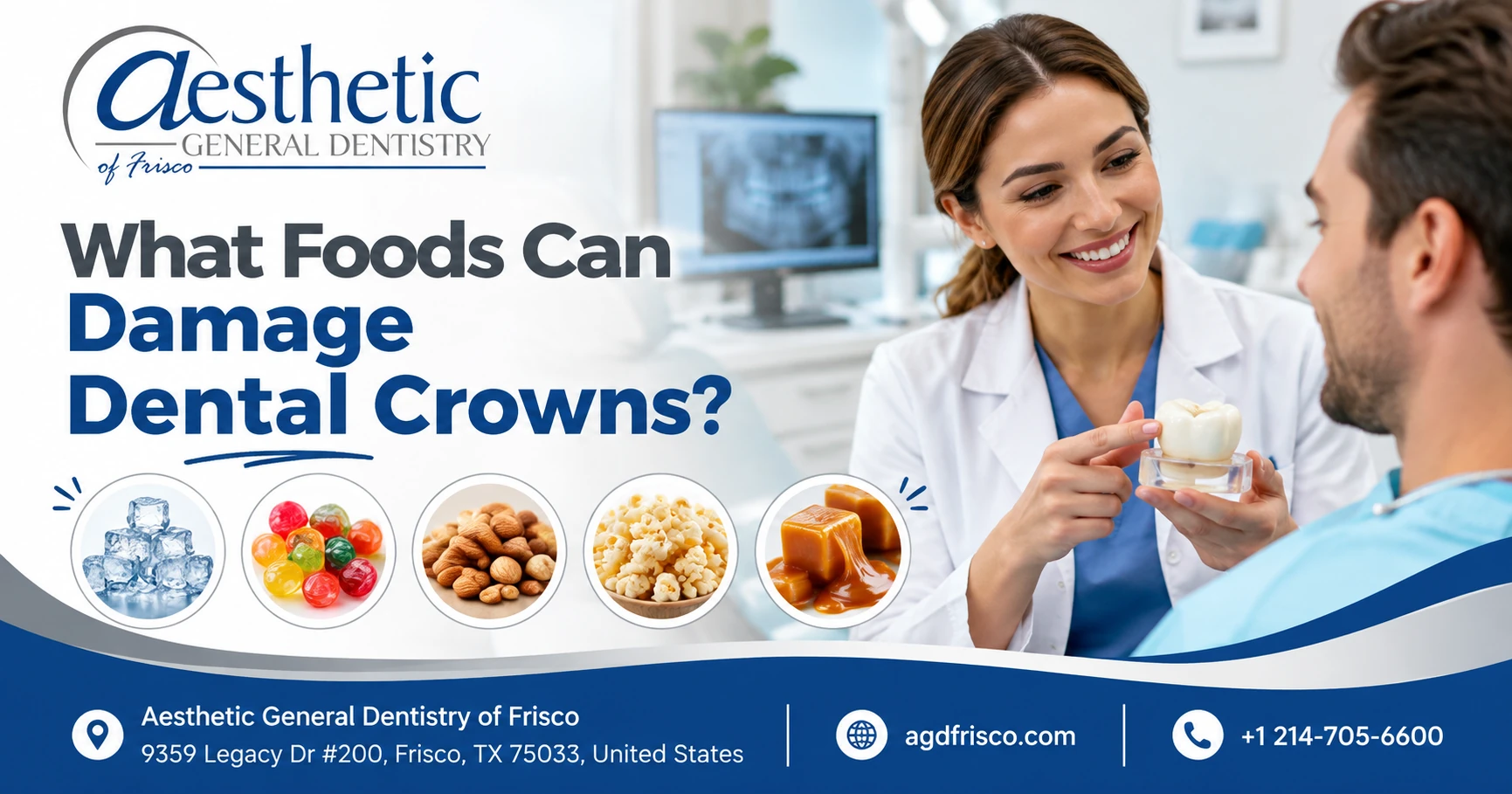
Foods that can damage dental crowns are usually very hard, sticky, or difficult to chew, especially when they place concentrated pressure on the restoration. Ice, hard candy, popcorn kernels, sticky caramels, and similar foods can increase the risk of chipping, loosening, or damaging a crown.
That does not mean everyone with a crown needs a permanently restricted diet. Most people can eat normally once the crown is fully settled. The goal is to avoid unnecessary stress, use good chewing habits, and keep the crowned tooth and surrounding gums clean so the restoration has the best chance of lasting.
What Foods Can Damage Dental Crowns?
Dental crowns are designed to handle normal chewing forces, but they are not indestructible.
A crown may be made from ceramic, porcelain, zirconia, metal, or a combination of materials. Each type has different characteristics, but all restorations can be affected by excessive force, repeated stress, decay around the tooth underneath, or problems with the cement holding the crown in place.
Foods that may create more risk include:
- Ice
- Hard candy
- Popcorn kernels
- Very hard nuts
- Hard pretzels
- Tough or crusty foods
- Sticky caramel
- Taffy
- Chewy candies
- Very sticky gum
- Hard seeds
- Foods containing unexpected bones or pits
The concern is not that eating one of these foods automatically destroys a crown.
Risk depends on factors such as:
- The material used for the crown
- The age of the restoration
- Where the crown is located
- Your bite
- Whether you grind your teeth
- The condition of the tooth underneath
- Whether the crown is already chipped or loose
Moderation and careful chewing are usually more realistic than trying to avoid every potentially challenging food forever.
Can Hard Foods Crack or Chip a Crown?
Yes. Hard foods can sometimes chip or fracture a crown, particularly when biting force is concentrated on one small area.
Ceramic and porcelain-based crowns can be very strong, but they may still chip under enough pressure.
The risk may be greater when biting:
- Ice cubes
- Hard candy
- Popcorn kernels
- Hard nuts
- Fruit pits
- Bones
- Unpopped popcorn
- Very hard crusts
Why Concentrated Pressure Matters
Normal chewing distributes force over the biting surfaces of the teeth.
Biting directly onto a hard object can create a sudden concentrated force.
This can affect:
- The crown itself
- The cement holding it in place
- The tooth underneath
- Nearby natural teeth
A crown can also be damaged by repeated smaller forces over time.
For example, habitually chewing ice may gradually increase wear and the risk of cracks, even if nothing happens the first few times.
Be Careful With Unexpected Hard Objects
Some of the most common problems happen when a person bites something unexpectedly hard.
Popcorn is a good example.
The soft popped portion is generally not a concern, but an unpopped kernel can create much greater pressure on a crown.
Similarly, olives, cherries, peaches, and other foods may contain pits that should be removed before chewing.
Why Are Sticky Foods a Problem for Dental Crowns?
Sticky foods can create pulling forces on a crown as you chew.
This is especially important if a crown is temporary, newly placed, or already beginning to loosen.
Foods that may be problematic include:
- Caramel
- Taffy
- Toffee
- Sticky candy
- Gummy candy
- Chewy fruit snacks
- Very sticky gum
Sticky Foods Can Pull on the Crown
As sticky food adheres to the chewing surface, it can pull upward when the teeth separate.
A properly bonded permanent crown should generally be secure, but repeated pulling forces may still be undesirable.
Temporary crowns are usually more vulnerable because they are intentionally cemented in a way that allows them to be removed later.
Sticky Foods Can Also Trap Plaque
Another issue is that sticky foods can remain around the margin where the crown meets the tooth.
The crown itself cannot develop a cavity, but the natural tooth underneath and around the edge of the restoration can still decay.
That makes cleaning important after eating sticky or sugary foods.
Should You Avoid Chewing Ice With a Crown?
Yes, chewing ice is best avoided if you have a dental crown.
Ice is extremely hard and can place substantial force on both restorations and natural teeth.
Even people without crowns can chip teeth by chewing ice.
With a crown, the force may cause:
- A porcelain chip
- A crack
- Crown loosening
- Damage to the underlying tooth
- Damage to another restoration
Let Ice Melt Instead
Having ice in a beverage is not usually a problem.
The issue is deliberately crushing or chewing the cubes.
If chewing ice has become an automatic habit, switching to chilled drinks without chewing the ice can reduce unnecessary stress on your crowns and natural teeth.
Can Sugary or Acidic Foods Affect a Crowned Tooth?
Sugary and acidic foods usually do not damage the crown material directly in the same way that biting ice might.
However, they can still affect the natural tooth and gums surrounding the crown.
Sugar and Decay Around the Crown
Bacteria in the mouth use sugars and produce acids that contribute to tooth decay.
A crowned tooth still has natural tooth structure beneath the restoration.
Decay can develop near the edge of the crown if plaque accumulates there.
Frequent sugary foods and drinks can increase this risk, especially when oral hygiene is inconsistent.
Examples include:
- Candy
- Soda
- Sweetened coffee
- Energy drinks
- Sweet tea
- Desserts
- Frequent sugary snacks
The frequency of sugar exposure matters as much as the amount.
Continually sipping a sugary beverage throughout the day repeatedly exposes teeth to an acidic environment.
Acidic Foods and Drinks
Acidic products may affect exposed natural tooth structure around the crown and other teeth.
Common examples include:
- Soda
- Citrus drinks
- Sports drinks
- Energy drinks
- Vinegar-heavy foods
- Sour candy
You do not necessarily need to eliminate these foods.
Limiting frequent exposure, drinking water afterward, and maintaining good oral hygiene can help protect the natural tooth structure around the crown.
Are There Foods You Should Avoid Right After Getting a Crown?
Yes. Diet recommendations may be more restrictive immediately after a crown is placed.
The advice depends on whether you received a temporary crown or your final permanent restoration.
After a Temporary Crown
Temporary crowns are generally less secure than permanent crowns.
Your dentist may recommend avoiding:
- Sticky candy
- Gum
- Caramel
- Taffy
- Hard nuts
- Ice
- Hard candy
- Very chewy foods
It can also help to chew primarily on the opposite side when practical.
After a Permanent Crown
Your dentist may advise waiting until the local anesthetic has fully worn off before eating.
This helps reduce the risk of accidentally biting your cheek, tongue, or lip.
Depending on the cement and procedure, you may also receive specific instructions about when normal chewing can resume.
Follow those instructions rather than relying on a general timeline.
Sensitivity After Crown Placement
A newly crowned tooth may temporarily feel sensitive to cold, pressure, or chewing.
This can occur while the tooth and surrounding tissues adjust.
However, persistent or worsening pain should be reported to the dentist.
What Foods Are Safer for Dental Crowns?
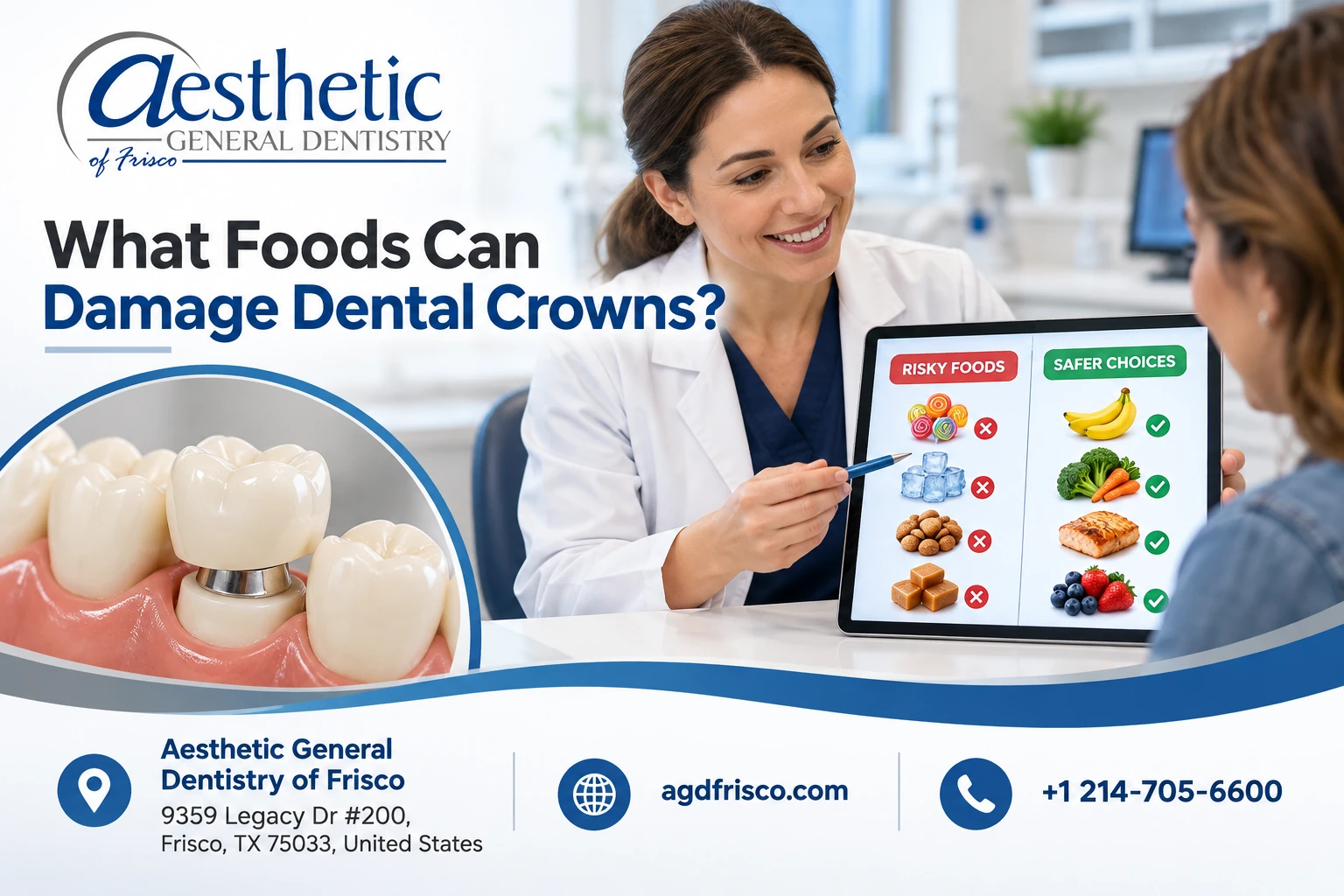
Once a permanent crown is fully settled, most normal foods can be eaten safely.
The safest choices are generally foods that do not require extreme biting pressure.
Examples include:
- Eggs
- Yogurt
- Soft-cooked vegetables
- Rice
- Pasta
- Fish
- Tender chicken
- Soft fruits
- Oatmeal
- Soups
- Cooked beans
- Soft breads
You do not need to build your entire diet around soft foods forever.
Modify Harder Foods When Needed
Sometimes the preparation method matters more than the food itself.
Instead of biting directly into a very hard food:
- Cut apples into smaller pieces.
- Slice raw carrots thinly.
- Remove pits before chewing.
- Cut tough meat into manageable pieces.
- Avoid biting directly on bones.
- Crack nuts before putting them in your mouth.
These small changes reduce concentrated force on crowns and natural teeth.
Chew With Awareness
If one side of your mouth contains several crowns or large restorations, be mindful when eating unusually hard foods.
Alternating sides and avoiding sudden force can reduce unnecessary stress.
How Should You Clean Around a Dental Crown?
A crown still requires daily brushing and interdental cleaning.
The most important area is often the margin where the crown meets the natural tooth.
Plaque buildup in this area can contribute to:
- Cavities around the crown
- Gum inflammation
- Bleeding gums
- Bad breath
- Periodontal problems
Brush Twice Daily
Use a soft-bristled toothbrush and fluoride toothpaste.
Brush around the crown just as you would around natural teeth.
Pay attention to the gumline without scrubbing aggressively.
Clean Between the Teeth
Flossing or another form of interdental cleaning helps remove plaque that a toothbrush cannot reach.
Depending on your dental work, your dentist may recommend:
- Traditional floss
- Floss threaders
- Interdental brushes
- Water flossers
For permanent crowns, floss can usually be used normally unless your dental team gives different instructions.
Be More Careful Around Temporary Crowns
Flossing instructions may be different with a temporary crown.
Your dentist may recommend sliding floss out through the side rather than pulling upward, which could potentially dislodge the temporary restoration.
Follow the specific instructions given after treatment.
What Habits Can Help Your Crown Last Longer?
Protecting a crown involves more than choosing the right foods.
Daily habits can have a major influence on the lifespan of both the crown and the tooth supporting it.
Do Not Use Your Teeth as Tools
Avoid using your teeth to:
- Open packages
- Tear plastic
- Remove bottle caps
- Cut fishing line or thread
- Crack nutshells
- Hold hard objects
These habits can damage crowns and natural teeth.
Avoid Chewing Pens and Fingernails
Chewing nonfood objects places repeated stress on the teeth.
Over time, this may contribute to chips, cracks, or restoration damage.
Manage Teeth Grinding
Grinding and clenching can place substantial force on crowns.
Many people grind during sleep without realizing it.
Signs may include:
- Flattened teeth
- Jaw soreness
- Morning headaches
- Chipped restorations
- Tooth wear
If your dentist identifies signs of grinding, they may recommend a night guard or another management strategy.
Keep Up With Dental Checkups
A crown can look and feel normal even when a problem is beginning underneath or around it.
Routine examinations allow the dentist to check:
- Crown margins
- Gum health
- Bite
- Wear
- Cracks
- Decay
- Crown stability
Early treatment is usually simpler than waiting until the crown becomes painful or comes off.
Maintain Good Gum Health
Healthy gums help support the tooth and maintain a stable environment around the crown.
Brush carefully, clean between your teeth, and attend professional cleanings as recommended.
When Should You See a Dentist About a Damaged or Loose Crown?
Contact a dentist if your crown feels loose, cracked, chipped, painful, or noticeably different when you bite.
A damaged crown does not always cause severe pain immediately.
Signs That a Crown May Need Attention
Contact your dentist if you notice:
- The crown moves when touched
- A piece has chipped off
- The crown falls out
- New sensitivity develops
- Pain occurs when biting
- The bite suddenly feels uneven
- Food frequently becomes trapped around the crown
- The gum around the crown becomes swollen
- You notice a bad taste or odor from the area
- The crown feels rough or sharp
What Should You Do if a Crown Comes Off?
Keep the crown if you can find it and contact your dentist.
Do not use household glue or another non-dental adhesive to put it back in place.
The dentist needs to evaluate both the restoration and the tooth underneath before deciding whether the crown can be re-cemented or needs replacement.
Do Not Ignore a Loose Crown
A loose crown may allow bacteria and food debris to reach areas that are normally sealed.
Waiting too long can increase the risk of damage to the underlying tooth.
Professional evaluation is the safest way to determine why the crown became loose and what should happen next.
Protecting a Crown Does Not Require Giving Up Every Favorite Food
Dental crowns are designed to allow normal function, so most people do not need to live on soft foods or permanently eliminate every crunchy or chewy item.
The main goal is to reduce unnecessary stress.
Avoid chewing ice, be cautious with extremely hard or sticky foods, limit frequent sugary and acidic exposure, and modify foods when cutting them into smaller pieces makes chewing easier.
Daily hygiene matters just as much as diet. The crown may be artificial, but the tooth underneath and the surrounding gums remain natural tissues that need protection.
If a crown starts to feel loose, becomes painful, chips, or suddenly changes the way your bite feels, schedule a dental examination rather than waiting for the problem to worsen. A dentist can determine whether the crown itself is damaged or whether something has changed with the supporting tooth.
FAQs
Can I eat normally with a dental crown?
Yes. Most patients can return to a normal diet once a permanent crown has settled. It is still wise to avoid unnecessary stress from very hard or sticky foods.
Can chewing hard candy break a crown?
It can. Hard candy creates concentrated pressure and may chip a crown or damage the natural tooth underneath. Letting hard candy dissolve instead of chewing it reduces the risk.
Is popcorn safe with a crown?
The popped portion is usually manageable, but unpopped kernels can be very hard. Avoid biting directly on kernels.
Can caramel pull off a dental crown?
Sticky foods such as caramel may create pulling forces, especially on temporary or already loose crowns. Permanent crowns are more secure, but moderation is still sensible.
Does sugar damage a crown?
Sugar does not usually damage crown material directly, but it can contribute to decay in the natural tooth around or underneath the restoration.
Can I chew ice if my crown is made from zirconia?
It is still better to avoid chewing ice. Even very strong crown materials can be damaged, and the underlying tooth or nearby teeth can also crack.
Why does my crown hurt when I chew?
Biting pain can have several possible causes, including bite problems, decay, inflammation, cracks, or an issue with the crown itself. A dentist should evaluate persistent pain.
What should I do if my crown feels loose?
Avoid chewing on that side and contact your dentist. Do not attempt to glue the crown back into place yourself.
Can I floss around a dental crown?
Yes. Permanent crowns generally require regular interdental cleaning just like natural teeth. Temporary crowns may need a different flossing technique, so follow your dentist’s instructions.
How long should a dental crown last?
Crown lifespan varies with the material, bite forces, hygiene, grinding habits, diet, and condition of the supporting tooth. Regular dental visits can help identify wear or problems before they become more serious.