

Tooth pain when biting down can happen for several reasons, including a cracked tooth, tooth decay, an infection, a damaged filling, or a problem with how your teeth come together. The pain may feel sharp and sudden, occur only when chewing certain foods, or continue as a dull pressure after you release your bite.
Because different dental problems can cause similar symptoms, biting pain should not be diagnosed based on the sensation alone. At Aesthetic General Dentistry, we can examine the painful tooth, evaluate your bite, and use dental imaging when appropriate to identify the source of discomfort and determine what treatment may be needed.
Why Does My Tooth Hurt When I Bite Down?
A tooth may hurt when you bite because pressure from chewing is affecting an irritated or damaged part of the tooth or surrounding tissue.
The problem may involve the tooth’s:
- Enamel or dentin
- Inner pulp and nerve
- Root
- Filling or other restoration
- Supporting gum and bone
- Bite relationship with surrounding teeth
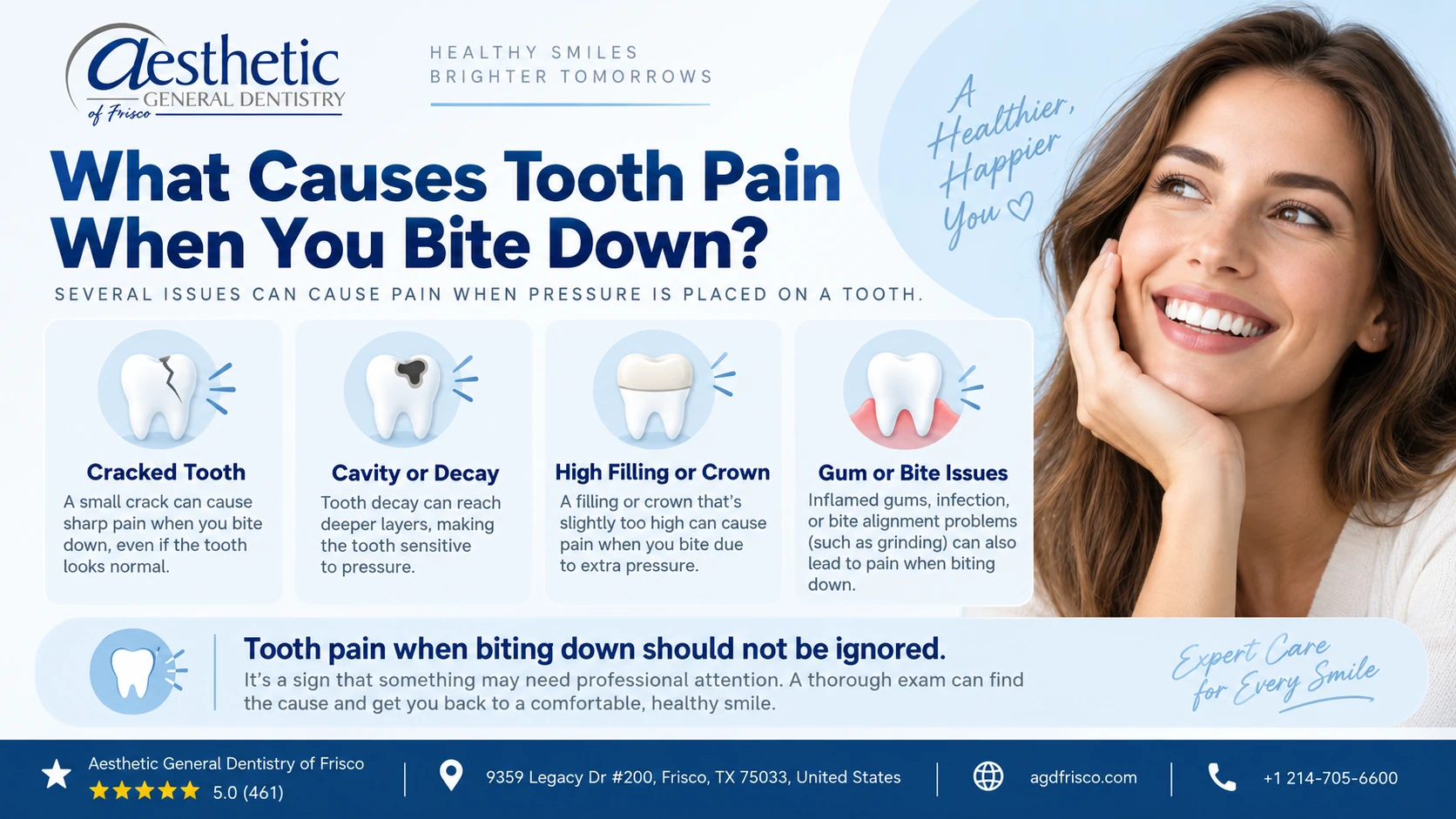
For example, a crack can cause parts of a tooth to move slightly when pressure is applied. A deep cavity may irritate the nerve inside the tooth, while an infection near the root can make the tooth particularly sensitive to chewing pressure.
Even if your tooth looks normal, a problem may still be present underneath a filling, between teeth, or inside the tooth itself. A dental examination is usually necessary to determine the actual cause.
What Are the Most Common Causes of Pain When Biting?
Several dental conditions can produce pain or pressure when chewing.
Common possibilities include:
Cracked or Fractured Teeth
A crack may cause sharp, inconsistent pain when you bite or when you release pressure. Some cracks are difficult to see without a detailed dental examination.
Tooth Decay
A cavity can weaken the tooth and eventually affect deeper layers. As decay progresses, chewing pressure may cause discomfort.
Dental Infection
When bacteria reach the pulp inside a tooth, inflammation or infection can develop. An abscess near the root may cause significant sensitivity to biting pressure.
Loose or Damaged Fillings
A filling that has cracked, worn down, or become loose may leave part of the tooth vulnerable to pressure, temperature, and bacteria.
Bite Problems
Sometimes a tooth contacts the opposing teeth too heavily. This may happen naturally or after dental treatment if a restoration changes the way the teeth come together.
Gum or Supporting-Tissue Problems
Inflammation or infection around the tooth may also make chewing uncomfortable.
The specific pattern of pain can provide useful clues, but symptoms alone cannot reliably determine which condition is responsible.
Can a Cracked Tooth Cause Pain When Chewing?
Yes. Pain during chewing is a common symptom associated with cracked teeth.
According to the American Association of Endodontists, a cracked tooth may produce unpredictable pain when chewing, sometimes particularly when biting pressure is released. Temperature sensitivity may also occur.
A crack can hurt because chewing causes the damaged sections of the tooth to move slightly. This movement may irritate the pulp, which contains the nerves and blood vessels inside the tooth.
Cracked-tooth symptoms can include:
- Sharp pain while chewing
- Pain when releasing your bite
- Sensitivity to hot or cold
- Pain that comes and goes
- Difficulty determining exactly which tooth hurts
Not every crack requires the same treatment. A minor fractured cusp may be restored with a filling or crown, while a deeper crack involving the pulp may require root canal treatment followed by a crown. A crack extending too far beneath the gumline may make the tooth impossible to save.
Early evaluation is important because cracks do not heal on their own and may become larger over time.
Can a Cavity Cause Tooth Pain When Biting?
Yes. Tooth decay can cause pain when biting, particularly once the cavity has progressed beyond the outer enamel and reached deeper portions of the tooth.
Early cavities may not cause noticeable symptoms. As decay becomes larger, you may experience:
- Sensitivity to sweets
- Hot or cold sensitivity
- A toothache
- Pain while chewing
- A visible hole or damaged area
Once decay creates a physical cavity in the tooth, treatment usually involves removing the damaged tissue and restoring the area with a filling. Larger cavities may require a crown, and decay that reaches the pulp may require root canal treatment.
Waiting for a cavity to become extremely painful can allow additional tooth structure to be damaged. If one tooth consistently hurts when you chew, it is worth having it examined even if there is no visible cavity.
Can a Dental Infection Cause Pressure Pain?
Yes. An infection around the root of a tooth can make biting or chewing particularly uncomfortable.
A tooth abscess can develop when bacteria enter the inner pulp through a deep cavity, crack, injury, or previous dental work. Infection and inflammation can then develop around the root.
Possible symptoms include:
- Pain when biting or chewing
- Persistent or throbbing toothache
- Hot or cold sensitivity
- Swollen or tender gums
- Facial swelling
- An unpleasant taste or odor
- Fever
Mayo Clinic specifically identifies discomfort from chewing or biting pressure as a symptom associated with a tooth abscess.
Dental infections require professional treatment. They do not reliably disappear just because the pain temporarily improves.
Treatment depends on where the infection is located and how much damage has occurred. Root canal treatment may sometimes save the tooth, while severely damaged teeth may require extraction.
Seek urgent medical or dental attention if dental pain is accompanied by substantial facial swelling, fever, or difficulty breathing or swallowing. These can be signs that an infection has spread and requires prompt care.
Can a Loose or Damaged Filling Cause Biting Pain?
Yes. A filling that becomes loose, cracked, worn, or damaged can cause discomfort when pressure is placed on the tooth.
Fillings must withstand considerable force every day. Over time, a restoration may wear down or the surrounding tooth structure may develop a problem.
Symptoms of a damaged filling can include:
- Pain when chewing
- New sensitivity to temperature
- Food getting caught around the filling
- A rough or sharp edge
- A feeling that something has changed in your bite
- Part of the filling breaking away
Pain can also occur if decay develops around or beneath an existing restoration.
Sometimes a recently placed filling may feel painful during chewing because the restoration is slightly higher than the surrounding teeth. That tooth may receive excessive pressure every time you close your mouth.
A dentist can check the filling, evaluate your bite, and determine whether the restoration needs adjustment, repair, or replacement.
When Is Root Canal Treatment Needed?
Root canal treatment may be recommended when the pulp inside a tooth becomes significantly inflamed, infected, or damaged and cannot recover on its own.
The pulp contains nerves, blood vessels, and connective tissue. Deep decay or a crack can allow bacteria to reach this area.
Possible signs that the pulp is involved include:
- Persistent tooth pain
- Significant pain when chewing
- Lingering hot or cold sensitivity
- Swelling around the tooth
- A pimple or bump on the gums
- Discoloration of the tooth
During root canal treatment, the damaged or infected pulp is removed. The inside of the tooth is then cleaned, disinfected, and sealed. A restoration, often a crown, may then be needed to protect the remaining tooth structure.
Not every painful tooth requires a root canal. A small cavity, damaged filling, or bite problem may require a much simpler treatment.
An examination and appropriate testing help determine whether the pulp is involved and whether root canal therapy is necessary.
When Can a Dental Crown Help?
A dental crown covers and protects a weakened or damaged tooth.
A crown may be recommended when the tooth does not have enough healthy structure remaining for a conventional filling or when additional protection is needed against chewing forces.
Situations where a crown may be considered include:
- A large cavity
- A large or failing filling
- A fractured or weakened tooth
- Certain cracked teeth
- A tooth that has undergone root canal treatment
For some cracked teeth, a crown helps hold the tooth together and reduces movement of the cracked portions during chewing. The American Association of Endodontists notes that crown placement can provide significant protection for certain cracked teeth, although it cannot guarantee that every crack will stop progressing.
Whether a crown is appropriate depends on how much tooth structure remains and where any fracture, decay, or other damage is located.
How Dentists Diagnose Tooth Pain When Biting
Identifying biting pain often requires combining your symptoms with a physical examination and diagnostic testing.
Your dentist may first ask questions such as:
- When did the pain begin?
- Does it hurt when biting down or releasing pressure?
- Is the pain sharp, aching, or throbbing?
- Is the tooth sensitive to hot or cold?
- Does the pain continue after you stop chewing?
- Have you recently had dental treatment?
- Have you injured the tooth?
The dentist may then examine the tooth for visible decay, cracks, damaged restorations, swelling, and gum problems.
Bite Testing
You may be asked to bite gently on a dental instrument or other material so your dentist can determine which area triggers the pain. This can be particularly useful when investigating a possible crack.
Percussion Testing
The dentist may gently tap different teeth. A tooth with inflammation or infection near its root may be more sensitive to pressure. Mayo Clinic notes that tapping the tooth can be part of evaluating a suspected abscess.
Temperature or Pulp Testing
Cold or other tests may be used to evaluate how the nerve inside the tooth responds.
Dental X-Rays
X-rays can help identify:
- Cavities between teeth
- Problems beneath restorations
- Changes around tooth roots
- Bone loss
- Some types of infection
X-rays can reveal decay that is not visible during a routine visual examination.
Some cracks do not appear clearly on standard dental X-rays, so dentists often use several pieces of information before reaching a diagnosis.
Bite Evaluation
The dentist may also examine how your upper and lower teeth contact each other. If one tooth is taking excessive force, adjusting the bite or restoration may sometimes help.
Once the cause is identified, treatment can be selected based on the condition of the tooth rather than simply treating the pain itself.
When Should You See a Dentist for Biting Pain?
A tooth that repeatedly hurts when you bite or chew should be evaluated rather than ignored.
Schedule a dental visit if:
- Biting pain continues for more than a short period
- Pain occurs repeatedly when chewing
- The tooth is sensitive to temperature
- You suspect a cracked tooth
- A filling or crown feels loose or damaged
- You notice swelling around the tooth
- Your bite suddenly feels different
- Pain is becoming more intense
- The tooth hurts without being touched
The earlier a problem is identified, the more treatment options may be available. A small cavity may only need a filling, for example, while untreated decay that reaches the pulp may eventually require root canal treatment or extraction.
Seek more urgent care if you develop significant facial swelling, fever, or difficulty swallowing or breathing along with dental pain.
At Aesthetic General Dentistry, we can evaluate tooth pain when biting, determine what is causing the pressure sensitivity, and discuss treatment options based on the condition of your tooth.
FAQs
Why Does My Tooth Hurt Only When I Bite?
Pain that occurs specifically during biting may be associated with a crack, cavity, damaged filling, inflammation around the root, infection, or excessive bite pressure. The location and timing of the pain can help your dentist investigate the cause, but an examination is needed for an accurate diagnosis.
Why Does My Tooth Hurt When I Release My Bite?
Pain that occurs when you release biting pressure can be associated with a cracked tooth. Cracked teeth can produce inconsistent pain during chewing because the damaged portions of the tooth may move under pressure.
Can Tooth Pain When Biting Go Away on Its Own?
It depends on the cause. Temporary irritation may improve, but structural problems such as cavities, cracked teeth, failing fillings, and dental infections generally require professional treatment. Even if pain temporarily disappears, the underlying problem may still be present.
Can a Dentist See a Cracked Tooth on an X-Ray?
Not always. Some cracks are too small or positioned in a way that makes them difficult to see on standard dental X-rays. Dentists may combine X-rays with bite tests, visual examination, magnification, symptoms, and other diagnostic techniques when evaluating a suspected crack.
Does Pain When Biting Mean I Need a Root Canal?
No. Biting pain does not automatically mean root canal treatment is necessary. A cavity, high filling, damaged restoration, or certain cracks may be treated without a root canal. Root canal therapy is generally considered when the pulp inside the tooth is significantly inflamed, infected, or damaged.
Can a Filling Be Too High and Hurt When I Bite?
Yes. If a filling or another restoration sits slightly higher than the surrounding teeth, that tooth may receive more pressure when you bite. Your dentist can evaluate the way your teeth come together and determine whether an adjustment is appropriate.
Can a Cracked Tooth Be Saved?
Some cracked teeth can be successfully treated, particularly when the crack is identified before it extends too deeply. Depending on the location and severity, treatment may involve a crown or root canal treatment followed by a crown. Cracks extending far below the gumline may make the tooth impossible to restore.
What Should I Do Until My Dental Appointment?
Try to avoid chewing hard or crunchy foods on the painful side of your mouth. Keep the area clean with gentle brushing and flossing, and follow medication instructions from your dentist or healthcare provider if applicable. Avoid placing aspirin directly against the tooth or gums.
Persistent tooth pain when biting down is your body’s way of indicating that something in or around the tooth may need attention. At Aesthetic General Dentistry, we can identify whether the discomfort is related to decay, a crack, infection, an existing restoration, or another dental issue and recommend treatment based on what we find.