

You have finished your filling, the numbness has worn off, and now the treated tooth feels a little different. Maybe cold water causes a quick zing. Perhaps chewing on that side feels tender. It is understandable to wonder whether something is wrong.
In many cases, mild tooth sensitivity after a filling can be temporary. A tooth has just undergone dental treatment, and the tissues inside and around it may need time to settle. Sensitivity may be triggered by cold, heat, sweets, pressure, or chewing, depending on the tooth and the type of treatment performed.
The more important question is how the discomfort behaves.
Mild sensitivity that gradually improves is generally less concerning than pain that becomes stronger, occurs without a trigger, interferes with normal chewing, or is accompanied by swelling.
At Aesthetic General Dentistry, we encourage patients to pay attention to changes after treatment and contact us when something does not feel right. A follow-up allows your dentist to determine whether the tooth is simply recovering or whether another issue needs attention.
Is Tooth Sensitivity Normal After a Filling?
Some sensitivity following a dental filling can occur as the tooth adjusts after treatment.
A filling requires removal of damaged tooth structure before the area is restored. The tooth may temporarily respond more strongly to temperature or pressure afterward, especially when the cavity was deeper or close to the sensitive inner portion of the tooth.
Sensitivity itself is not unusual in dentistry. The American Dental Association explains that tooth sensitivity occurs when underlying dentin becomes exposed or stimulated, and temperature changes are among the common triggers.
After a filling, you might notice a brief response when:
- Drinking something cold
- Eating something hot
- Biting or chewing
- Eating something sweet
- Putting pressure on the treated tooth
What matters is whether the symptoms are mild and improving.
A tooth that feels slightly sensitive shortly after treatment is different from a tooth that develops severe, persistent, or worsening pain. If you are concerned about how the tooth feels, your dentist can evaluate the restoration and the tooth itself.
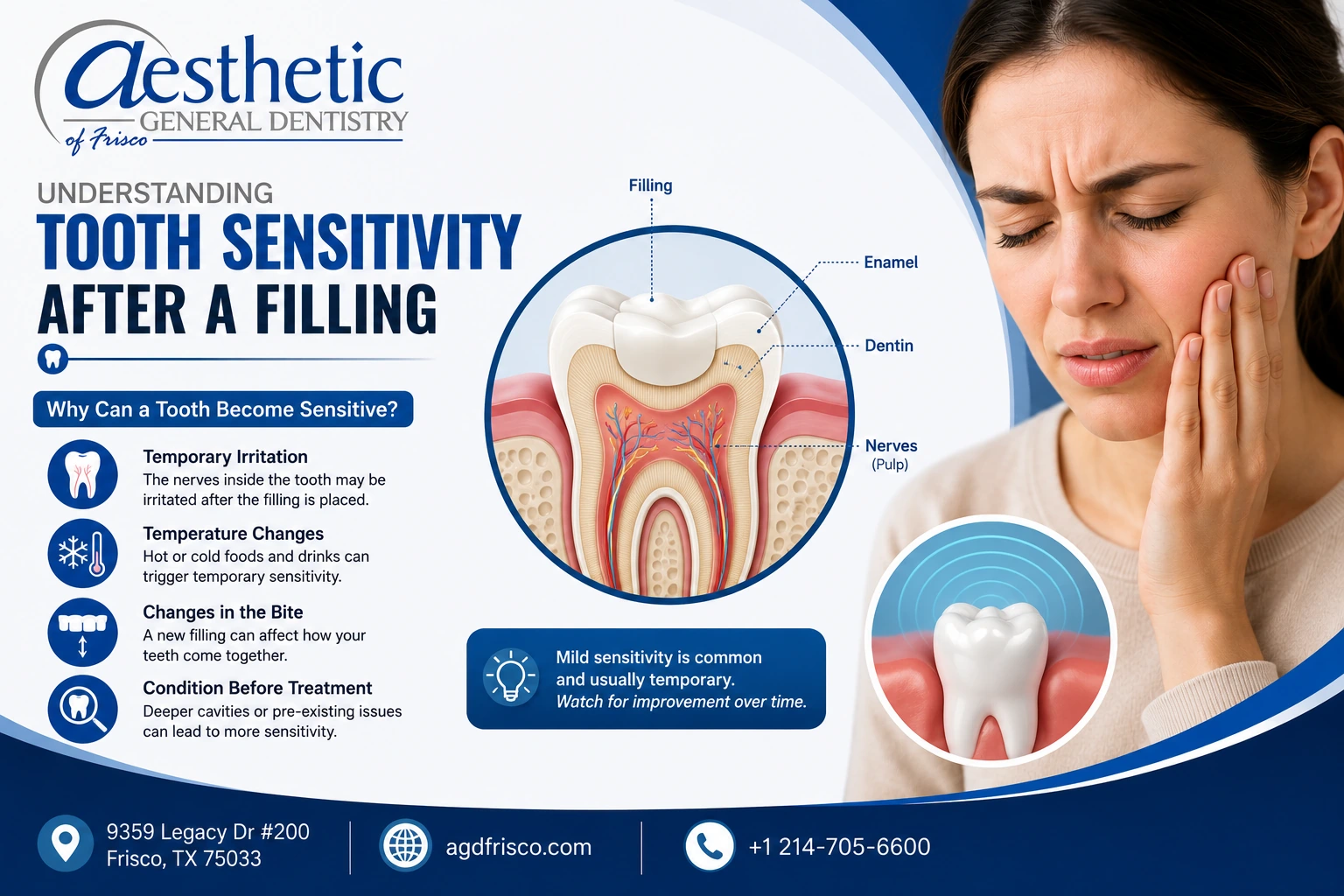
Why Can a Tooth Become Sensitive After a Filling?
Several factors can contribute to tooth sensitivity after a filling.
Temporary Irritation Inside the Tooth
A tooth contains living tissue, including nerves and blood vessels.
Removing decay and preparing the tooth for a filling can temporarily irritate those tissues. The tooth may therefore respond more noticeably to cold, heat, or pressure while it settles.
The depth of the original cavity can also matter. A deeper cavity means the dental work occurred closer to the pulp, where the tooth’s nerves are located.
Temperature Changes
Cold drinks, ice cream, hot coffee, or other temperature changes may temporarily trigger a treated tooth.
Sensitivity to hot or cold can occur for many dental reasons, including decay, fractures, exposed roots, worn enamel, and worn restorations. Following recent dental work, your dentist can determine whether the reaction fits the expected recovery pattern.
Changes in the Bite
A new filling changes the shape of the chewing surface.
If the restored tooth contacts the opposing tooth differently than it did before treatment, you may notice discomfort when chewing or biting down.
Persistent bite-related pain should be evaluated rather than ignored.
The Condition of the Tooth Before Treatment
A tooth with a small cavity may respond differently from one that had significant decay or had already been sensitive before the filling.
Every tooth and treatment is different, which is why post-filling symptoms can vary from one patient to another.
What Types of Sensitivity Can Happen After Dental Work?
Sensitivity does not always feel the same.
Understanding what triggers the sensation can help you describe it accurately if you need to contact your dentist.
Cold Sensitivity
A sip of ice water or cold air reaching the tooth may produce a quick, sharp sensation.
The duration matters. A brief response that disappears when the cold stimulus is removed is different from intense discomfort that continues afterward.
Heat Sensitivity
Hot coffee, tea, or food may also trigger a treated tooth.
New or increasing sensitivity to heat deserves attention, particularly if the discomfort becomes strong or lingers.
Pressure Sensitivity
The tooth may feel tender when chewing immediately after treatment.
If the discomfort is mild and decreasing, it may simply need monitoring. Persistent or significant pain when biting should be checked.
Sweet Sensitivity
Some patients notice sensitivity when eating sugary foods or drinks.
Because sensitivity to sweets can also occur with other dental problems, tell your dentist if it continues.
General Tenderness
Sometimes patients describe the tooth as simply “feeling different” rather than painful.
That may include mild tenderness around the tooth or awareness of the restoration when chewing.
The important thing is the direction in which symptoms are moving. Improvement is reassuring. Increasing discomfort deserves evaluation.
How Long Can Sensitivity Last After a Filling?
There is no single recovery period that applies to every filled tooth.
Sensitivity can depend on:
- How deep the cavity was
- Which tooth was treated
- How much tooth structure required preparation
- The condition of the tooth before treatment
- The type and location of the filling
- How your bite contacts the restoration
- Your individual response to dental treatment
Rather than focusing on an exact number of days, watch the overall trend.
Mild sensitivity should generally move toward improvement rather than becoming progressively worse.
If you continue having discomfort without improvement, or if the symptoms interfere with eating and normal daily activities, contact your dentist.
You do not need to wait for pain to become severe before asking for a follow-up.
What Is Normal vs. Abnormal Sensitivity After a Filling?
A simple distinction can make post-treatment symptoms easier to understand.
Sensitivity That May Fit Normal Recovery
You may experience:
- Mild temperature sensitivity
- Brief sensitivity to cold
- Mild tenderness with chewing
- General awareness of the newly filled tooth
- Symptoms that gradually become less noticeable
These symptoms should be monitored according to the instructions you received after treatment.
Sensitivity That Deserves a Dental Evaluation
Contact your dentist if you experience:
- Severe pain
- Pain that is getting worse
- Significant pain without eating, drinking, or touching the tooth
- Pain that repeatedly wakes you up
- Persistent pain when biting
- Strong or lingering temperature sensitivity
- Swelling
- A feeling that your bite is noticeably uneven
- Symptoms that are not improving as expected
Tooth pain can have several causes, including decay, cracks, or infection, which is why persistent pain should be professionally evaluated rather than diagnosed at home.
Swelling or rapidly worsening symptoms deserve more prompt attention.
Why Does My Filled Tooth Hurt When I Bite Down?
Pain when biting is one of the most common reasons patients contact a dentist after a filling.
One possible explanation is that your bite has changed.
When you close your mouth, your upper and lower teeth should come together in a balanced way. If the newly restored tooth contacts first or feels noticeably different from surrounding teeth, chewing can be uncomfortable.
There are other possibilities as well.
Biting pain can sometimes be associated with cracks or other problems within the tooth. The American Association of Endodontists notes that cracked teeth can cause erratic pain when chewing, including discomfort related to biting pressure.
That does not mean post-filling bite pain automatically indicates a crack.
It means persistent biting discomfort is worth evaluating because several conditions can produce similar symptoms.
Do not attempt to file, grind, or otherwise alter the filling yourself. Your dentist can examine the restoration and determine whether the bite or another part of the tooth needs attention.
What Can Help Relieve Mild Sensitivity After a Filling?
If the sensitivity is mild and your dentist has not identified a complication, a few simple measures may make the tooth more comfortable while it settles.
Avoid Obvious Triggers Temporarily
If ice-cold drinks consistently cause sensitivity, choosing less extreme temperatures for a short period may make eating and drinking more comfortable.
Likewise, avoid putting unnecessary chewing pressure on an area that feels tender.
Follow Your Dentist’s Instructions
Post-treatment instructions are based on the filling you received and your individual dental situation.
If your dentist recommended specific oral hygiene or eating precautions, continue following them.
Continue Good Oral Hygiene
Unless your dentist has instructed otherwise, continue brushing and cleaning between your teeth.
Do not stop cleaning the area simply because the tooth feels mildly sensitive. Maintaining oral hygiene remains important for the health of the restoration and surrounding gums.
Ask Before Using Sensitivity Products
Products such as desensitizing toothpaste may be appropriate for certain types of tooth sensitivity. The ADA notes that treatment for sensitive teeth depends on the underlying cause, and a dentist can recommend an appropriate approach.
If your sensitivity began specifically after dental treatment, ask your dentist whether a sensitivity product makes sense for your situation.
Most importantly, do not try to repair or modify the filling at home.
When Should You Call Your Dentist About Filling Sensitivity?
Call your dentist when the symptoms seem more significant than expected or are moving in the wrong direction.
A follow-up is particularly appropriate when:
- Sensitivity keeps getting worse
- Pain is severe
- The tooth hurts spontaneously
- Temperature pain lingers
- Chewing remains painful
- The bite feels uneven
- The tooth or surrounding gum is swollen
- You cannot comfortably eat on that side
- Symptoms fail to improve
- You are simply unsure whether what you are experiencing is normal
Your dentist can check the filling, evaluate your bite, examine the tooth, and determine whether additional treatment is necessary.
Tooth sensitivity has multiple possible causes, and the ADA recommends seeing a dentist when sensitivity is concerning so the source can be identified.
Seeking a follow-up does not necessarily mean something serious is wrong. Sometimes an examination is simply the quickest way to provide reassurance and make sure the recovery is progressing appropriately.
Can an Older Filling Suddenly Become Sensitive?
Yes. New sensitivity is not limited to recently filled teeth.
A tooth with an older restoration can become sensitive if something changes in either the tooth or the filling.
Potential causes can include:
- Wear in the restoration
- New decay
- A fracture or crack
- Changes around the filling margins
- Gum recession or exposed root surfaces
- Wear of the tooth itself
- Other underlying dental conditions
The ADA lists worn fillings among the possible causes of tooth sensitivity. It also notes that older fillings can weaken over time and may fracture or develop leakage around their margins.
If a tooth that has felt normal for years suddenly becomes sensitive, do not assume the filling simply needs time to settle. The change should be evaluated.
Your dentist can determine whether the restoration remains intact or whether another dental issue has developed.
What Frisco Patients Should Know After Getting a Filling
If you have recently received a filling in Frisco, a little sensitivity does not automatically mean there is a problem.
Some teeth need time to adjust after dental treatment.
Pay attention to three things:
What triggers the sensitivity?
Is it cold, chewing, sweets, or something else?
How strong is it?
A quick, mild sensation is different from severe or throbbing pain.
Is it improving?
The overall trend is one of the most useful things to monitor.
At Aesthetic General Dentistry, we want our patients to feel comfortable asking questions after treatment. If your bite does not feel right, the tooth remains uncomfortable, or your symptoms are becoming worse instead of better, contact our office.
Post-treatment education is part of dental care. You should not feel as though you have to diagnose a sensitive tooth yourself.
A quick evaluation can help determine whether the tooth is experiencing expected temporary sensitivity or whether the filling, bite, or tooth requires additional attention.
FAQs
Is it normal for a tooth to be sensitive after a filling?
Mild, temporary sensitivity can occur after a dental filling. The tooth may respond to cold, heat, pressure, or chewing. Symptoms that are improving are generally less concerning than pain that becomes severe or progressively worse.
Why is my new filling sensitive to cold?
The treated tooth may be temporarily more responsive following dental work. Cold sensitivity can also occur for many other dental reasons, so persistent or significant symptoms should be discussed with your dentist.
How long should a filled tooth remain sensitive?
There is no exact timeline for every tooth. Recovery varies according to the depth of the cavity, the tooth treated, and other factors. What matters is whether mild symptoms are gradually improving.
Is it normal for a filling to hurt when I chew?
Some temporary tenderness can occur, but continuing pain when biting deserves evaluation. Your dentist may need to check how the restored tooth contacts the opposing teeth or investigate another cause.
What if my filling feels too high?
If your bite feels noticeably different after the numbness has disappeared, contact your dentist. Do not attempt to grind or adjust the restoration yourself.
Is throbbing pain normal after a filling?
Significant throbbing, spontaneous, severe, or worsening pain should be discussed with your dentist. Those symptoms should not simply be assumed to be routine sensitivity.
Can I eat normally if my filling is sensitive?
Follow the instructions provided by your dentist. If certain temperatures or chewing pressures trigger mild discomfort, temporarily avoiding those triggers may help while the tooth settles.
Should I use sensitive-tooth toothpaste after a filling?
Desensitizing toothpaste can be useful for some forms of tooth sensitivity, but the appropriate treatment depends on the cause. Ask your dentist whether it is suitable for your post-filling symptoms.
Can a filling cause sensitivity to hot foods?
A newly treated tooth may temporarily react to temperature. However, strong, persistent, or lingering heat sensitivity should be evaluated by a dentist.
Can an old filling start hurting years later?
Yes. Older restorations can wear, fracture, or develop problems around their edges, and the underlying tooth can also change. New sensitivity in a previously comfortable tooth should be checked.
When is sensitivity after a filling concerning?
Contact your dentist if sensitivity is severe, getting worse, persistent, spontaneous, associated with swelling, or making it difficult to chew normally.
Should I call my dentist even if I am not sure the sensitivity is abnormal?
Yes. If you are concerned about a recently treated tooth, contacting your dental office is appropriate. Your dentist can determine whether your symptoms fit normal recovery or need additional evaluation.