

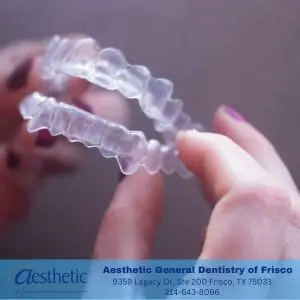
Crooked teeth make you hesitate before smiling, and you are wondering whether clear aligners or braces are the better investment.
Invisalign treatment uses a series of clear, removable aligners to gradually move teeth, while traditional braces use brackets and wires that stay attached throughout treatment. Neither option is automatically better.
The right choice depends on your orthodontic needs, lifestyle, budget, treatment goals, and how consistently you can follow your dentist’s instructions.
Is Invisalign faster than traditional braces?
In some cases, Invisalign can be faster than traditional braces. Mild to moderate spacing or alignment problems may be completed in 12 to 18 months, while more complex cases often take longer.
The timeline depends more on the difficulty of the case than the type of appliance.
What affects treatment time?
Crowding, bite problems, tooth rotation, jaw alignment, and patient compliance all influence how quickly teeth move.
Unlike braces, Invisalign aligners must be worn as instructed every day. Removing them too often can delay progress and extend treatment.
Regular follow-up appointments also help keep treatment on schedule.
Can Invisalign fix severe orthodontic problems?
Yes, Invisalign can successfully treat many complex orthodontic cases, but not every situation is suitable for clear aligners alone.
Severe bite discrepancies, significant jaw problems, or teeth requiring complex movements may still be better treated with traditional braces or a combination of orthodontic techniques.
Who is a good candidate?
Patients with mild or moderate crowding, spacing, overbites, underbites, crossbites, and open bites may benefit from Invisalign if their case is appropriate.
A full examination, digital scans, and bite analysis help determine whether Invisalign treatment is the right option.
Trying to choose treatment without a professional evaluation can lead to unrealistic expectations.
How much does Invisalign cost compared to braces?
The cost of Invisalign is often similar to traditional braces, although pricing varies based on treatment complexity, treatment length, location, and provider experience.
Simple cases generally cost less than comprehensive treatment.
Understanding total treatment costs
Ask whether your estimate includes digital scans, aligners, refinements, office visits, retainers, and follow-up care.
Some practices offer monthly payment plans that make treatment easier to budget.
Choosing the lowest price is not always the best value. Experience, planning, technology, and long-term follow-up all contribute to successful outcomes.
Is Invisalign more comfortable than metal braces?
Many patients find Invisalign more comfortable because there are no brackets or wires rubbing against the cheeks or lips.
Instead, smooth plastic aligners apply gentle pressure as teeth move.
Comfort versus responsibility
Although aligners may feel more comfortable, they still create pressure when switching to a new set. Mild soreness for a day or two is common.
Metal braces cannot be removed, so treatment continues without relying on patient compliance.
With Invisalign, patients must remember to wear the aligners consistently. Forgetting to wear them can slow treatment and affect results.
How often do I need to wear Invisalign aligners?
Most patients should wear Invisalign aligners for about 20 to 22 hours each day.
They should only be removed for eating, drinking anything besides water, brushing, and flossing.
Daily habits matter
Keeping aligners out too long reduces the amount of controlled tooth movement.
Patients should also clean the aligners daily using recommended cleaning methods instead of hot water, which may warp the plastic.
You can safely brush, floss, clean your aligners, and store them properly when removed.
Only your dental provider should decide when to change aligners or modify the treatment plan.
Are Invisalign results permanent?
Invisalign results can last for many years, but teeth naturally shift throughout life.
That is why retainers are an important part of every orthodontic treatment plan.
Why retainers matter
Whether you choose Invisalign or braces, wearing retainers as instructed helps maintain your new smile.
Skipping retainers increases the chance that teeth gradually move out of alignment again.
Long-term success depends on consistent retainer use, regular dental visits, and good oral hygiene.
Patients should ask how long retainers need to be worn and what replacement costs may be over time.
Which is better for adults: Invisalign or braces?
For many adults, invisalign vs braces comes down to lifestyle and treatment needs rather than appearance alone.
Invisalign offers nearly invisible treatment, removable aligners, and easier brushing and flossing.
Traditional braces remain an excellent choice for more complicated tooth movements because they work continuously without relying on patient compliance.
Comparing both options
Adults with busy professional lives often appreciate the discreet appearance of Invisalign.
Patients who may struggle to wear aligners consistently or who have complex orthodontic needs may achieve better results with braces.
Neither option is universally superior.
If you’re experiencing crooked teeth or alignment concerns, a professional evaluation can help determine the most appropriate treatment.
For patients considering Invisalign in Frisco, TX, the best treatment begins with a comprehensive evaluation, digital imaging, bite analysis, and a discussion of treatment goals, expected timeline, maintenance, and overall cost before making a final decision.
Key Insights
- Invisalign and traditional braces are both effective orthodontic treatments when matched to the right patient and treatment goals.
- Invisalign offers removable, nearly invisible aligners that many adults find comfortable, while braces provide continuous tooth movement for more complex cases.
- Treatment time, cost, and long-term success depend on the condition being treated and patient compliance.
- Wearing retainers after treatment is essential regardless of which option you choose.
- A professional orthodontic evaluation remains the best way to determine which solution will provide predictable, healthy, and lasting results.
Find the Right Orthodontic Solution
A straighter smile starts with understanding your options before making a commitment.
At Aesthetic General Dentistry of Frisco, we take time to evaluate your smile, explain the differences between Invisalign and traditional braces, and recommend treatment based on your goals rather than a one-size-fits-all approach.
We review your bite, discuss expected timelines, answer your questions about costs and maintenance, and create a personalized treatment plan using advanced dental technology and proven treatment methods.
Schedule a consultation to learn whether clear aligners are right for you and begin your journey toward a healthier, more confident smile.