
Dental bonding vs veneers is a common comparison for patients who want to improve chipped, discolored, uneven, or slightly spaced teeth. Both treatments can enhance the appearance of a smile, but they differ in materials, preparation, cost, durability, and long-term maintenance. Dental bonding typically offers a more affordable, conservative approach, while porcelain veneers may provide greater stain resistance and longer-lasting cosmetic results.
At Aesthetic General Dentistry of Frisco, we help patients understand their cosmetic dentistry options so they can make informed decisions based on their dental health, appearance goals, and preferences.
Dental Bonding vs. Veneers: What Is the Difference?
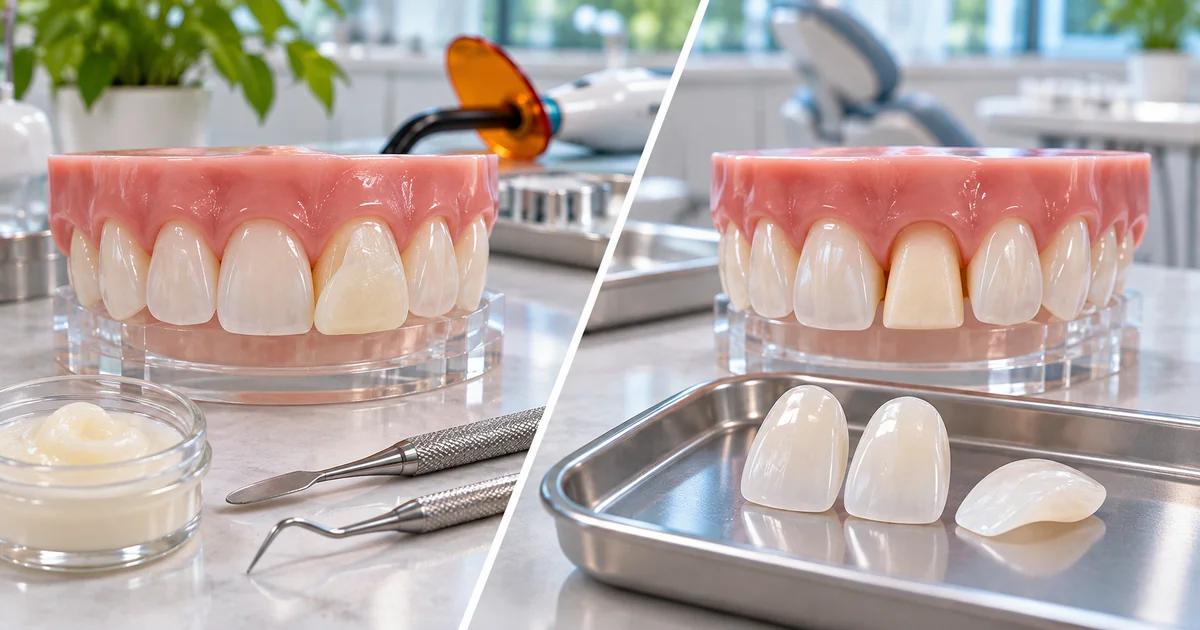
The main difference between dental bonding and veneers is how each treatment changes the appearance of a tooth.
Dental bonding uses tooth-colored composite resin applied directly to the tooth. The dentist shapes and polishes the material to conceal imperfections such as small chips, gaps, or uneven edges.
Dental veneers are thin coverings placed over the front surfaces of teeth. They may be made from porcelain or composite resin, although porcelain veneers are commonly considered when comparing veneers with direct dental bonding.
Both treatments can produce natural-looking improvements, but they have different advantages.
| Feature | Dental bonding | Porcelain veneers |
| Material | Composite resin | Dental porcelain |
| Typical treatment time | Often one appointment | Commonly two or more appointments |
| Tooth preparation | Usually minimal enamel removal | Generally requires some enamel removal |
| Appearance | Natural-looking for minor corrections | Highly customizable color and translucency |
| Stain resistance | More susceptible to discoloration | Generally more stain-resistant |
| Typical lifespan | Approximately 3–10 years | Often 10–15 years or longer |
| Repairs | Often relatively straightforward | May require repair or replacement |
| Initial cost | Generally lower | Generally higher |
| Reversibility | Often possible with minimal preparation | Usually irreversible |
These are general comparisons. Results depend on the materials used, tooth condition, treatment design, and oral habits.
Neither procedure is automatically better for every patient.
A person correcting one small chip may benefit from bonding, while someone seeking a more extensive cosmetic transformation may prefer veneers.
How Does Dental Bonding Work?
Dental bonding is a cosmetic procedure that uses tooth-colored composite resin to improve the shape, color, or appearance of a tooth.
The material is applied directly to the tooth surface and shaped to blend with the surrounding enamel.
Preparing the tooth
The dentist begins by examining the tooth and choosing a resin shade that closely matches the natural enamel.
The tooth surface is then prepared to help the bonding material attach securely.
This may involve gently conditioning the enamel and applying a bonding agent.
Because dental bonding typically requires little or no removal of healthy enamel, it is often considered a conservative cosmetic option.
Applying and shaping the material
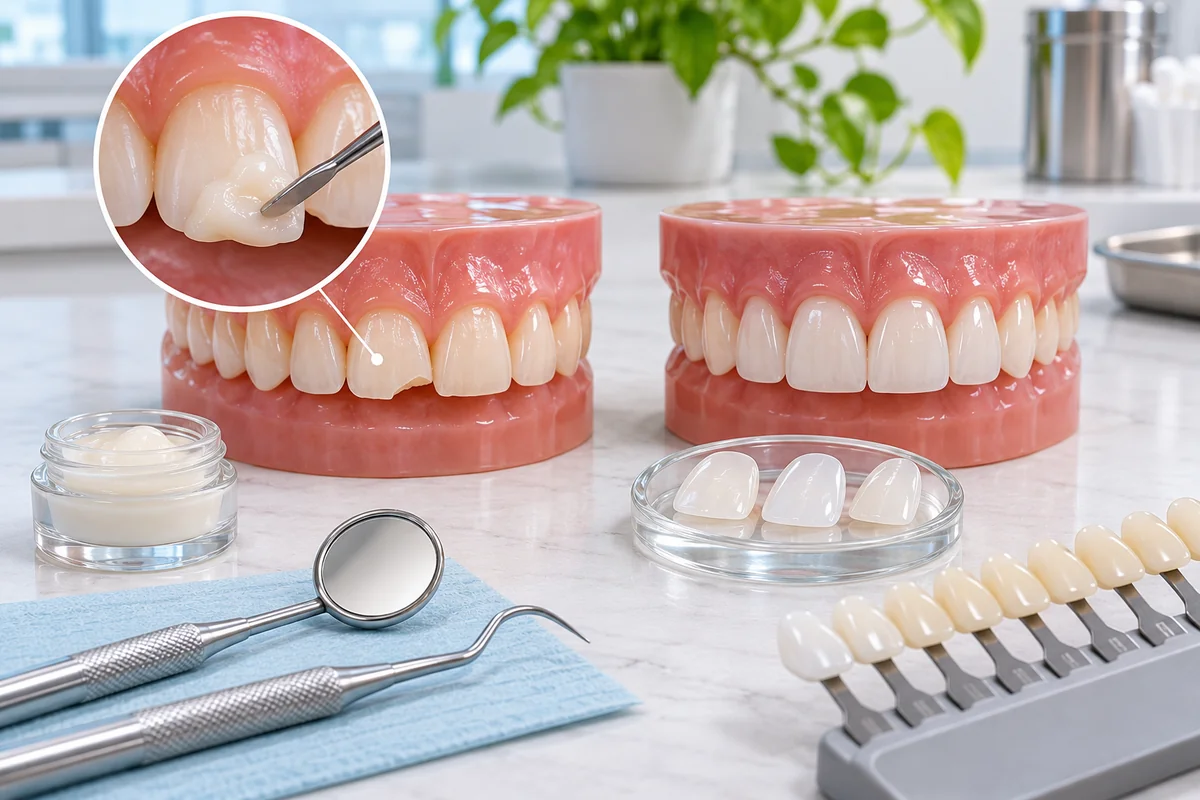
The dentist places composite resin onto the tooth and carefully shapes it.
For example, a small chip along the edge of a front tooth can be filled and contoured to restore its appearance.
A special curing light hardens the resin.
The dentist then makes final adjustments and polishes the material to achieve a smooth surface and natural-looking finish.
How long does treatment take?
Dental bonding can often be completed in a single appointment.
Cleveland Clinic notes that the procedure commonly takes approximately 30 to 60 minutes per tooth, although the time varies depending on the correction needed.
Bonding may be especially useful when a patient wants to address a limited cosmetic concern without extensive tooth preparation.
However, larger corrections may require other restorative or cosmetic options.
How Do Veneers Work?
Dental veneers are thin, custom-designed coverings that improve the visible surfaces of teeth.
They can change tooth color, size, shape, and apparent alignment.
Although veneers can be made from porcelain or composite resin, porcelain veneers are often selected for their appearance and resistance to staining.
Evaluating the teeth
Before recommending veneers, the dentist examines the teeth and gums to determine whether the treatment is appropriate.
Existing cavities, gum disease, or other dental problems may need attention first.
The dentist also discusses the desired appearance, including tooth proportions, color, and overall smile balance.
Preparing the teeth
Traditional porcelain veneers generally require removing a small amount of enamel from the front surfaces of the teeth.
This creates room for the restorations and helps them fit naturally.
Because enamel does not grow back, this preparation is usually irreversible.
Some minimal-preparation or no-preparation veneer designs require less alteration, but they are not appropriate for every patient.
Creating and placing veneers
After preparation, the dentist takes impressions or digital scans.
These records help create veneers designed to fit the patient’s teeth.
Depending on the fabrication method, temporary veneers may be needed before the final restorations are ready.
At the placement appointment, the dentist evaluates the color, shape, and fit before bonding the veneers into place.
Final adjustments help ensure that the teeth look natural and function comfortably.
Unlike direct dental bonding, porcelain veneers are commonly fabricated outside the mouth before placement.
Which Option Looks More Natural?
Both dental bonding and porcelain veneers can create natural-looking results when carefully planned and performed.
The final appearance depends on the dentist’s technique, material selection, tooth shape, and surrounding teeth.
Natural appearance with dental bonding
Composite resin is available in different shades and can be shaped to resemble natural enamel.
For a small chip or gap, bonding may blend so closely with the surrounding tooth that the correction is difficult to notice.
The dentist can also adjust the contours of the material during treatment.
However, composite resin can become stained or lose some surface polish over time.
Natural appearance with porcelain veneers
Porcelain can reproduce certain optical characteristics of natural teeth, including translucency and light reflection.
This makes porcelain veneers useful for patients seeking consistent changes across several visible teeth.
The dentist can customize color, size, and proportions to complement the patient’s smile.
However, veneers that are excessively white, bulky, or poorly proportioned may appear artificial.
The goal should be a result that complements the patient’s natural facial features rather than simply producing the brightest possible shade.
Which looks better?
For one small imperfection, bonding may offer an excellent cosmetic result.
For extensive discoloration or several teeth requiring coordinated changes, porcelain veneers may provide more consistent color and shape.
The best-looking result depends on thoughtful treatment planning rather than the material alone.
Which Treatment Removes More Tooth Structure?
Preserving healthy tooth structure is an important consideration when comparing dental bonding vs veneers.
In general, dental bonding requires less enamel removal than traditional porcelain veneers.
Dental bonding is usually more conservative
For minor cosmetic corrections, bonding often involves preparing the tooth surface without removing substantial enamel.
This makes it attractive to patients who want to preserve as much natural tooth structure as possible.
In some circumstances, bonding can be removed or modified.
However, reversibility depends on how the original tooth was prepared and whether the restoration involved additional changes.
Porcelain veneers generally require enamel preparation
Traditional porcelain veneers usually require removing some enamel to accommodate the restoration.
The amount varies according to the tooth’s shape, position, existing structure, and planned design.
Once enamel has been removed, the tooth generally needs continued protection with an appropriate restoration.
Why tooth preparation matters
Patients should consider the long-term implications before choosing a treatment that permanently changes natural tooth structure.
For someone with healthy teeth and a minor cosmetic concern, a conservative approach may be preferable.
However, veneers may still be appropriate when the desired correction cannot be achieved predictably through bonding alone.
The dentist should explain how much preparation is expected and whether alternative treatments could address the concern.
How Long Do Bonding and Veneers Last?
Dental bonding and porcelain veneers can both provide years of cosmetic improvement, but neither is guaranteed to last indefinitely.
Their longevity depends on oral hygiene, tooth condition, material quality, bite forces, and everyday habits.
How long does dental bonding last?
Dental bonding commonly lasts approximately 3 to 10 years before requiring touch-ups, repairs, or replacement.
Some restorations last longer, while others may need attention sooner.
Composite resin can gradually wear, chip, or become discolored.
For example, bonding placed along the edge of a front tooth may experience considerable pressure when a person bites into hard foods.
How long do porcelain veneers last?
Porcelain veneers often last approximately 10 to 15 years, and some remain functional for longer with proper care.
Porcelain is generally more resistant to surface staining and wear than direct composite bonding.
However, veneers can still chip, crack, loosen, or develop problems involving the underlying tooth.
What affects longevity?
Grinding or clenching teeth, chewing hard objects, poor oral hygiene, and untreated dental conditions can shorten the lifespan of either treatment.
A patient who grinds their teeth at night may need a professionally recommended nightguard.
Regular dental examinations can help identify wear or damage before it becomes more serious.
Longevity estimates should be treated as general expectations rather than guarantees.
How Do the Costs of Bonding and Veneers Compare?
Dental bonding typically costs less initially than porcelain veneers.
However, the total expense depends on the number of teeth treated, the extent of the cosmetic changes, the materials selected, and the complexity of the procedure.
Why bonding usually costs less
Dental bonding commonly involves applying composite resin directly to the tooth during one appointment.
Because it generally requires less preparation and does not always involve a dental laboratory, the initial cost is often lower.
This can make bonding attractive to patients who want to correct one or two small imperfections.
Why porcelain veneers cost more
Porcelain veneers involve additional planning, tooth preparation, customized fabrication, and precise placement.
Factors influencing cost may include the number of veneers, material selection, laboratory fees, and any additional treatment needed before placement.
A single veneer will generally cost less overall than treating several visible teeth.
Consider long-term maintenance expenses
The initial price is not the only financial consideration.
Dental bonding may require more frequent polishing, repairs, or replacement.
Porcelain veneers often last longer, but repairing or replacing them may involve a larger expense.
Patients should consider both the upfront cost and potential future maintenance.
Does dental insurance cover cosmetic treatment?
Dental insurance generally provides limited coverage for procedures performed solely to improve appearance.
However, coverage may differ when treatment is considered medically necessary or restores damaged tooth structure.
Patients should review their policy and request a personalized estimate before proceeding.
At Aesthetic General Dentistry of Frisco, we encourage patients to discuss their treatment goals and financial considerations during a cosmetic consultation.
Which Option Is Better for Chips, Gaps, and Discoloration?
Both treatments can address several cosmetic concerns, but the type and extent of the problem often influence which approach is more appropriate.
Small chips
Dental bonding is often a practical choice for repairing a small chip in an otherwise healthy tooth.
The dentist can add resin to restore the missing contour without extensively altering the remaining enamel.
However, a larger fracture may require a different type of restoration.
Gaps between teeth
Bonding can sometimes close small spaces by adding material to the sides of neighboring teeth.
Porcelain veneers may also be used to change the appearance of spacing.
For larger gaps or significant alignment problems, orthodontic treatment may be more appropriate because simply making teeth wider could create unnatural proportions.
Tooth discoloration
Bonding can cover certain localized discolorations.
However, porcelain veneers may offer greater coverage and color stability when stains are extensive or resistant to whitening.
Patients with otherwise healthy teeth may want to discuss whitening before choosing a restoration that requires more tooth preparation.
Uneven or misshapen teeth
Bonding can reshape individual teeth or correct small irregularities.
Veneers may be useful when several teeth need coordinated changes in shape, size, and appearance.
Worn teeth
Minor wear may sometimes be addressed with bonding.
However, significant wear can indicate grinding, bite problems, or other conditions requiring assessment.
Covering worn areas without understanding the cause may lead to premature restoration failure.
What Maintenance Do Bonding and Veneers Require?
Both bonding and veneers require consistent oral hygiene and regular professional dental care.
Although the materials differ, the natural teeth underneath remain vulnerable to decay and gum disease.
Brush and floss daily
Brush twice daily using fluoride toothpaste and a soft-bristled toothbrush.
Clean between your teeth every day to remove plaque around the edges of restorations.
Your dentist may recommend a nonabrasive toothpaste to help protect the polished surfaces.
Be careful with hard objects
Avoid using your teeth to open packages, bite fingernails, or chew pens.
These habits can damage composite resin and porcelain restorations.
Patients should also be cautious when biting directly into especially hard foods.
Reduce staining habits
Composite bonding is generally more susceptible to discoloration from coffee, tea, tobacco, and other staining substances.
Porcelain veneers are more resistant, but staining can still occur around restoration margins or on nearby natural teeth.
Maintaining good hygiene and limiting frequent staining exposures can help preserve appearance.
Address teeth grinding
Patients who clench or grind their teeth may place excessive pressure on cosmetic restorations.
A dentist may recommend a custom nightguard or other appropriate treatment.
Maintain regular dental visits
Routine examinations allow dentists to evaluate restoration edges, bite alignment, and surrounding oral health.
Bonding may occasionally benefit from polishing or minor repairs.
Veneers may need professional evaluation if they become loose, chipped, or uncomfortable.
Neither treatment eliminates the need for preventive dental care.
Who Is a Good Candidate for Each Option?
Choosing between bonding and veneers depends on more than appearance.
A dentist must evaluate tooth structure, gum health, bite alignment, cosmetic goals, and the patient’s expectations.
Good candidates for dental bonding
Bonding may be suitable for patients who have small chips, minor gaps, uneven edges, or localized discoloration.
It may also appeal to people who prefer a less invasive cosmetic option or want to limit initial treatment costs.
Patients should understand that the material may require touch-ups over time.
Good candidates for porcelain veneers
Porcelain veneers may be appropriate for patients who want more extensive or coordinated cosmetic changes involving several teeth.
They can be considered for visible discoloration, uneven proportions, certain gaps, and other appearance concerns.
Candidates should have sufficiently healthy teeth and gums and understand that traditional veneer preparation is generally irreversible.
When another treatment may be better
Bonding and veneers are not appropriate for every dental problem.
For example, active decay or untreated gum disease should generally be addressed before elective cosmetic treatment.
Significant tooth damage may require a crown or another restorative treatment.
Likewise, substantial tooth misalignment may be better addressed with orthodontics rather than masking the position of the teeth.
Patients with severe grinding or bite problems may also require additional evaluation before cosmetic treatment.
Which treatment should you choose?
Dental bonding may be preferable when the cosmetic concern is small, preserving enamel is a priority, and the patient wants a lower initial cost.
Porcelain veneers may be preferable when a patient wants broader cosmetic changes, greater stain resistance, and a restoration designed for longer-term appearance stability.
Neither option is universally superior.
A consultation allows the dentist to explain the advantages, limitations, and expected maintenance associated with each approach.
Explore Your Cosmetic Dentistry Options at Aesthetic General Dentistry of Frisco
Choosing between dental bonding and veneers is an individual decision. The best treatment should complement your natural smile while considering the health and condition of your teeth.
At Aesthetic General Dentistry of Frisco, Dr. Chirag Patel and our dental team help patients explore cosmetic options based on their needs and desired results.
Whether you want to repair a chipped tooth, improve uneven edges, close a small gap, or address discoloration, we can evaluate your concerns and discuss appropriate treatment possibilities.
Our cosmetic dentistry services include dental bonding and porcelain veneers, allowing patients to explore different approaches to smile enhancement.
We believe informed decisions begin with understanding the procedure, expected results, maintenance responsibilities, and long-term considerations.
If you are comparing dental bonding vs veneers, our team is available to help you understand which option may be appropriate for your smile.
Contact Aesthetic General Dentistry of Frisco at (214) 705-6600 to schedule a cosmetic dentistry consultation.
FAQs
Is dental bonding better than veneers?
Neither treatment is universally better. Bonding may be more suitable for small corrections and minimal tooth preparation, while porcelain veneers may offer greater stain resistance and longer-lasting cosmetic results.
Which looks more natural, dental bonding or veneers?
Both can look natural when carefully matched and shaped. Porcelain veneers offer customizable translucency and color, while bonding can blend effectively with neighboring teeth for minor repairs.
Is dental bonding cheaper than veneers?
Yes, dental bonding generally has a lower initial cost. Porcelain veneers usually cost more because of their materials, customization, and preparation requirements.
Can bonding be replaced with veneers later?
In many cases, yes. A dentist can evaluate the existing bonding and determine whether veneers are appropriate. The decision depends on the remaining tooth structure, oral health, and desired changes.
Do veneers last longer than dental bonding?
Porcelain veneers generally last longer. Bonding commonly lasts around 3 to 10 years, while porcelain veneers often last 10 to 15 years or more. Individual results vary.
Do dental bonding and veneers stain?
Composite bonding is more likely to stain over time. Porcelain veneers resist staining better, although the surrounding teeth and restoration margins can still become discolored.
Can you whiten bonded teeth or veneers?
Whitening products do not reliably change the color of composite bonding or porcelain veneers. Patients considering whitening should discuss treatment timing and shade matching with their dentist.
Can veneers or bonding fix crooked teeth?
Both can conceal minor appearance irregularities, but neither physically moves teeth into proper alignment. Significant crowding, spacing, or bite concerns may require orthodontic evaluation.