Misshapen Teeth
Frisco TX
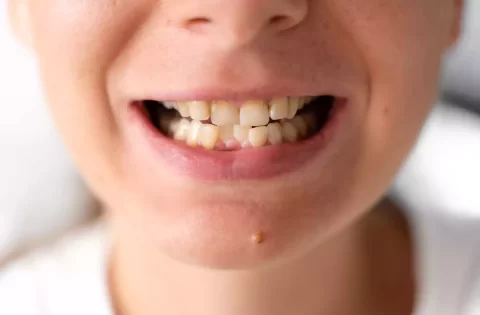
If you’ve typed ‘messed up teeth’ into a search bar, you’re probably describing what dentists call misshapen teeth — teeth that are unusually small, pointed, pitted, worn, or irregularly formed compared to a typical tooth shape. It’s a genuinely common concern, and the causes range from something you were born with to damage that happened later in life.
Below is a real breakdown of why teeth end up misshapen and what can and can’t be done about it.
How Misshapen Teeth Affect Confidence
A tooth that’s noticeably smaller, pointier, or more irregular than the teeth around it tends to draw the eye, and many patients tell us it’s the first thing they think people notice about their smile. That’s a legitimate reason to seek cosmetic treatment — self-consciousness about tooth shape can affect how comfortable someone feels smiling, speaking in public, or being photographed, independent of whether the tooth is functioning normally.
When Is It Just Cosmetic, and When Is It a Bite Problem?
Not every misshapen tooth is purely aesthetic. When tooth shape is tied to malocclusion, a bite where the upper and lower teeth (or jaws) don’t meet correctly — the irregular shape can affect chewing efficiency, place uneven wear on certain teeth, and in some cases contribute to jaw discomfort.
That’s an important distinction: a single misshapen tooth from a childhood injury is usually a cosmetic fix, while a mouthful of irregularly shaped, overlapping, or crowded teeth tied to a bite misalignment may need an orthodontic evaluation as well as (or instead of) a purely cosmetic one.
Our related page on crooked and misaligned teeth covers the bite-alignment side of this in more depth.
What Causes Misshapen Teeth?
Genetics
Tooth size, shape, and even minor irregularities in cusp form are inherited traits, the same way features like jaw shape run in families.
Enamel hypoplasia
Cleveland Clinic describes this as a developmental condition where tooth enamel doesn’t form properly before the tooth ever erupts, leaving it too thin, pitted, grooved, or missing in places, which changes the tooth’s apparent shape and can make it more prone to chipping.
Cleveland Clinic notes it can stem from genetic conditions (including amelogenesis imperfecta, which affects roughly 1 in 14,000 people in the U.S.), from factors during pregnancy or early childhood such as maternal vitamin D deficiency or lack of prenatal care, from early childhood illness or high fevers, from nutritional deficiencies in vitamins A, C, or D or calcium, or from trauma to a developing tooth.
Trauma
A fall, sports injury, or other accident can chip, crack, or wear down a tooth well after it’s already erupted, permanently changing its shape.
Tooth wear and erosion
Years of grinding or clenching (bruxism), or chronic acid exposure from diet or acid reflux, can gradually shorten and reshape the biting edges of teeth.
Untreated tooth decay
Cavities that progress without treatment destroy tooth structure, which can leave a tooth looking notably smaller or irregularly shaped even after a filling repairs the functional damage.
Malocclusion
Crowding, gaps, or a misaligned bite can make otherwise normally shaped teeth look irregular simply because of how they’re positioned relative to each other.
Treatment Options for Misshapen Teeth
Tooth-colored composite resin is applied and sculpted directly onto the tooth to correct minor shape irregularities in a single visit — one of the fastest, most cost-effective options for small chips or pits.
Thin custom shells bonded over the front of the tooth can correct more significant shape, size, or surface irregularities and tend to hold up longer than bonding.
For teeth that are more severely worn, decayed, or structurally compromised, a full-coverage crown rebuilds the tooth’s shape while also restoring strength and function — appropriate when the issue goes beyond a cosmetic surface fix.
Tooth contouring (enamel reshaping)
For very minor irregularities, a dentist can sometimes smooth and reshape the enamel surface directly — a minimally invasive option that works only for small corrections.
Orthodontic treatment
When shape irregularity is really a positioning issue tied to malocclusion, braces or clear aligners address the underlying alignment rather than masking it cosmetically.
Dental implants
When a tooth is too damaged or decayed to restore, replacement with an implant may be the most durable long-term option.
Frequently Asked Questions -
Misshapen Teeth
At Aesthetic General Dentistry of Frisco, we’re always here to clarify and guide. Never hesitate to ask; your oral health is our top priority!
What’s the difference between misshapen teeth and messed up teeth?
They’re generally the same thing described two ways. ‘Misshapen teeth’ is the more clinical term dentists use for teeth that are unusually small, pointed, worn, pitted, or irregularly formed, while ‘messed up teeth’ is how many patients describe the same concern in everyday language.
Can misshapen teeth be a sign of a bigger dental problem?
Sometimes. A single misshapen tooth from an old injury is usually cosmetic. But widespread irregular tooth shape tied to a bite misalignment (malocclusion) can affect chewing and place uneven stress on certain teeth, which is why we evaluate the bite, not just the tooth surface, before recommending treatment.
Is bonding or veneers better for a misshapen tooth?
Bonding is faster and less expensive, and works well for minor chips or shape irregularities on one or two teeth. Veneers cost more but are more stain-resistant and durable over time, and are often preferred when several visible teeth need correcting for a consistent look.
Can enamel hypoplasia be prevented?
Not always — some causes, like inherited enamel conditions, aren’t preventable. But since enamel hypoplasia develops before a tooth erupts, prenatal care, and adequate nutrition and illness management during early childhood, are protective factors during the window when tooth enamel is forming.
Will insurance cover treatment for misshapen teeth?
Coverage depends on your plan and the cause. Purely cosmetic reshaping, bonding, or veneers are often not covered, while treatment for a tooth that’s structurally damaged, decayed, or affecting your bite may be partially covered as restorative rather than cosmetic care. We can review your specific case and help you understand your options, including CareCredit financing.
Schedule an Appointment
Ready to get started? Call Aesthetic General Dentistry of Frisco at 214-705-6600 or Request an Appointment online. Our office is located at 9359 Legacy Dr, Ste 200, Frisco, TX 75033.