


Veneers generally cannot be whitened with bleaching products in the same way natural teeth can. Whitening gels are designed to change pigments within natural tooth enamel, while porcelain and composite restorations usually keep the shade they were made to have.
That does not mean stained, dull, or mismatched veneers cannot be improved. Professional cleaning, polishing, repair, or replacement may help depending on the material and condition of the veneers. If natural teeth have changed color around them, a dentist can also evaluate whether whitening the surrounding teeth or updating the restorations would create a better match.
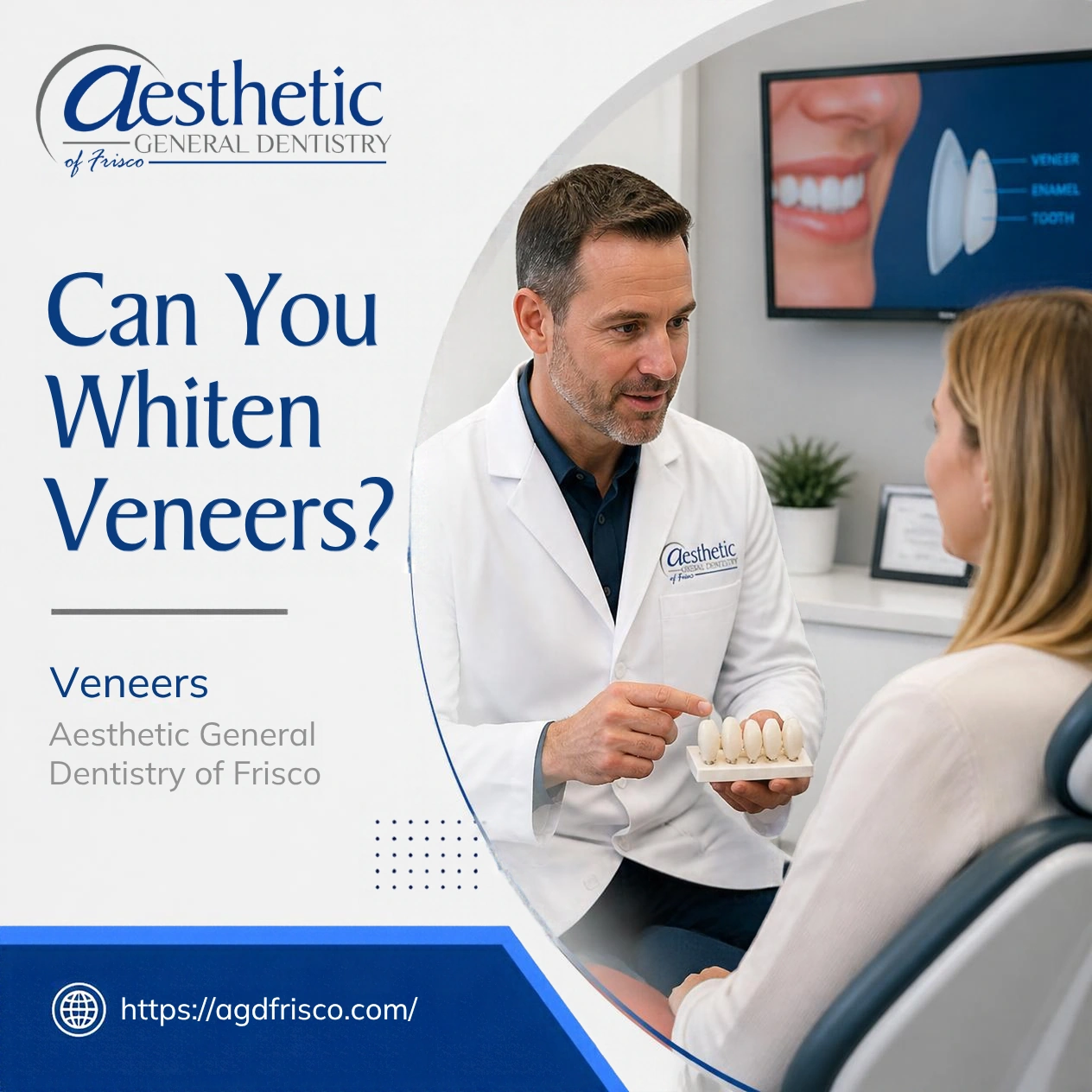
Can You Whiten Veneers?
In most cases, whitening treatments do not significantly change the actual color of veneers.
Products such as:
- Whitening strips
- Whitening gels
- Whitening toothpaste
- Professional bleaching treatments
- Whitening trays
are primarily designed to lighten natural tooth structure.
Veneers are restorative materials placed over the front surfaces of teeth. Depending on the type, they may be made from porcelain, ceramic, or composite resin.
These materials do not respond to bleaching agents in the same way enamel does.
Whitening May Affect the Teeth Around the Veneers
Although the veneer itself may not change color, natural teeth nearby may become lighter after whitening.
This can create a mismatch.
For example, if a patient has veneers on the upper front teeth but natural teeth beside them, bleaching may make the natural teeth brighter while the veneers remain at their original shade.
That does not mean whitening is always inappropriate. It simply means color planning matters.
A dentist can evaluate which teeth are natural, which have restorations, and how a whitening treatment may affect the overall appearance of the smile.
Why Don’t Veneers Respond to Whitening Like Natural Teeth?
Natural enamel and restorative materials have different structures.
Whitening gels typically contain peroxide-based ingredients that penetrate natural tooth structure and break down color-producing compounds.
Porcelain, ceramic, and composite materials do not react in the same way.
Natural Teeth Are Porous
Natural tooth structure can absorb and release pigments over time.
That is why teeth may gradually become darker from:
- Coffee
- Tea
- Red wine
- Tobacco
- Aging
- Certain medications
- Repeated exposure to strongly colored foods
Whitening agents can penetrate natural tooth structure and alter some of these pigments.
Veneers Are Manufactured Materials
Porcelain veneers are created to a specific shade and surface finish.
Once fabricated and bonded to the tooth, that color is relatively stable.
Composite veneers are built from resin-based material and may pick up surface staining more readily than porcelain, but bleaching products still do not reliably lighten the restoration itself.
Surface Stain Is Different From Internal Color
This distinction matters.
A veneer may look darker because of:
- Surface staining
- Plaque buildup
- Changes at the margins
- Staining of bonding material
- Wear of the surface finish
- Color changes in the underlying tooth
If the issue is surface buildup, professional cleaning or polishing may improve the appearance.
If the restoration itself is the wrong shade, bleaching usually will not correct it.
Does Veneer Material Affect Whitening Results?
Yes. The material affects how a veneer responds to staining, polishing, and long-term color changes.
Porcelain Veneers
Porcelain veneers are highly resistant to staining compared with natural enamel and composite resin.
Their glazed surface helps protect them from many common pigments.
However, porcelain still does not whiten in the same way natural teeth do.
If the veneer shade no longer matches the surrounding teeth, the solution may involve adjusting the natural teeth or replacing the veneer rather than bleaching it.
Composite Veneers
Composite resin is more prone to staining and surface wear than porcelain.
Over time, composite veneers may become:
- Duller
- Rougher
- More stained
- Less reflective
Professional polishing can sometimes improve surface staining.
However, whitening gel generally does not change the base color of the composite itself.
Ceramic Materials Vary
Different ceramic systems have different optical properties, translucency, and stain resistance.
The exact appearance also depends on:
- Material thickness
- Surface glaze
- Bonding cement
- Underlying tooth color
- Lighting conditions
- Adjacent teeth
A dentist may need to evaluate all of these factors before deciding why a veneer appears darker or lighter than expected.
Can Porcelain Veneers Become Stained?
Porcelain veneers are stain-resistant, but they are not completely immune to changes in appearance.
The porcelain surface itself often remains relatively stable.
However, staining can sometimes appear around the edges of the veneer or where the restoration meets the natural tooth.
What Can Make Porcelain Veneers Look Darker?
Possible reasons include:
- Plaque and tartar buildup
- Surface residue
- Staining around the margins
- Gum recession
- Changes in the bonding material
- Changes in the natural tooth underneath
- Loss of surface polish
- Differences between the veneer and surrounding teeth
Some of these problems are cosmetic.
Others may need closer evaluation.
For example, a dark line near the edge of a veneer could be related to surface staining, gum changes, or an issue with the underlying tooth or restoration.
Can Coffee Stain Porcelain Veneers?
Porcelain is generally more resistant to coffee staining than natural enamel or composite.
However, frequent exposure can still contribute to staining around restoration margins or changes in surrounding natural teeth.
Good oral hygiene and professional cleanings can help maintain the overall appearance.
Can Composite Veneers Be Whitened?
Composite veneers generally cannot be predictably whitened with bleaching products.
Composite resin does not respond to peroxide bleaching in the same way natural enamel does.
However, composite can sometimes be improved through professional polishing.
Why Composite May Change Color
Composite resin may gradually absorb or collect pigments from:
- Coffee
- Tea
- Red wine
- Tobacco
- Strongly colored foods
- Plaque
- Surface wear
As the material ages, microscopic surface roughness may also make it more likely to hold stains.
Can Polishing Help?
Sometimes.
If discoloration is mostly superficial, a dentist may be able to polish the surface and improve brightness or smoothness.
The amount of improvement depends on the condition of the restoration.
If staining has penetrated deeper into the composite, polishing may not fully restore the original shade.
In that situation, repair or replacement may be discussed.
What Happens If Your Natural Teeth Become Whiter Than Your Veneers?
This is one of the most common cosmetic concerns involving whitening and veneers.
If natural teeth are whitened after veneers are placed, the veneers generally remain the same shade.
The natural teeth may then appear noticeably lighter.
This Is Why Whitening Is Often Done Before Veneers
When possible, whitening natural teeth before choosing the final veneer shade can make color matching easier.
The dentist can then select a veneer shade based on the new tooth color.
Once veneers are bonded, their color is not easily changed.
What If the Mismatch Already Exists?
There are several possible approaches.
Depending on the situation, a dentist may consider:
- Allowing recently whitened teeth to stabilize in color
- Professional cleaning of the veneers
- Polishing composite restorations
- Whitening additional natural teeth for better consistency
- Adjusting the overall cosmetic treatment plan
- Replacing older veneers with a more suitable shade
The right approach depends on how noticeable the difference is and what caused it.
Do Not Keep Whitening in an Attempt to Lighten the Veneers
More bleaching will not necessarily make the veneers lighter.
Instead, it may make surrounding natural teeth even brighter and increase the contrast.
A dental evaluation is usually more useful than simply continuing whitening treatments.
How Can You Improve the Color of Older Veneers?
Older veneers can sometimes look duller or more mismatched over time.
The treatment depends on whether the issue is surface staining, wear, margin changes, or the actual color of the restoration.
Professional Cleaning
If plaque, tartar, or surface deposits are making the veneers look less bright, professional cleaning may improve their appearance.
Polishing
Composite veneers may sometimes benefit from professional polishing.
Porcelain restorations may also be polished in certain situations using techniques and materials appropriate for ceramic surfaces.
Improper polishing can damage the surface, so it should be done professionally.
Repair
Small defects in composite restorations may sometimes be repaired without replacing the entire veneer.
Repair options depend on:
- Size of the defect
- Location
- Existing material
- Bite forces
- Overall condition of the restoration
Replacement
If a veneer is significantly discolored, chipped, poorly matched, worn, or structurally compromised, replacement may provide the most predictable cosmetic improvement.
Replacing a veneer allows the dentist to choose a new shade and shape.
Evaluate the Tooth Underneath
Sometimes the veneer is not the main problem.
A natural tooth underneath can become darker due to:
- Previous trauma
- Changes in the dental pulp
- Root canal treatment
- Internal discoloration
Because veneers can be translucent, changes underneath may affect how the restoration looks.
A dentist can evaluate whether the discoloration comes from the veneer, bonding material, or underlying tooth.
Can Professional Cleaning Make Veneers Look Brighter?
Yes, professional cleaning can sometimes improve the appearance of veneers, especially when the problem is surface buildup rather than a change in the restoration itself.
A dental cleaning can remove:
- Plaque
- Tartar
- Surface stains
- Residue around the gumline
This can make both natural teeth and veneers appear cleaner and brighter.
Cleaning Is Not the Same as Whitening
A professional cleaning removes material from the surface.
Whitening chemically changes pigments within natural tooth structure.
That is why cleaning may make veneers look better without actually changing their original shade.
Polishing May Help Restore Shine
Composite veneers may lose some shine as the surface wears.
Professional polishing may help smooth the surface and improve reflection.
This can make a veneer look brighter even if the underlying color has not changed.
Porcelain restorations require appropriate polishing methods to avoid damaging the surface glaze.
When Should Veneers Be Polished, Repaired, or Replaced?
The appropriate treatment depends on the condition of the veneer and what is causing the cosmetic concern.
Polishing May Be Appropriate When
- Surface staining is mild
- Composite has become slightly dull
- Small rough areas are present
- The restoration is otherwise intact
Repair May Be Appropriate When
- A composite veneer has a small chip
- A minor defect affects appearance
- The restoration can be predictably corrected without full replacement
Replacement May Be Appropriate When
- The veneer is significantly discolored
- The shade no longer matches nearby teeth
- The veneer is cracked or fractured
- The restoration is loose
- There is decay around the margin
- The underlying tooth has changed substantially
- The veneer no longer fits properly
- Multiple repairs have affected appearance
Replacement is not automatically necessary just because a veneer is older.
A dentist can evaluate whether the restoration remains healthy and functional.
How to Keep Veneers Looking Bright Longer
Daily care can help preserve the appearance of veneers and the natural teeth around them.
Brush Twice Daily
Use a soft-bristled toothbrush and a toothpaste that is appropriate for your restorations.
Highly abrasive products may scratch or dull some restorative materials over time.
If you are unsure which toothpaste to use, ask your dental team.
Clean Between the Teeth
Floss or another interdental cleaning method helps remove plaque between veneers and around restoration margins.
Keeping these areas clean helps protect the gums and natural tooth structure.
Limit Tobacco
Smoking and other tobacco use can contribute to staining of natural teeth and restorative margins.
Tobacco can also affect gum health, which may change how veneers look over time.
Rinse After Dark Beverages
After coffee, tea, or red wine, rinsing with water can help reduce how long pigments remain in contact with the teeth.
Do Not Use Teeth as Tools
Avoid biting:
- Packaging
- Fingernails
- Pens
- Ice
- Hard objects
These habits can chip or damage veneers.
Address Grinding
Grinding and clenching can place substantial stress on veneers.
If you grind your teeth, your dentist may recommend a night guard or another strategy to help protect the restorations.
Keep Up With Dental Visits
Routine dental visits allow the dentist to monitor:
- Veneer margins
- Gum health
- Surface wear
- Chipping
- Color changes
- Bite forces
- Underlying tooth health
Early changes are often easier to address than problems that have progressed.
Whitening Veneers Is Usually About Managing the Overall Smile Color
Veneers generally do not become lighter with conventional bleaching treatments, but that does not mean a smile with veneers cannot be improved.
The first step is identifying what is actually causing the color concern.
A veneer may look darker because of surface buildup, composite staining, gum recession, changes in the underlying tooth, or a mismatch with recently whitened natural teeth.
Professional cleaning or polishing may improve some situations. Other cases may require repair or replacement.
The most important point is to avoid assuming that more whitening product will solve every color difference.
Because veneers and natural teeth respond differently to bleaching, cosmetic treatment usually works best when the entire smile is considered together.
A dentist can evaluate the veneer material, surrounding teeth, margins, gum health, and existing shade before recommending the most appropriate way to improve the appearance.
FAQs
Can whitening strips whiten veneers?
No. Whitening strips generally do not change the shade of porcelain or composite veneers the same way they lighten natural teeth.
Can professional teeth whitening make veneers whiter?
Professional whitening can lighten natural teeth, but it typically does not change the color of existing veneers.
Do porcelain veneers stain over time?
Porcelain is highly stain-resistant, but surface deposits, margin staining, gum changes, or changes in the underlying tooth can affect how veneers look.
Can composite veneers become yellow?
Yes. Composite resin may gradually stain or lose surface polish. Professional polishing may help in some cases, but deeper discoloration may require repair or replacement.
Should I whiten my teeth before getting veneers?
In many cosmetic treatment plans, whitening natural teeth first can help establish the desired shade before veneers are made. Your dentist can advise whether that approach is appropriate for you.
What should I do if my veneers look darker than my natural teeth?
Schedule a dental evaluation. The dentist can determine whether the difference is caused by the veneer itself, surface staining, surrounding tooth color, or another issue.
Can toothpaste whiten veneers?
Whitening toothpaste may remove some surface stains, but it will not significantly change the original shade of a veneer. Highly abrasive toothpaste may also be unsuitable for some restorations.
Can stained veneers be polished?
Composite veneers can sometimes be polished to reduce superficial staining. Porcelain may also be professionally polished when appropriate, but the method must be suitable for the material.
Do veneers need to be replaced if they stop matching?
Not always. Cleaning, polishing, or adjusting the surrounding tooth color may sometimes improve the match. Replacement may be considered when the shade difference is significant or the restoration has other problems.
How can I keep veneers from becoming discolored?
Brush twice daily, clean between the teeth, limit tobacco, rinse after strongly colored beverages, avoid overly abrasive products, and attend regular dental visits.