


Clear aligners can be worth it for adults who want a discreet, removable way to improve tooth alignment and who can consistently follow the treatment instructions. They are not automatically the right choice for every patient, particularly when tooth movement is complex or wearing removable trays for most of the day would be difficult.
The decision usually comes down to candidacy, treatment goals, lifestyle, cost, and willingness to stay consistent. Adults comparing clear aligners with traditional braces should look beyond appearance alone and consider how each option fits the specific orthodontic problem and daily routine.
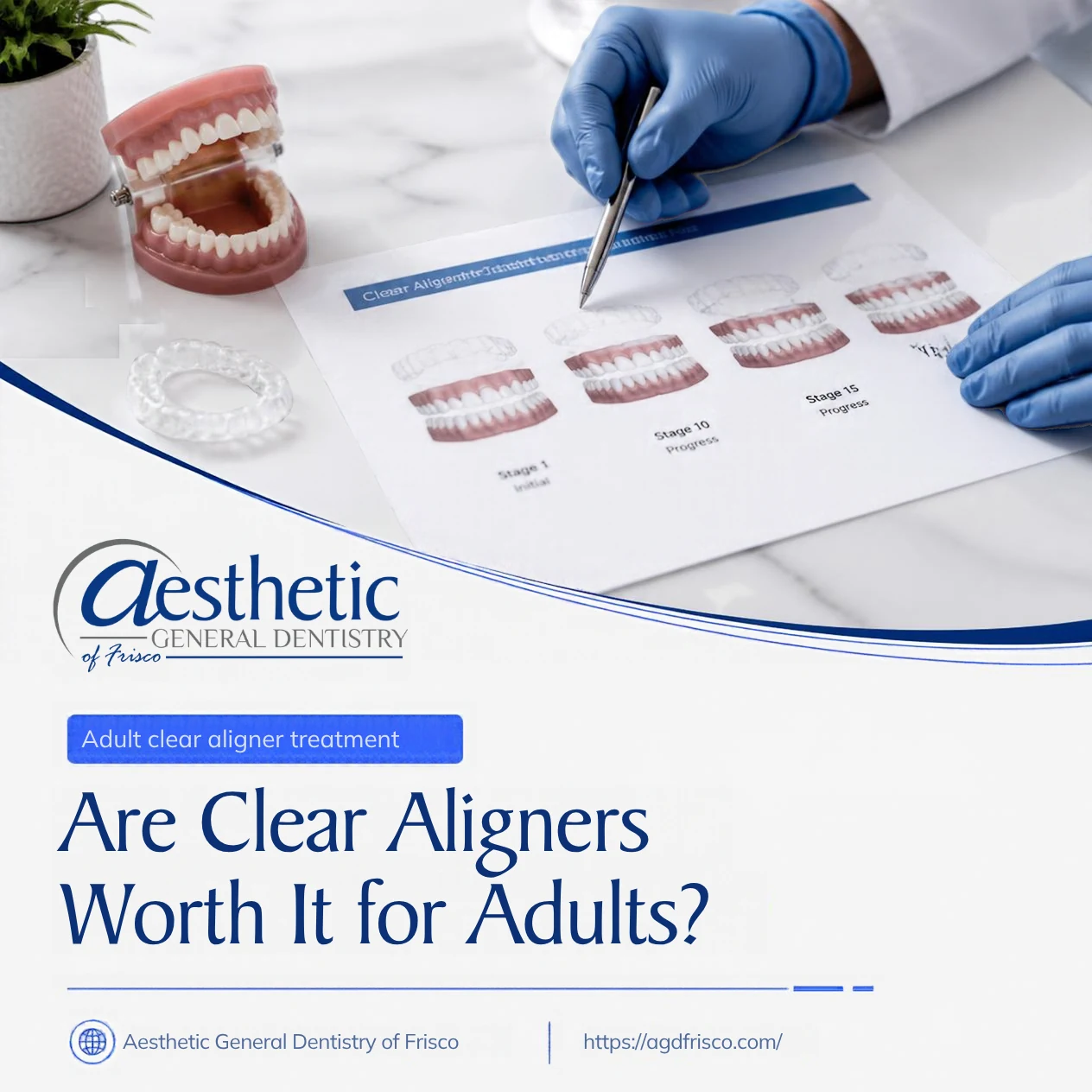
Are Clear Aligners Worth It for Adults?
For many adults, clear aligners offer a useful balance between appearance, convenience, and orthodontic treatment.
The trays are designed to gradually move teeth through a planned sequence of aligners. Unlike traditional braces, there are no permanently attached brackets and wires. Patients can remove the trays for eating, brushing, and flossing.
That flexibility is one of the biggest reasons adults consider them.
Clear aligners may be especially appealing if you:
- Work in a public-facing profession
- Prefer a less noticeable orthodontic appliance
- Want to remove the appliance while eating
- Value easier brushing and flossing
- Can commit to wearing trays consistently
- Have alignment problems that can be treated predictably with aligners
However, “worth it” is personal.
An adult who values discretion and can wear aligners as directed may consider them highly worthwhile. Someone who frequently removes or loses trays, needs complex tooth movement, or prefers a treatment that does not depend as heavily on daily compliance may be better suited to braces.
The first step is determining whether clear aligners can realistically accomplish the movement your teeth need.
What Are the Main Benefits of Clear Aligners?
Clear aligners have several advantages that can make orthodontic treatment easier to fit into adult life.
They Are Less Noticeable
Clear aligners are made from transparent plastic and fit closely over the teeth.
They are not invisible, particularly at close range, but they are usually much less noticeable than metal brackets and wires.
For adults who attend meetings, work with clients, speak publicly, or simply prefer a subtler appearance, this can be an important benefit.
You Can Remove Them to Eat
Traditional braces stay attached during meals.
Clear aligners are removed before eating, so there are generally fewer restrictions on the types of food you can enjoy.
Hard, crunchy, chewy, or sticky foods that can damage braces are not an issue while the trays are out.
You still need to clean your teeth before putting the aligners back in.
Brushing and Flossing Are More Familiar
Because the trays come out, you can brush and floss without navigating around brackets or wires.
This can make routine oral hygiene simpler.
Good hygiene still requires effort, especially because food or sugary drinks trapped beneath aligners can create an unhealthy environment around the teeth.
They May Feel Smoother Than Braces
Aligners do not have metal brackets or protruding wires.
Some patients find the smooth plastic more comfortable against the cheeks and lips.
Temporary pressure or soreness is still expected when teeth begin moving or when you change to a new set of aligners.
Fewer Food Restrictions
You usually remove aligners before eating, so the appliances are not exposed to normal chewing forces.
This means you do not have the same restrictions associated with protecting brackets and wires.
The tradeoff is that you have to remember to remove, store, clean, and replace the trays consistently.
Who Is a Good Candidate for Clear Aligners?
A good candidate is someone whose orthodontic needs can be treated effectively with removable aligners and who is prepared to wear them as instructed.
Candidacy depends on much more than age.
Adults can pursue orthodontic treatment well beyond their teens as long as their teeth, gums, and supporting bone are healthy enough for planned tooth movement.
Dental Health Comes First
Before starting orthodontic treatment, the dentist or orthodontist may evaluate:
- Cavities
- Gum health
- Bone support
- Existing crowns or bridges
- Missing teeth
- Dental implants
- Previous dental work
Active dental disease may need to be addressed before tooth movement begins.
Commitment Matters
Clear aligners only work while they are in your mouth.
Patients generally need to wear them for most of the day, removing them primarily for meals, certain drinks, brushing, and flossing.
If you know you are unlikely to keep the trays in consistently, treatment can take longer or become less predictable.
Previous Orthodontic Treatment Does Not Automatically Exclude You
Many adults seek aligners because their teeth shifted after braces earlier in life.
Depending on the amount of relapse, clear aligners may be able to correct those changes.
An examination is needed to determine whether retreatment is straightforward or requires a more involved plan.
What Types of Alignment Problems Can Clear Aligners Treat?
Clear aligner systems can treat many common orthodontic concerns, although the exact capabilities vary by system and individual case.
Possible treatment goals may include:
- Crowded teeth
- Spaces between teeth
- Mild to moderate rotations
- Certain bite problems
- Teeth that have shifted after previous orthodontic treatment
- Some overbite or underbite concerns
- Certain crossbite patterns
More Complex Cases May Need Additional Techniques
Some tooth movements are more difficult to accomplish with removable trays alone.
Treatment may require:
- Small tooth-colored attachments
- Elastics
- Additional aligner sets
- Interproximal reduction
- Other orthodontic appliances
In more complex cases, traditional braces may provide greater control.
Not Every Bite Problem Is Primarily About Straight Teeth
Someone may have relatively straight front teeth but still have an underlying bite problem.
An orthodontic assessment should look at:
- Tooth position
- Jaw relationships
- How the upper and lower teeth meet
- Available space
- Tooth roots
- Bone support
Cosmetic alignment is only one part of orthodontic planning.
How Long Does Clear Aligner Treatment Usually Take?
Treatment length varies widely.
Some relatively small alignment corrections may be completed in several months, while more involved treatment may take a year or longer.
The timeline depends on:
- Amount of crowding
- Number of teeth being moved
- Type of movement needed
- Bite correction
- Patient compliance
- Treatment response
- Whether refinements are needed
Your Original Estimate Can Change
Orthodontic treatment is planned carefully, but teeth do not always move exactly as projected.
Some patients need additional scans and extra aligners, commonly called refinements, to improve the final result.
This does not necessarily mean something went wrong.
It reflects the reality that biological tooth movement can vary.
Wearing the Aligners Matters
Consistently leaving trays out longer than recommended can slow progress.
A tray that is not worn enough may not fit properly when it is time to move to the next stage.
That can affect the rest of the sequence.
How Much Do Clear Aligners Cost for Adults?
Clear aligner costs can vary considerably from one patient to another.
The total price may depend on:
- Complexity of the case
- Length of treatment
- Number of aligners needed
- Whether refinements are included
- Provider fees
- Type of aligner system
- Geographic location
- Follow-up requirements
- Retainers after treatment
Because treatment plans differ, advertised starting prices may not reflect what a particular adult will actually pay.
Ask What Is Included
When comparing costs, find out whether the quoted amount includes:
- Initial records or scans
- All treatment visits
- Attachments
- Refinement aligners
- Replacement trays
- Retainers
- Post-treatment follow-up
A lower initial price may not represent the lower total cost if important items are billed separately.
Insurance and Financing
Some dental insurance plans include an orthodontic benefit, while others exclude adult orthodontic treatment.
Coverage limits and eligibility vary.
Practices may also offer financing or monthly payment arrangements.
Before starting treatment, ask for a written estimate so you understand both the expected total and what your insurance may contribute.
Clear Aligners vs Traditional Braces for Adults
Both aligners and braces can move teeth effectively when they are used for appropriate cases.
The better option depends on what needs to be corrected and how you want treatment to fit into your life.
Appearance
Clear aligners are typically much less noticeable.
Traditional braces are more visible, although ceramic or tooth-colored brackets can make them less prominent.
Removability
Aligners can be removed.
Braces cannot.
That makes eating and brushing easier with aligners but also places more responsibility on the patient.
Treatment Discipline
Braces work continuously because they remain attached.
Aligners require consistent wear.
For patients who struggle with routines, a fixed appliance may actually be easier.
Food Restrictions
Aligner patients remove their trays before eating.
Braces require more caution with foods that could break brackets or bend wires.
Oral Hygiene
Brushing and flossing are usually simpler with removable aligners.
Braces require cleaning around wires and brackets.
Neither option eliminates the need for excellent daily oral hygiene.
Complex Tooth Movement
Traditional braces may be preferable when extensive or highly controlled tooth movement is necessary.
Modern aligners can handle increasingly complicated cases, but they are not ideal for every orthodontic problem.
Office Visits
Both treatments require professional monitoring.
The exact frequency depends on the treatment plan.
Aligners should not be viewed as a completely hands-off orthodontic treatment.
What Are the Downsides of Clear Aligners?
The same features that make clear aligners convenient can also create challenges.
You Have to Wear Them Consistently
Removability is useful only if the trays go back in after meals.
Frequent removal or forgetting to replace them can interfere with progress.
You Need to Remove Them Before Eating
Taking trays out for every meal and most snacks can become inconvenient.
This is especially noticeable during:
- Social events
- Travel
- Long workdays
- Frequent snacking
- Restaurants
You also need a clean place to store the trays instead of wrapping them in a napkin, where they can easily be lost.
Attachments May Be Visible
Many aligner cases use small tooth-colored attachments bonded to selected teeth.
These help the trays apply specific forces.
They are generally subtle, but they can make the treatment more visible than patients initially expect.
Speech May Feel Different at First
Some people notice a temporary change in speech when they begin wearing aligners.
This often improves as they adjust, but the experience varies.
Aligners Can Be Lost or Damaged
Because they are removable, trays can be:
- Misplaced
- Thrown away accidentally
- Damaged by pets
- Warped by heat
- Cracked
Replacement policies and costs vary by provider.
They May Not Be Appropriate for Every Case
Certain orthodontic problems may be treated more predictably with braces or another appliance.
Choosing aligners simply because they are less visible can be frustrating if they are not well suited to the required tooth movement.
How Much Daily Commitment Do Clear Aligners Require?
Clear aligner treatment requires meaningful daily participation.
You are not simply given a set of trays and told to return when treatment is finished.
Wear Them for Most of the Day
The trays generally need to remain in place for the large majority of each day.
They are usually removed for:
- Meals
- Snacks
- Drinks other than plain water
- Brushing
- Flossing
Your provider will give you specific wear instructions.
Clean Your Teeth Before Replacing the Trays
Putting aligners back over food debris can trap plaque, sugars, and acids against the teeth.
Whenever practical, brush before reinserting them.
If brushing is temporarily impossible, rinsing your mouth and cleaning more thoroughly as soon as you can is better than ignoring hygiene altogether.
Keep the Aligners Clean
Aligners can collect plaque, odor, and discoloration.
Follow the cleaning instructions provided by your dentist or orthodontist.
Avoid very hot water, which can potentially distort some aligner materials.
Change Trays on Schedule
Patients usually progress through a series of aligners.
Do not switch earlier or later than instructed without discussing it with your provider.
Keep Your Appointments
Professional monitoring helps confirm that your teeth are moving appropriately.
Appointments also give you an opportunity to report:
- Poor tray fit
- Broken attachments
- Lost aligners
- Persistent discomfort
- Bite changes
- Other concerns
What Should You Consider Before Starting Treatment?
Before choosing clear aligners, look at more than photographs of straight teeth.
The treatment affects your routine for months and requires consistent participation.
Ask Whether Aligners Are Appropriate for Your Case
The first question should not be, “Can I get aligners?”
It should be, “Can aligners predictably accomplish the tooth movement I need?”
A dentist or orthodontist can explain whether your particular alignment and bite concerns are suitable.
Understand the Full Treatment Plan
Ask:
- How long is treatment expected to take?
- Will I need attachments?
- Are elastics likely?
- Are refinements included?
- How often will I need appointments?
- What happens if a tray does not fit?
- Are retainers included?
- What happens after active treatment ends?
Knowing these details makes it easier to compare aligners with braces realistically.
Think About Your Daily Routine
Consider whether you are comfortable removing trays every time you eat.
Someone who snacks frequently, travels constantly, or struggles with routines may find aligner wear more demanding than expected.
Consider Existing Dental Work
Crowns, bridges, implants, and other restorations can affect orthodontic planning.
Dental implants do not move like natural teeth, for example, so their location must be considered carefully.
Plan for Retainers
Orthodontic treatment does not end when the final aligner comes out.
Teeth naturally have a tendency to shift.
Retainers are typically needed after treatment to maintain alignment.
Before beginning, understand what type of retention will be recommended and how often you will need to wear it.
Deciding Whether Clear Aligners Are Worth It
For many adults, clear aligners offer a practical way to straighten teeth without wearing visible metal braces.
They can be discreet, removable, easier to clean around, and convenient for adults who want fewer food restrictions.
Those advantages come with responsibility.
The trays only work when they are worn consistently, and not every alignment or bite problem is ideally suited to removable treatment. Cost, treatment duration, attachments, refinements, existing dental work, and long-term retainer use should all be considered before making a decision.
Traditional braces remain an effective option and may offer advantages when more complex tooth movement or stronger treatment control is needed.
The most useful comparison is therefore not whether aligners are generally better than braces. It is which approach can safely and predictably address your specific orthodontic needs while fitting your lifestyle.
A professional orthodontic evaluation can clarify candidacy, expected treatment length, costs, and alternatives so you can decide whether clear aligners make sense for you.
FAQs
Are clear aligners effective for adults?
Yes, clear aligners can effectively treat many adult orthodontic concerns when the case is appropriate and the trays are worn consistently. More complex cases may require braces or additional orthodontic techniques.
Is there an age limit for clear aligners?
There is generally no upper age limit based on age alone. Healthy teeth, gums, bone support, and appropriate treatment goals are more important factors.
Do clear aligners hurt?
Patients often experience pressure or mild soreness, particularly after switching to a new tray. Significant or persistent pain should be discussed with the treating dentist or orthodontist.
Can adults with crowns get clear aligners?
Sometimes. Crowns do not automatically prevent aligner treatment. Existing restorations need to be evaluated as part of orthodontic planning.
Can dental implants move with clear aligners?
Dental implants are fixed in the jawbone and do not move like natural teeth. Their position therefore has to be incorporated into the orthodontic treatment plan.
Can you eat with clear aligners in?
Patients are generally instructed to remove clear aligners before eating. Follow the specific recommendations provided by your treating clinician.
Are clear aligners faster than braces?
Not necessarily. Treatment time depends on the orthodontic problem, amount and type of movement required, and patient compliance rather than simply the appliance used.
What happens if I forget to wear my aligners?
Insufficient wear can slow treatment and cause the current or next tray to fit poorly. Contact your provider if you fall significantly behind rather than changing your treatment schedule yourself.
Will I need a retainer after clear aligners?
Yes, retention is generally needed after orthodontic treatment to reduce the risk of teeth shifting. Your provider will recommend a retainer type and wear schedule.
Are clear aligners worth the extra cost?
That depends on your case, local pricing, insurance coverage, and how much you value factors such as appearance and removability. Comparing the complete treatment cost and clinical suitability of aligners and braces is more useful than comparing price alone.