

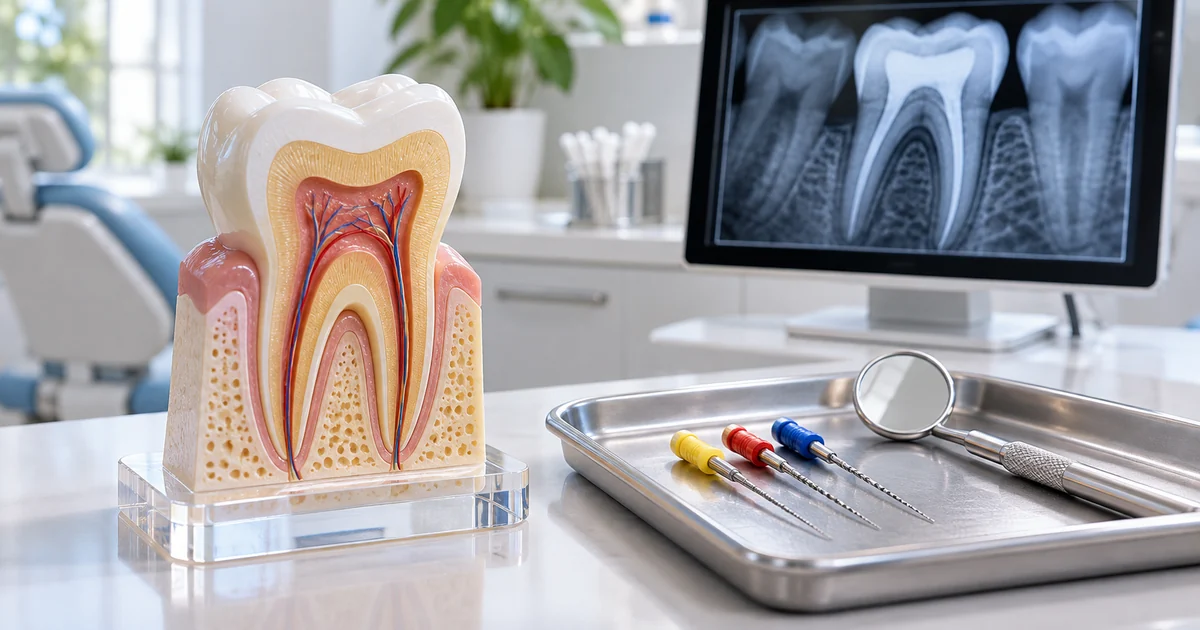
What happens during a root canal? A dentist numbs the affected tooth, removes infected or damaged tissue from inside it, cleans and disinfects the root canals, and seals the space to help prevent further infection. The procedure is designed to relieve discomfort and preserve a natural tooth that might otherwise need extraction.
At Aesthetic General Dentistry of Frisco, we understand that patients may feel concerned about root canal treatment, especially when they have never experienced the procedure. Learning what happens during treatment, how discomfort is managed, and what recovery involves can help you feel more prepared for your appointment.
What Happens During a Root Canal?
A root canal is a dental procedure used to treat inflammation or infection involving the soft tissue inside a tooth, known as the pulp.
The pulp contains nerves, blood vessels, and connective tissue that help the tooth develop.
When this tissue becomes severely inflamed, infected, or damaged, root canal treatment may be recommended to preserve the tooth.
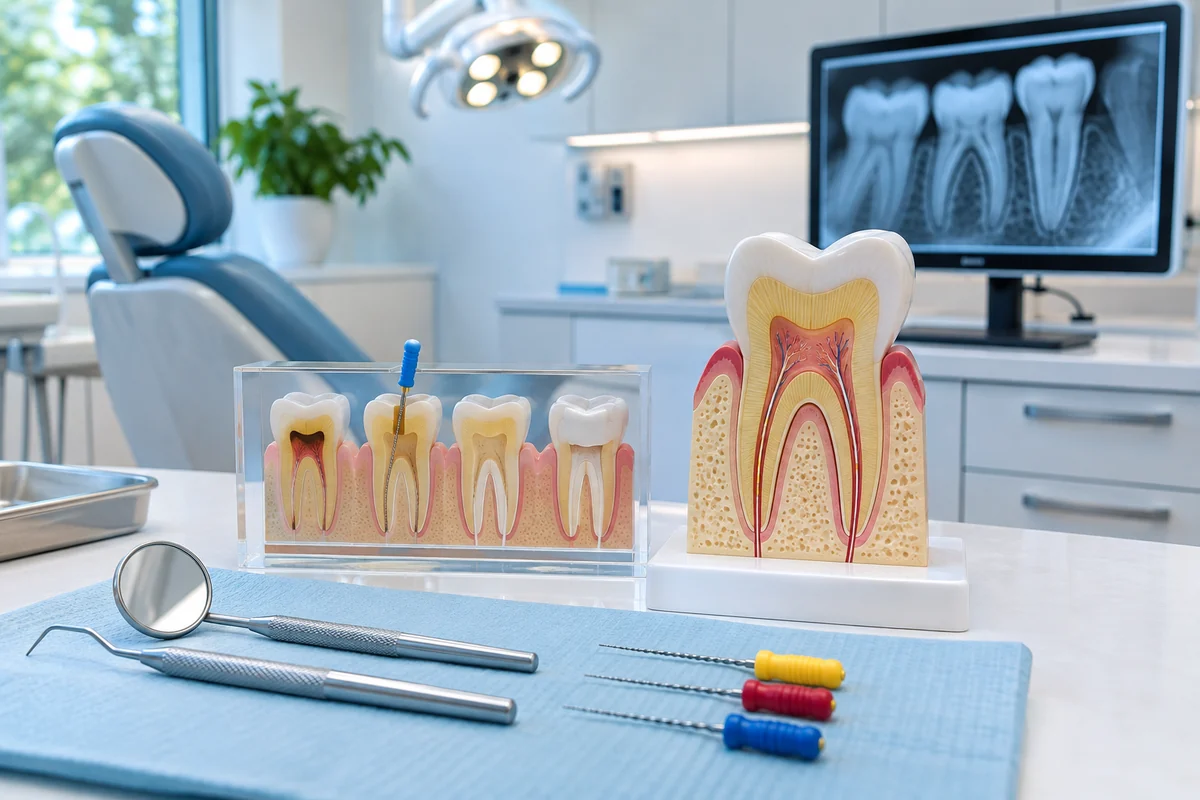
During the procedure, the dentist removes the affected pulp, cleans the internal spaces, and fills and seals the canals.
The main steps of root canal treatment include:
- Examining the tooth: The dentist evaluates symptoms and uses dental imaging when appropriate to assess the tooth and surrounding structures.
- Numbing the area: Local anesthesia is administered to reduce discomfort during treatment.
- Isolating the tooth: A dental dam helps keep the treatment area clean and dry.
- Accessing the pulp: A small opening is created to reach the inside of the tooth.
- Removing damaged tissue: Small instruments remove the inflamed or infected pulp.
- Cleaning the canals: The internal spaces are cleaned, disinfected, and shaped.
- Filling and sealing: The canals are filled with a biocompatible material and sealed.
- Restoring the tooth: A permanent filling or crown is used to protect the treated tooth.
Some root canals can be completed in one appointment, while others require additional visits.
The number of appointments depends on the tooth’s anatomy, the condition being treated, and the complexity of the procedure.
Why Might You Need Root Canal Treatment?
Root canal treatment may be recommended when the pulp inside a tooth becomes irreversibly inflamed, infected, or seriously damaged.
This can happen for several reasons.
Deep tooth decay
When a cavity extends through the protective enamel and dentin, bacteria may eventually reach the pulp.
This can cause inflammation, discomfort, and sometimes infection.
A filling may no longer be sufficient if the pulp has been irreversibly damaged.
Cracked or fractured teeth
A crack can expose internal tooth structures to bacteria or directly injure the pulp.
Even a crack that is difficult to see may cause persistent sensitivity or pain when chewing.
Not every cracked tooth requires a root canal, but pulp damage may make treatment necessary.
Repeated dental procedures
A tooth that has undergone several restorations or procedures may develop pulp inflammation.
Repeated irritation can sometimes affect the pulp’s ability to recover.
Dental injuries
A tooth can experience internal damage after an accident or impact, even when there is no obvious fracture.
The pulp may become damaged or lose its blood supply.
Signs that may indicate a problem
Common symptoms include:
- Persistent or severe tooth pain.
- Lingering sensitivity to hot or cold temperatures.
- Discomfort when chewing or biting.
- Swollen or tender gums near a tooth.
- A small pimple-like bump on the gums.
- Tooth discoloration following injury.
- Swelling associated with a dental infection.
However, some teeth requiring root canal treatment produce few noticeable symptoms.
A dental examination and appropriate testing are necessary to determine whether the pulp is affected.
How Does the Dentist Numb the Tooth?
One of the first steps in root canal treatment is administering local anesthesia.
This medication temporarily blocks pain signals from the treatment area.
Patients generally remain awake and aware during the procedure.
Preparing for the anesthetic
Before administering the injection, the dentist may apply a topical numbing gel to the gum tissue.
The gel can help reduce the sensation of the injection.
A local anesthetic is then administered near the affected tooth.
The dentist allows time for the medication to take effect before beginning treatment.
What will you feel?
Once the area is adequately numb, you may notice pressure, movement, or vibrations from dental instruments.
However, these sensations should be different from the sharp pain associated with untreated tooth inflammation.
Some teeth, particularly those with significant inflammation, may be more difficult to numb completely.
If you experience discomfort during treatment, tell your dentist immediately.
Additional anesthesia or a change in technique may be necessary.
How long does numbness last?
The effects of local anesthesia may continue for several hours after your appointment.
During this time, your lips, cheek, tongue, or surrounding tissues may feel numb.
Avoid chewing until normal sensation returns so you do not accidentally bite your cheek or tongue.
Your dentist can provide instructions based on the anesthetic used.
How Is the Infected or Damaged Pulp Removed?
Once the tooth is numb, the dentist begins accessing the pulp chamber and root canals.
These are the internal spaces containing the soft tissue that has become inflamed or infected.
Isolating the tooth
A thin protective sheet called a dental dam is typically placed around the tooth.
The dental dam helps prevent saliva from entering the treatment area and keeps the tooth isolated during cleaning.
It also helps prevent small instruments and materials from entering the mouth.
Creating an access opening
The dentist makes a small opening through the chewing surface or another appropriate area of the tooth.
This opening provides access to the pulp chamber.
The exact location depends on which tooth is being treated and its anatomy.
Removing the pulp
Very small dental instruments are used to remove the damaged tissue from the pulp chamber and root canals.
Because teeth may contain several root canals, the dentist must carefully identify and treat the relevant internal spaces.
Front teeth often have fewer canals than molars, although individual anatomy varies.
Can a tooth function without its pulp?
Yes.
The pulp plays an important role during tooth development, but a mature tooth can continue functioning after it has been removed.
The tissues surrounding the root continue supporting the tooth.
However, the treated tooth no longer has normal pulp sensation, and it still requires appropriate restoration and everyday dental care.
How Is the Inside of the Tooth Cleaned and Sealed?
Removing the affected pulp is only one part of root canal treatment.
The internal spaces must also be cleaned, disinfected, shaped, and sealed to reduce the risk of remaining bacteria causing further problems.
Cleaning the root canals
The dentist uses specialized instruments to clean the narrow canals inside the roots.
These instruments remove remaining tissue and help shape the spaces for filling.
Disinfecting solutions are also used to reduce bacteria and remove debris.
The process requires precision because root canals can be narrow, curved, or unusually shaped.
Preparing the canals for filling
After cleaning, the dentist shapes the canals to accommodate a filling material.
This helps create a more consistent space for sealing.
The dentist may use measurements and dental imaging to evaluate the working length and treatment progress.
Filling the cleaned canals
Once the canals have been appropriately prepared, they are usually filled with a rubber-like material called gutta-percha.
A dental sealer is used with the filling material to help seal the internal spaces.
The purpose is to reduce the possibility of bacteria reentering the root canals.
However, no dental procedure can guarantee that reinfection will never occur.
Closing the access opening
The dentist places a temporary or permanent restoration over the access opening.
If additional treatment or a separate restorative appointment is needed, a temporary filling may be used.
Patients should follow instructions for protecting the tooth until the final restoration is completed.
Will You Need a Crown After a Root Canal?
Many teeth require a crown after root canal treatment, but not every treated tooth needs the same restoration.
The recommendation depends on how much healthy tooth structure remains, the tooth’s location, and the forces it experiences during chewing.
Why crowns are commonly recommended
A dental crown covers and protects the visible portion of a tooth.
Teeth requiring root canal treatment may already have substantial damage from cavities, cracks, or previous restorations.
A crown can help protect the remaining tooth structure and restore normal chewing function.
Are crowns necessary for back teeth?
Molars and premolars experience considerable pressure during chewing.
Because of these forces, back teeth often benefit from crown coverage after root canal treatment.
The dentist evaluates the remaining structure before recommending the appropriate restoration.
Can a filling be enough?
Some front teeth may be restored with a permanent filling if enough healthy structure remains.
The appropriate choice depends on the individual tooth and its condition.
Why completing restoration matters
A tooth with an unfinished restoration may be more vulnerable to fracture or bacterial leakage.
For example, a temporary filling is not necessarily intended to protect the tooth indefinitely.
Patients should arrange their permanent restoration according to their dentist’s instructions.
Completing this step is an important part of helping the treated tooth remain functional.
Does a Root Canal Hurt?
Modern root canal treatment is performed using local anesthesia to reduce discomfort.
Many patients describe the experience as similar to receiving a dental filling.
However, individual experiences vary, and it would be inaccurate to promise that every procedure will be completely pain-free.
Why root canals have a painful reputation
Root canals are often associated with severe toothaches.
In many cases, the discomfort comes from the existing inflammation or infection rather than the treatment itself.
The purpose of the procedure is to address the affected pulp and help relieve the source of pain.
What might you feel during treatment?
You may notice:
- Pressure while dental instruments are being used.
- Vibrations during preparation.
- Sensations associated with keeping your mouth open.
- Temporary jaw fatigue during longer appointments.
Sharp pain should be reported to the dentist immediately.
Additional anesthetic measures may be needed, especially when the tooth is severely inflamed.
Will the tooth hurt afterward?
Mild soreness or tenderness may occur as the surrounding tissues recover.
This discomfort is usually temporary.
The amount and duration of soreness depend on the condition of the tooth before treatment, the complexity of the procedure, and individual healing factors.
Pain that becomes severe or progressively worse requires dental evaluation.
What Should You Expect During Recovery?
Recovery after root canal treatment is often manageable, but the experience differs from patient to patient.
Some individuals return to their usual activities shortly after treatment, while others prefer to rest because of lingering numbness or tenderness.
The first few hours
Your mouth may remain numb after the procedure.
Avoid chewing until sensation returns to reduce the risk of accidentally biting soft tissues.
If sedation was used in addition to local anesthesia, follow the specific activity and transportation instructions provided by your dental team.
Eating after a root canal
Soft foods are often more comfortable during the initial recovery period.
Examples include yogurt, scrambled eggs, soft vegetables, and other foods that require minimal chewing.
Avoid biting down heavily on the treated tooth until your dentist confirms that it is adequately restored.
Hard or sticky foods may damage a temporary restoration or vulnerable tooth structure.
Managing discomfort
Some patients experience mild soreness for a few days.
Over-the-counter pain relievers, such as ibuprofen or acetaminophen, may be appropriate for certain patients.
However, these medications are not suitable for everyone.
Follow your dentist’s instructions and the product labeling, and consider your existing health conditions and medications.
Maintaining oral hygiene
Continue brushing and flossing unless your dentist gives different instructions.
Be gentle around the treated area, particularly if the surrounding gums feel tender.
Keeping your mouth clean supports overall oral health and helps protect the restored tooth from future decay.
Returning for follow-up care
Some patients require an additional appointment to finish root canal treatment or place a permanent restoration.
Follow-up examinations may also be recommended to monitor healing around the tooth’s roots.
Attending these appointments helps your dentist evaluate the treatment outcome and address any concerns.
What Symptoms Are Normal After Treatment?
Some temporary symptoms are expected after root canal treatment.
The tissues surrounding the tooth may remain irritated for a short period, particularly if the tooth was painful or infected before the procedure.
Mild tenderness when biting
The treated tooth may feel tender when pressure is applied.
This can occur because tissues surrounding the root are still healing.
The discomfort should generally improve rather than intensify over time.
Temporary jaw soreness
Holding your mouth open during treatment can cause temporary muscle fatigue.
Some patients notice mild jaw discomfort afterward, especially following longer appointments.
Lingering numbness
Numbness from local anesthesia can continue for several hours.
As the medication wears off, normal sensation gradually returns.
Slight sensitivity around the treated area
The gums and tissues near the tooth may feel mildly tender following the procedure.
This usually improves during recovery.
How long does recovery take?
Many patients notice improvement within several days.
However, healing can take longer, especially when there was significant inflammation or infection before treatment.
Bone changes around an infected root may take months to heal.
A dentist may recommend follow-up imaging to evaluate this process.
The most important consideration is whether symptoms are gradually improving.
Persistent, worsening, or unexpected symptoms should not automatically be considered normal.
When Should You Contact Your Dentist After a Root Canal?
Although mild soreness is common, certain symptoms may indicate that the tooth needs further evaluation.
Knowing when to seek help is an important part of recovery.
Severe or increasing pain
Contact your dentist if pain becomes severe, increases instead of improving, or persists longer than expected.
Pain that interferes with sleep or daily activities also deserves attention.
Visible swelling
New or worsening swelling around the treated tooth, gums, cheek, or jaw should be evaluated promptly.
Swelling may indicate inflammation or an infection requiring further care.
Fever or signs of infection
A fever, particularly when accompanied by facial swelling, worsening dental pain, or feeling generally unwell, requires prompt assessment.
Other concerning symptoms include drainage, a persistent unpleasant taste, or a recurring bump on the gums.
A loose or missing temporary filling
If a temporary filling or crown becomes loose or falls out, contact your dentist.
The tooth may need protection to prevent contamination or additional damage.
A bite that feels uneven
If the treated tooth contacts the opposing teeth before the others when you close your mouth, let your dentist know.
An uneven bite may contribute to discomfort and may need adjustment.
Symptoms that return after improvement
If the original toothache or swelling returns after initially improving, arrange an evaluation.
A previously treated tooth can occasionally develop persistent or recurring problems.
When is emergency medical care necessary?
Seek emergency medical care immediately if you develop difficulty breathing or swallowing, rapidly spreading facial or neck swelling, or swelling affecting the eye.
These symptoms may indicate a serious infection that requires urgent medical treatment.
Do not wait for a routine dental appointment if you experience these warning signs.
Understand Your Root Canal Treatment With Aesthetic General Dentistry of Frisco
If you have been told that you may need a root canal, understanding the procedure can make it easier to prepare for treatment.
At Aesthetic General Dentistry of Frisco, Dr. Chirag Patel and our dental team help patients understand their oral health concerns and the treatment options available to them.
We recognize that tooth pain and unfamiliar dental procedures can raise questions. Our team takes time to explain findings, discuss recommended treatment, and address concerns about comfort and recovery.
Whether you are experiencing persistent tooth sensitivity, discomfort when biting, or questions about a previously treated tooth, a dental evaluation can help identify the next appropriate step.
We welcome patients throughout Frisco, TX, and surrounding communities who are looking for personalized general and restorative dental care.
Contact Aesthetic General Dentistry of Frisco at (214) 705-6600 to schedule an appointment and discuss your dental concerns with our team.
FAQs
How long does a root canal procedure take?
A root canal appointment often takes approximately 60 to 90 minutes, but complex cases may take longer. Some teeth require more than one visit, depending on their anatomy and the condition being treated.
Are you awake during a root canal?
Yes, most root canals are performed using local anesthesia, allowing you to remain awake while the tooth is numb. Sedation may be considered in certain circumstances based on patient needs and the provider’s available options.
Can you eat after a root canal?
Yes, but wait until the numbness wears off to avoid biting your tongue or cheek. Choose soft foods and avoid heavy chewing on the treated tooth until your dentist advises otherwise.
Is it normal for a tooth to hurt after a root canal?
Mild tenderness or soreness for a few days can be normal. However, severe pain, worsening discomfort, or significant swelling should be evaluated by your dentist.
Will you always need a crown after a root canal?
Not always. Back teeth commonly require crowns because they experience substantial chewing pressure. Some front teeth may be restored with a permanent filling if enough healthy tooth structure remains.
Can a root canal tooth become infected again?
Yes. Although root canal treatment is intended to remove infection and seal the tooth, persistent or recurring problems can occasionally develop. Additional treatment may be necessary depending on the cause.
How long can a tooth last after a root canal?
A properly treated and restored tooth can function for many years and sometimes for a lifetime. Its longevity depends on the remaining tooth structure, restoration, oral hygiene, and other individual factors.