

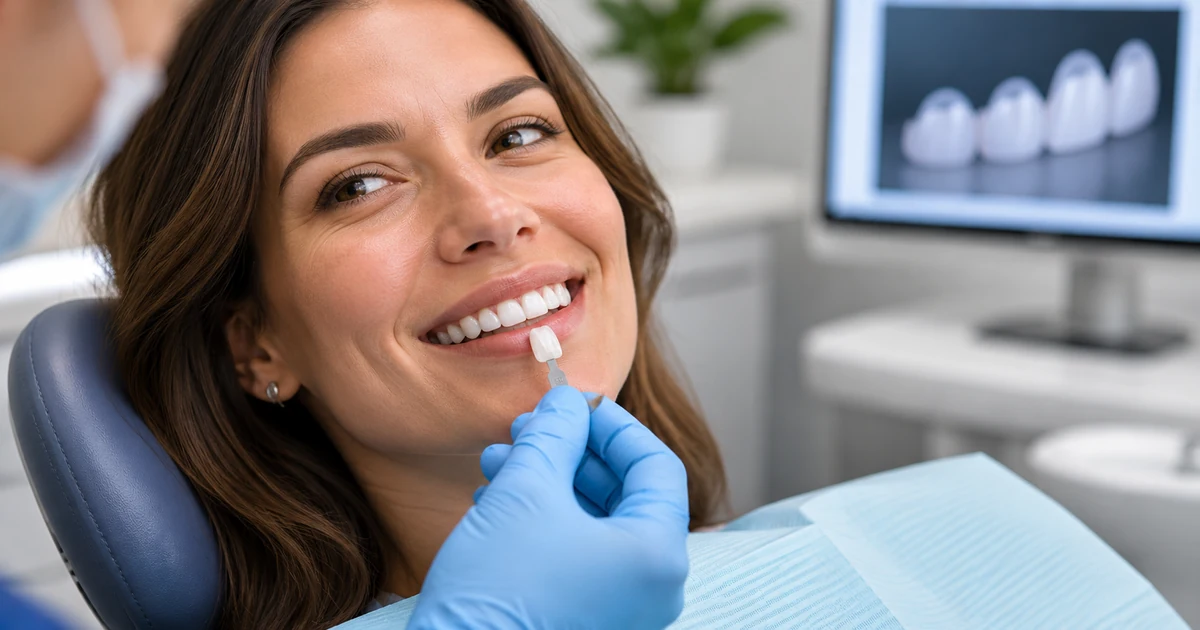
Getting dental veneers can take anywhere from a single day to several weeks, depending on the type of veneer, how it is fabricated, and whether your teeth need treatment beforehand. Traditional porcelain veneers commonly require multiple appointments, while some dental practices can create certain ceramic veneers in the office using digital CAD/CAM technology.
The actual timeline should never be based on speed alone. Your dentist first needs to evaluate your teeth and gums, understand your cosmetic goals, and determine whether veneers are appropriate for your smile.
At Aesthetic General Dentistry of Frisco, patients considering dental veneers in Frisco, TX can receive an individualized evaluation before treatment begins.
Below is a practical step-by-step explanation of what may happen from your first consultation through final placement and follow-up.
How Long Does the Dental Veneer Process Usually Take?
For traditional porcelain veneers, the complete process commonly involves two to three dental appointments over several weeks.
Aesthetic General Dentistry explains that conventional veneer treatment may involve a consultation followed by preparation and placement appointments. When veneers are produced by an outside dental laboratory, fabrication may take approximately two to four weeks.
However, that is not the only possible timeline.
The practice also uses CEREC CAD/CAM technology, which can create certain porcelain restorations, including veneers, inside the dental office. This technology can allow some restorations to be designed, fabricated, and placed in a single visit.
Your treatment schedule therefore depends on your individual case.
Factors That Can Change Your Veneer Timeline
The amount of time required may depend on:
- The number of teeth receiving veneers
- Whether you choose porcelain or composite veneers
- Whether an outside dental laboratory is involved
- Whether same-day CAD/CAM fabrication is appropriate
- The condition of your teeth and gums
- Whether decay or gum disease needs treatment first
- Whether existing restorations need attention
- How much tooth preparation is required
- Whether temporary veneers are needed
- Whether adjustments are necessary before final bonding
A patient receiving one veneer for a damaged front tooth may have a different schedule from someone planning veneers across several visible teeth.
That is why the consultation comes first.
Step 1: Your Initial Dental Veneer Consultation
The first step is determining whether veneers are suitable for your teeth.
During your consultation, your dentist will examine your oral health and ask what you want to change about your smile.
Veneers can be used to improve the appearance of certain chipped, worn, stained, irregularly shaped, or spaced teeth. They cover the front surface of a tooth rather than surrounding the entire tooth like a crown.
What Will the Dentist Evaluate?
Your consultation may include an evaluation of:
- Your teeth and gums
- Existing tooth decay
- Available enamel
- Tooth shape and position
- Your bite
- Existing crowns or fillings
- Tooth discoloration
- Gaps or irregular spacing
- Chipped or worn teeth
- Your cosmetic expectations
The dentist may also discuss whether another treatment would better address your concern.
For example, tooth whitening may be appropriate when discoloration is the main problem. Dental bonding may sometimes address smaller chips or shape irregularities. More significant alignment concerns may need orthodontic treatment rather than veneers alone.
Aesthetic General Dentistry provides several cosmetic dentistry options in Frisco, including porcelain veneers, teeth whitening, and dental bonding.
Can Dental Problems Delay Veneer Treatment?
Yes.
Existing oral health problems may need treatment before cosmetic veneers are placed.
The American Dental Association advises that decay or gum disease should be treated before veneers because placing veneers over unhealthy teeth can worsen existing dental problems.
Aesthetic General Dentistry also states that patients with unhealthy teeth, inadequate enamel, or significant orthodontic concerns may not be immediate candidates for veneers.
If additional dental care is necessary, your overall timeline may extend beyond the usual veneer schedule.
That delay has a purpose. Cosmetic treatment should begin with a healthy foundation.
Step 2: Planning the Shape, Shade, and Overall Smile
Once you are considered a suitable candidate, treatment planning becomes more detailed.
This stage focuses on what the veneers should look like and how they should fit within your existing smile.
Your dentist may discuss tooth shape, proportions, color, symmetry, and how many teeth need treatment.
Choosing the Right Veneer Shade
Very bright does not automatically mean natural.
Your dentist will consider how the proposed shade relates to neighboring teeth and the overall appearance of your smile.
If only one or two teeth are receiving veneers, matching the surrounding teeth becomes particularly important.
If several visible teeth are being treated, you may have more flexibility in selecting the overall shade.
This is also a good time to discuss any whitening you may want before the final veneer color is chosen.
A veneer itself will not respond to whitening products in the same way natural tooth structure does. Planning the desired shade before final fabrication can therefore be important.
How Many Veneers Will You Need?
There is no standard number.
Some patients may need one veneer to address one specific tooth. Others may consider several veneers to improve symmetry across the visible smile.
Aesthetic General Dentistry notes that the number required depends on the patient’s cosmetic goals and current dental condition.
Your dentist should explain why each tooth is included in the plan rather than recommending an arbitrary number.
Step 3: Preparing the Teeth for Veneers
The next stage may involve preparing the tooth surface.
For traditional porcelain veneers, a small amount of enamel is commonly removed so the veneer can fit naturally without making the tooth appear excessively bulky.
The ADA explains that porcelain veneer placement typically involves removing a small amount of enamel from the front and sides of the tooth before an impression or digital model is created.
Aesthetic General Dentistry describes removing approximately 0.5 millimeters of enamel in its traditional veneer process, depending on the treatment.
Does Veneer Preparation Hurt?
Local anesthetic may be used when appropriate to keep the patient comfortable during tooth preparation.
The amount of preparation varies according to the type of veneer and individual tooth.
You may experience some temporary sensitivity afterward, especially if enamel has been removed.
Your dentist should explain what sensation is normal and when you should contact the office.
Are Veneers Reversible?
Patients should understand this before treatment begins.
When enamel is permanently removed to accommodate a veneer, treatment is generally considered irreversible.
The ADA specifically advises patients that traditional veneer treatment involving enamel removal cannot simply be reversed to restore the tooth to its original condition.
That is one reason a thorough consultation and informed treatment plan matter.
Veneers should be considered a long-term dental decision, not a temporary cosmetic accessory.
Step 4: Digital Scans or Dental Impressions Are Taken
After preparation, the dentist needs an accurate representation of the treated teeth.
Traditionally, this may involve taking a physical impression that is sent to a dental laboratory.
Modern systems can also use digital scanning.
The scan or impression gives the dentist or dental technician the measurements needed to create veneers that fit the prepared teeth.
Traditional Veneer Fabrication Timeline
When veneers are sent to an outside dental laboratory, Aesthetic General Dentistry states that fabrication may take approximately two to four weeks.
During this period, temporary veneers may be used when appropriate.
Temporary restorations can protect prepared teeth and give you an idea of how the final smile may feel.
However, temporary veneers are not identical to the final porcelain restorations. Their appearance, texture, and durability may differ.
Follow your dentist’s instructions carefully while wearing them.
Step 5: Can CEREC Veneers Be Made the Same Day?
In selected cases, yes.
Aesthetic General Dentistry uses CEREC CAD/CAM technology to produce certain ceramic restorations inside the Frisco dental office. The system can be used for porcelain veneers as well as crowns, inlays, onlays, bridges, and some implant restorations.
The process uses digital imaging rather than relying solely on traditional physical impressions.
How Same-Day CEREC Treatment Works
After the tooth is prepared, the dentist can capture a digital impression.
The digital information creates a virtual model of the tooth. The restoration can then be designed using CEREC software.
A ceramic block is selected based partly on the desired tooth shade.
The design is transferred to an in-office milling machine, which fabricates the restoration. Aesthetic General Dentistry states that its CEREC milling process can create certain restorations in less than an hour before finishing and placement.
This can reduce the need for multiple appointments or temporary restorations in suitable cases.
Does Everyone Qualify for Same-Day Veneers?
Not necessarily.
The fact that the technology is available does not mean every veneer case should be completed in one visit.
Your dentist needs to consider the number of teeth involved, treatment complexity, material requirements, cosmetic objectives, existing dental conditions, and whether same-day fabrication can achieve the desired result.
Ask during your consultation whether conventional laboratory veneers or an in-office CEREC approach is recommended for your case.
The appropriate method matters more than simply selecting the fastest one.
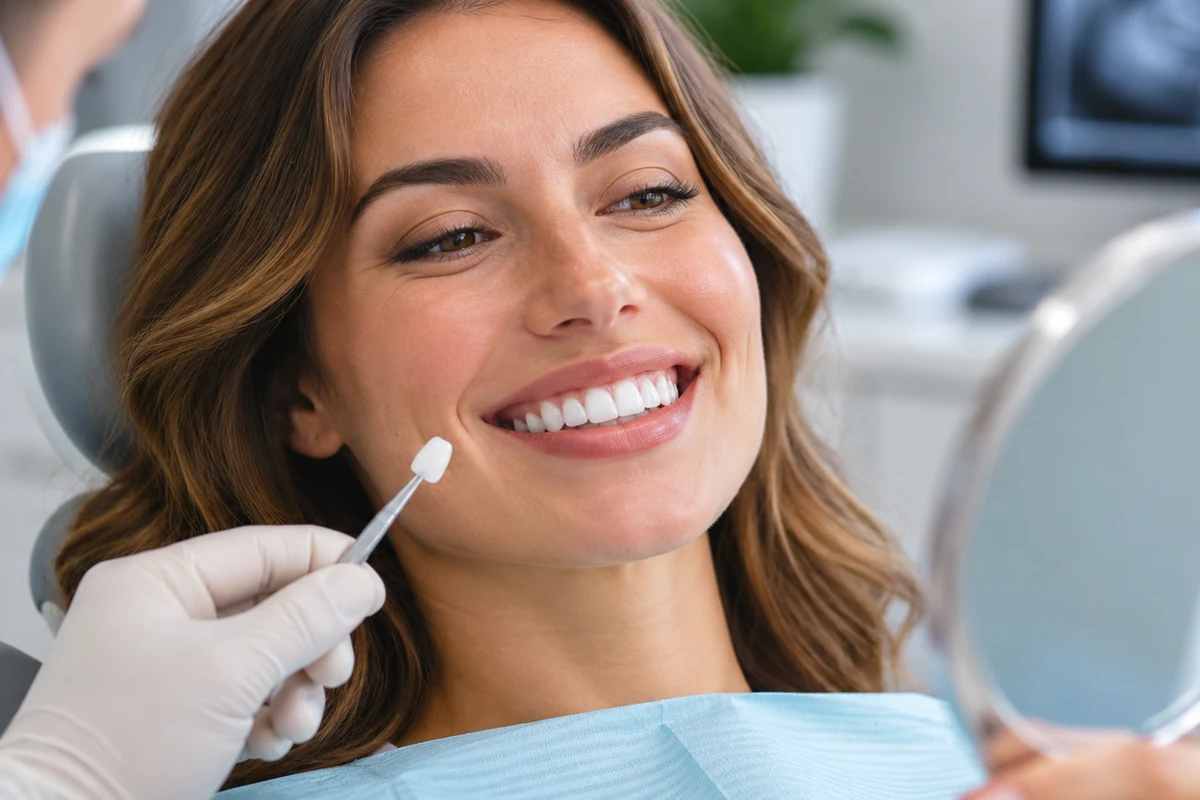
Step 6: Trying In the Veneers and Checking the Fit
Before a veneer is permanently bonded, the dentist checks its appearance and fit.
This is an important stage.
Aesthetic General Dentistry explains that traditionally fabricated veneers may first be temporarily positioned so the dentist can evaluate their fit and color. Adjustments may be made before permanent placement.
What Should Be Checked Before Bonding?
The dentist may evaluate:
- How the veneer fits against the tooth
- Its relationship with neighboring teeth
- Tooth color
- Shape and length
- Contact points
- Overall smile appearance
- Your bite
You should also have an opportunity to see the proposed appearance.
If something concerns you, speak up before permanent bonding.
Cosmetic dentistry involves personal preferences as well as clinical requirements. Your dentist needs to understand whether the proposed shape and appearance match the goals discussed during planning.
Step 7: Permanently Bonding the Veneers
Once the fit and appearance are approved, the veneers can be bonded to the teeth.
The tooth surface is cleaned and prepared so the bonding material can adhere appropriately.
Dental cement is applied, the veneer is positioned, and a curing light may be used to harden the bonding material.
The dentist then checks the finished restoration and bite.
How Long Does the Bonding Appointment Take?
The appointment length depends on how many veneers are being placed and whether adjustments are required.
Placing one veneer may require less time than bonding several restorations across the smile.
Do not judge the quality of treatment by how quickly the appointment ends.
Careful positioning, bite assessment, finishing, and final evaluation are all important parts of the process.
Step 8: What Happens After Veneers Are Placed?
Most patients can return to normal daily activities relatively quickly after routine veneer placement.
However, your mouth may need a short period to adapt.
The ADA notes that it can take a few days to become accustomed to new veneers. Patients should contact their dentist if their bite does not feel correct after placement.
Is Sensitivity Normal After Veneers?
Some temporary sensitivity may occur, particularly when enamel was prepared.
Your dentist can explain what to expect based on your procedure.
Persistent discomfort, significant pain, an unusual bite, or a veneer that feels loose should be reported to the dental office.
Do not attempt to adjust a veneer yourself.
How Should You Care for Dental Veneers?
Veneers do not eliminate the need for regular oral hygiene.
Natural tooth structure remains underneath and around the restoration. Teeth can still develop decay, and gum health remains important.
Brush your teeth regularly with fluoride toothpaste, clean between your teeth daily, and continue professional dental examinations and cleanings.
The ADA also advises avoiding habits that can damage veneers, such as chewing very hard objects or biting fingernails.
What If You Grind Your Teeth?
Tell your dentist if you clench or grind your teeth.
Repeated heavy forces may increase the risk of damaging dental restorations.
Aesthetic General Dentistry advises patients who grind or clench at night to use a night guard when recommended to help protect veneers.
Your dentist can determine whether additional protection is appropriate for your bite and treatment.
How Long Do Dental Veneers Last?
Veneers are designed as long-term restorations, but they do not last forever.
Their longevity depends on several factors, including the material used, oral hygiene, bite forces, grinding habits, diet, and whether the restorations experience trauma.
Aesthetic General Dentistry states that porcelain veneers commonly last approximately 10 to 15 years with appropriate care, while composite veneers may have a shorter service life.
Individual results vary.
A veneer can eventually chip, loosen, wear, or require replacement. The ADA likewise advises patients that veneers may need repair, rebonding, or replacement over time.
Regular dental visits allow the dentist to monitor both the veneers and the natural teeth supporting them.
Can I Get Veneers Before a Wedding or Major Event?
Possibly, but plan early.
If you have a wedding, graduation, professional event, or other important date approaching, tell your dentist during the initial consultation.
Traditional laboratory veneers may require several weeks from consultation through final placement. Additional dental treatment could extend that timeline.
Even if same-day CEREC veneers are an option for your case, leaving treatment until immediately before an important event may provide little room for planning or unexpected changes.
A better approach is to schedule the consultation early.
That gives the dentist time to evaluate your oral health, discuss alternatives, establish the desired appearance, and select the most appropriate fabrication process.
Traditional Versus Same-Day Veneers: What Timeline Should You Expect?
For a straightforward traditional porcelain veneer case, the timeline may look like this:
First visit: Consultation, oral health evaluation, and treatment planning.
Second visit: Tooth preparation and impressions or scans.
Next two to four weeks: Laboratory fabrication when conventional veneers are used.
Final placement visit: Fit assessment, color evaluation, adjustments, and permanent bonding.
With CEREC, selected cases may combine digital scanning, design, fabrication, and placement into a much shorter treatment window, potentially a single treatment day.
Neither approach is automatically better for every patient.
The best timeline is the one that supports an appropriate clinical and cosmetic result for your specific teeth.
When Should You Schedule Your Veneer Consultation?
Schedule a consultation when you are seriously considering changing the shape, color, size, spacing, or visible appearance of one or more teeth.
Do not wait until you have already decided exactly how many veneers you want.
The consultation should determine whether veneers are appropriate in the first place.
A dentist may identify a more conservative treatment that can accomplish your goal, or may recommend completing necessary dental care before cosmetic treatment.
You should leave the consultation understanding:
- Whether you are a candidate
- Which teeth would be treated
- Which veneer material is recommended
- Whether tooth preparation is required
- Whether traditional or same-day fabrication is appropriate
- How many appointments you may need
- Your expected treatment timeline
- How to care for the finished veneers
That information allows you to make a more informed decision about both the treatment and timing.
Plan Your Veneer Timeline With Aesthetic General Dentistry
The time required for veneers depends on your smile, oral health, treatment goals, and how the restorations will be created. Some patients may follow a traditional process lasting several weeks, while selected cases may benefit from the streamlined digital capabilities available at Aesthetic General Dentistry.
Dr. Chirag Patel and the team provide cosmetic dental care that includes porcelain veneers, bonding, teeth whitening, and individualized smile planning. The practice also uses CEREC CAD/CAM technology to create certain ceramic restorations within the Frisco office.
If you are considering veneers, start with an evaluation rather than trying to select a treatment timeline yourself.
Visit Aesthetic General Dentistry of Frisco to learn more about the practice, or review its dental veneers in Frisco, TX service to understand the available treatment process.
A consultation can help determine whether veneers fit your needs, whether preliminary dental care is necessary, and how long your individual treatment is likely to take.