

Persistent bad breath can be a sign of gum disease, especially when it occurs with bleeding gums, swelling, gum recession, or heavy plaque and tartar buildup. However, bad breath does not automatically mean you have gum disease because dry mouth, cavities, food debris, tongue bacteria, tobacco use, and other conditions can also cause ongoing odor.
Occasional bad breath after eating certain foods or waking up in the morning is common. The concern is breath odor that continues despite brushing, flossing, tongue cleaning, and other routine hygiene. When that happens, a dental examination can help determine whether the source is the gums, teeth, mouth, or another factor.
Is Bad Breath a Sign of Gum Disease?
Yes, bad breath can occur with gum disease, but it is only one possible symptom.
Gum disease develops when bacterial plaque accumulates around the teeth and gumline and triggers inflammation. If plaque is not regularly removed, it can harden into tartar and make the area more difficult to keep clean.
Bacteria living in plaque and below the gumline can produce compounds that contribute to unpleasant breath.
Bad breath related to gum disease may be more likely when you also notice:
- Bleeding while brushing or flossing
- Red or swollen gums
- Gum tenderness
- Gum recession
- Persistent bad taste
- Loose teeth
- Changes in tooth spacing
- Pus around the gums
- Heavy tartar buildup
However, many people with bad breath do not have periodontal disease.
A dentist needs to look at the entire mouth before identifying the cause.
How Does Gum Disease Cause Bad Breath?
Gum disease creates areas where bacteria can accumulate around and below the gumline.
These bacteria break down proteins and other substances in the mouth. During that process, they can release sulfur-containing compounds that contribute to unpleasant odors.
Inflamed Gums Can Create Deeper Spaces
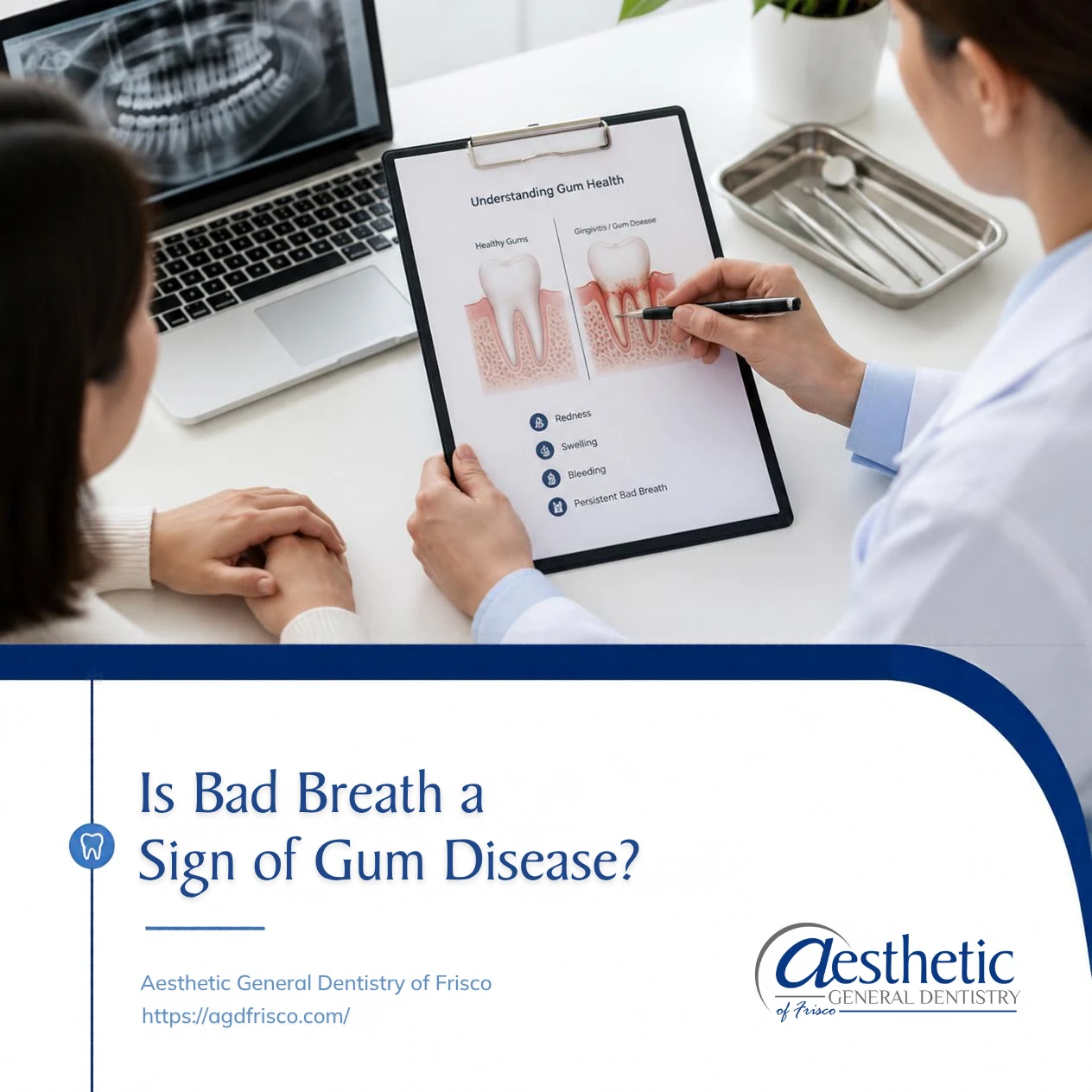
Healthy gums fit relatively closely around the teeth.
As periodontal disease progresses, the tissues may pull away and create deeper spaces known as periodontal pockets.
These areas can collect:
- Plaque
- Tartar
- Food debris
- Bacteria
- Inflamed tissue fluids
They are difficult to clean effectively with a regular toothbrush.
The deeper and more inflamed these areas become, the more opportunity bacteria have to contribute to persistent odor.
Gum Disease Can Progress Without Significant Pain
One reason gum-related bad breath may persist is that periodontal disease does not always hurt.
A patient may notice bad breath or occasional bleeding long before experiencing significant discomfort.
That makes regular dental examinations important even when nothing feels painful.
What Other Dental Problems Can Cause Bad Breath?
Gum disease is only one possible oral cause of chronic bad breath.
Several other dental problems can contribute.
Cavities
Tooth decay can create areas where bacteria and food collect.
Large cavities or areas of decay between teeth may be difficult to keep clean and can sometimes contribute to odor.
Broken or Failing Dental Work
A damaged filling, loose crown, or poorly fitting restoration can trap plaque and food.
This does not mean every older restoration causes bad breath, but areas that are difficult to clean may contribute.
Food Trapped Between Teeth
Food can become lodged between closely spaced teeth, around dental work, or in areas where gums have receded.
If it remains there, bacteria begin breaking it down and may produce an unpleasant smell.
Tooth Infections
An infected tooth can sometimes cause a bad taste or odor, particularly when drainage is present.
Possible accompanying symptoms include:
- Tooth pain
- Gum swelling
- Facial swelling
- Tenderness
- Pus or drainage
An infection needs professional evaluation rather than treatment with mouthwash alone.
Problems Around Wisdom Teeth
Partially erupted wisdom teeth can create spaces where food and bacteria collect.
Inflamed gum tissue around these teeth can sometimes contribute to unpleasant breath or taste.
Can Plaque and Tartar Lead to Persistent Odor?
Yes.
Plaque is a sticky bacterial film that continuously forms on the teeth.
If plaque remains in the mouth, bacteria can contribute to both gum inflammation and bad breath.
Plaque Can Be Removed at Home
Brushing twice daily and cleaning between the teeth help disrupt plaque before it hardens.
Tongue cleaning can also help because large numbers of odor-producing bacteria can collect on the tongue.
Tartar Requires Professional Removal
When plaque mineralizes into tartar, regular brushing and flossing cannot remove it effectively.
Tartar can form:
- Above the gumline
- Between teeth
- Below the gums
Its rough surface can also make it easier for additional plaque to collect.
Professional dental cleaning is needed to remove these deposits.
Mouthwash Does Not Remove Tartar
Mouthwash may temporarily improve breath, but it cannot remove hardened tartar.
If tartar accumulation is contributing to gum inflammation and persistent odor, professional treatment is necessary.
How Can You Tell If Bad Breath Is More Than a Temporary Problem?
Temporary bad breath is common.
It may happen after:
- Eating garlic or onions
- Drinking coffee
- Waking up
- Going several hours without eating
- Smoking
- Drinking alcohol
This type of odor may improve after brushing, cleaning the tongue, flossing, drinking water, or allowing the food-related compounds to leave the body.
Chronic bad breath is different.
Signs the Problem May Be Persistent
Consider scheduling an evaluation if bad breath:
- Happens most days
- Returns shortly after brushing
- Continues despite good oral hygiene
- Is repeatedly noticed by other people
- Occurs with a persistent bad taste
- Is accompanied by bleeding or swollen gums
- Happens along with dry mouth
- Appears with tooth pain or swelling
You May Not Always Notice Your Own Breath
People can become accustomed to their own breath odor, which makes self-assessment unreliable.
If a family member or partner repeatedly mentions a persistent odor despite good hygiene, it may be worth having the mouth evaluated.
What Other Symptoms May Point to Gum Disease?
Bad breath is more suggestive of periodontal problems when other gum symptoms are present.
Watch for:
- Bleeding when brushing
- Bleeding when flossing
- Red gums
- Puffy or swollen gums
- Gum tenderness
- Gum recession
- Teeth that appear longer
- Persistent bad taste
- Loose teeth
- New spaces between teeth
- Changes in the way teeth fit together
Gum Recession Can Be a Clue
As gums recede, more of the tooth root becomes exposed.
Recession can occur for several reasons, but when it appears with bleeding, tartar buildup, or deeper periodontal pockets, gum disease may be involved.
Loose Teeth Require Prompt Attention
Permanent teeth should not normally become increasingly mobile.
Advanced periodontal disease can damage the bone and tissues supporting the teeth.
If a tooth feels loose, schedule a dental evaluation rather than waiting for pain to develop.
How Is the Cause of Chronic Bad Breath Diagnosed?
Finding the cause starts with reviewing your dental and medical history and examining the mouth.
Your dentist may ask:
- How long the bad breath has been present
- Whether it is constant or occasional
- What oral hygiene products you use
- Whether you smoke or vape
- Whether your mouth feels dry
- Which medications you take
- Whether you have tooth pain or gum bleeding
- Whether you have noticed drainage or a bad taste
The Dental Exam
The dentist may evaluate:
- Teeth
- Fillings and crowns
- Gum inflammation
- Gum recession
- Plaque and tartar
- Tongue coating
- Areas where food becomes trapped
- Signs of cavities or infection
Periodontal Measurements
A small probe may be used to measure the spaces around the teeth.
These measurements can help assess whether periodontal pockets are present.
Bleeding and other tissue changes may also be recorded.
Dental X-Rays
X-rays may be recommended when the dentist needs to evaluate:
- Bone levels
- Cavities
- Tooth roots
- Existing restorations
- Possible infection
Not every patient with bad breath requires the same diagnostic process.
Sometimes the Source Is Not Dental
If the teeth and gums appear healthy, the dentist may suggest discussing other possible causes with a physician.
These can include certain sinus, throat, digestive, or medical issues.
Dry mouth from medications or health conditions can also play a role.
Can Professional Teeth Cleanings Help With Bad Breath?
They can when plaque, tartar, or gum inflammation is contributing to the odor.
A professional cleaning removes deposits that regular brushing cannot.
Routine Cleaning
For patients with generally healthy gums, a routine cleaning may remove:
- Plaque
- Tartar
- Surface stains
The hygienist may also review brushing, flossing, and tongue-cleaning techniques.
Periodontal Treatment
If periodontitis is present, a routine cleaning may not be enough.
Treatment may involve deeper cleaning below the gumline, often called scaling and root planing.
The purpose is to remove plaque and tartar from areas affected by periodontal disease.
Cleaning May Not Solve Every Type of Bad Breath
If the cause is dry mouth, an infected tooth, a cavity, or a non-dental condition, professional cleaning alone may not completely resolve the odor.
The treatment needs to match the underlying cause.
How Is Gum Disease Treated?
Gum disease treatment depends on how advanced the condition is.
Gingivitis
Early gum inflammation may improve with:
- Better brushing
- Consistent interdental cleaning
- Professional cleaning
- Improved plaque control
At this stage, the supporting bone has not yet experienced the same type of permanent destruction associated with periodontitis.
Periodontitis
When gum disease progresses and affects the supporting tissues, treatment may include:
- Scaling and root planing
- Periodontal maintenance
- Improved daily plaque control
- Management of contributing risk factors
More advanced cases may require referral to a periodontist or surgical treatment.
Treatment Is Not Only About Breath
Improving bad breath can be a welcome benefit, but the main purpose of periodontal treatment is protecting the gums, supporting bone, and teeth.
Simply covering the odor with mints or mouthwash does not address the underlying disease.
When Should You See a Dentist About Persistent Bad Breath?
Schedule a dental evaluation when bad breath continues despite regular brushing, flossing, tongue cleaning, and hydration.
You should also make an appointment if bad breath occurs with:
- Frequent gum bleeding
- Swelling
- Gum recession
- Persistent bad taste
- Tooth pain
- Loose teeth
- Pus or drainage
- Heavy tartar
- Increasing spaces between teeth
Seek Faster Care for Signs of Infection
Contact a dentist promptly if you have bad breath or a bad taste along with:
- Increasing dental pain
- Gum or facial swelling
- Pus
- Fever
- Significant tenderness
These symptoms may indicate an infection that requires professional treatment.
Significant facial swelling, difficulty swallowing, or difficulty breathing requires urgent medical attention.
Do Not Rely Only on Mouthwash
Mouthwash can temporarily freshen breath and may be useful as part of an oral hygiene routine, but persistent odor should not simply be masked.
Finding the cause is more important than repeatedly covering the symptom.
Persistent Bad Breath Is Worth Investigating
Bad breath is common, and an occasional episode usually does not indicate a serious dental problem.
Persistent bad breath is different.
Plaque, tartar, gum inflammation, cavities, dry mouth, tongue bacteria, failing dental work, or infection can all contribute. Periodontal disease is one possible cause, especially when odor occurs with bleeding, swelling, recession, or changes in tooth stability.
Improving brushing, cleaning between the teeth, cleaning the tongue, drinking enough water, and keeping regular dental appointments can help reduce many oral causes of bad breath.
If the odor continues despite those efforts, a dental examination can help identify whether the gums, teeth, or another factor is responsible. Addressing the underlying cause is usually more effective than relying on mints or mouthwash alone.
FAQs
Does bad breath always mean you have gum disease?
No. Gum disease is one possible cause, but bad breath can also come from dry mouth, cavities, food debris, tongue bacteria, smoking, medications, or other health conditions.
What does gum disease breath smell like?
There is no specific smell that can reliably diagnose gum disease. Persistent unpleasant odor combined with bleeding, swelling, recession, or tartar buildup should be evaluated by a dentist.
Can gingivitis cause bad breath?
Yes. Plaque-related gum inflammation can contribute to persistent odor. Improving plaque control and receiving appropriate professional care may help.
Can tartar make your breath smell bad?
Tartar itself provides a rough surface where plaque and bacteria can accumulate. This bacterial buildup and associated gum inflammation may contribute to bad breath.
Will mouthwash get rid of gum disease breath?
Mouthwash may temporarily improve odor, but it cannot remove tartar or treat advanced periodontal disease by itself.
Can dry mouth cause bad breath?
Yes. Saliva helps cleanse the mouth and control bacteria. When saliva production decreases, odor-producing bacteria and debris may accumulate more easily.
Can cavities cause bad breath?
They can. Cavities may trap bacteria and food debris, especially when decay becomes more extensive.
Can professional cleaning cure bad breath?
Professional cleaning may improve bad breath when plaque, tartar, or gum inflammation is the cause. Other causes may require different treatment.
Why does my breath still smell after brushing?
Persistent odor after brushing may come from areas the toothbrush cannot reach, including between teeth, below the gumline, or on the tongue. Dry mouth or other dental and medical factors may also contribute.
When should I worry about bad breath?
Schedule a dental evaluation if bad breath persists despite good oral hygiene or occurs with bleeding gums, swelling, recession, tooth pain, loose teeth, pus, or a persistent bad taste.