


Gum disease may be connected with several aspects of overall health, including diabetes, cardiovascular health, and pregnancy outcomes. Research has identified associations between periodontal disease and these conditions, but an association does not necessarily mean that gum disease directly causes another health problem.
What is clear is that gum disease involves ongoing infection and inflammation in the tissues supporting the teeth. At Aesthetic General Dentistry, we encourage patients to treat bleeding, swelling, recession, and other gum changes as oral health concerns worth addressing rather than assuming they are harmless or temporary.
Can Gum Disease Affect Your Overall Health?
Your mouth is part of your body, so oral and general health are not completely separate.
Periodontal disease, commonly called gum disease, is an inflammatory condition affecting the gums and other structures that support the teeth. Research has found associations between periodontal disease and several systemic health conditions, including diabetes and cardiovascular disease. Researchers continue to study how much of these relationships results from inflammation, bacteria, shared risk factors, or other biological processes.
It is important to interpret these findings carefully.
Having gum disease does not mean you will develop heart disease, diabetes, or another medical condition. Likewise, treating gum disease should not be viewed as a replacement for medical treatment.
Instead, maintaining healthy gums is one part of taking care of your overall health.
How Does Gum Disease Develop?
Gum disease typically begins when plaque accumulates around the teeth and gumline.
Plaque is a sticky bacterial film that forms continuously on teeth. Regular brushing and cleaning between the teeth help disrupt and remove it.
When plaque is not adequately removed, it can harden into tartar, also called calculus. Tartar cannot be removed with routine brushing and flossing and generally requires professional cleaning.
Gingivitis
Gingivitis is the earliest form of gum disease.
The gums may become:
- Red
- Swollen
- Tender
- More likely to bleed when brushing or flossing
Plaque-related gingivitis can often be reversed with improved daily oral hygiene and professional care before permanent damage to the supporting structures occurs.
Periodontitis
If inflammation progresses, periodontitis can develop.
Periodontitis affects the tissues and bone supporting the teeth. The gums may begin pulling away from the teeth, creating periodontal pockets where bacteria can collect.
As disease progresses, patients may develop bone loss, gum recession, tooth mobility, and eventually tooth loss.
This is one reason early gum symptoms should not simply be ignored.
What Are the Common Signs of Gum Disease?
Gum disease does not always cause significant pain, particularly during its earlier stages.
Possible signs include:
- Red or swollen gums
- Bleeding while brushing or flossing
- Gum tenderness
- Persistent bad breath
- Gum recession
- Teeth that appear longer
- Increased tooth sensitivity
- Pain when chewing
- Changes in tooth spacing
- Loose teeth
NIDCR identifies red, swollen or tender gums, easy bleeding, recession, loose or sensitive teeth, pain while chewing, and persistent bad breath among possible symptoms of periodontal disease.
Bleeding Gums Should Not Be Considered Normal
Occasional irritation can happen, but gums that repeatedly bleed deserve attention.
Bleeding may be related to gingivitis or periodontal disease, although other factors can also contribute.
A dental examination can determine whether inflammation is present and whether routine preventive care or periodontal treatment is appropriate.
How Is Gum Disease Connected to Inflammation in the Body?
Periodontal disease creates a chronic inflammatory environment in the tissues around the teeth.
Researchers have investigated whether bacteria, bacterial products, and inflammatory signals associated with periodontal disease may also contribute to inflammation elsewhere in the body.
The American Heart Association’s 2025 scientific statement, for example, discusses possible pathways involving bacteria entering the bloodstream from diseased periodontal tissues and inflammatory mediators associated with periodontal disease. At the same time, it emphasizes that these biological mechanisms and observed associations do not establish that periodontal disease directly causes cardiovascular disease.
Shared Risk Factors Also Matter
Another reason relationships between oral and systemic conditions can be difficult to interpret is that they often share risk factors.
These may include:
- Smoking or tobacco use
- Age
- Diabetes
- Obesity
- Diet
- Access to healthcare
- Genetics
For example, smoking increases the risk and severity of periodontal disease while also affecting many other areas of health.
Researchers therefore need to separate the potential effects of gum disease itself from these overlapping factors.
Is There a Link Between Gum Disease and Heart Health?
Research has consistently found an association between periodontal disease and cardiovascular disease, but that does not prove that one directly causes the other.
In an updated scientific statement published in December 2025, the American Heart Association reported growing evidence linking periodontal disease with atherosclerotic cardiovascular disease and cardiovascular events. However, the organization also states that causality has not been established and that additional high-quality studies are needed to determine whether periodontal treatment changes cardiovascular outcomes.
What Does That Mean for Patients?
It means gum health is worth taking seriously, but dental treatment should not be presented as a treatment for heart disease.
If you have cardiovascular disease, continue following the recommendations of your physician or cardiologist.
At the same time, maintaining healthy gums through daily oral hygiene and professional dental care remains important for preventing and managing periodontal disease itself.
Tell Your Dentist About Heart Conditions and Medications
Your dental team should know about relevant medical conditions and medications.
Certain medications, cardiovascular conditions, or previous procedures may influence how dental treatment is planned.
Keeping both your dentist and medical providers informed allows each team to consider the larger health picture.
How Can Diabetes and Gum Disease Affect Each Other?
The relationship between diabetes and gum disease is particularly important because the two conditions can influence one another.
People with diabetes have a higher risk of periodontal disease, especially when blood sugar is not well controlled. High blood sugar can affect immune function and make infections more difficult to fight and heal.
At the same time, periodontal inflammation may make diabetes management more difficult in some people.
The CDC notes that gum disease can be more severe and take longer to heal in people with diabetes, and having gum disease may make diabetes harder to manage.
Does Treating Gum Disease Improve Blood Sugar?
Research continues in this area.
Some studies have found improvements in measures of blood sugar control after periodontal treatment, while other evidence is less conclusive. The ADA notes that the effect of periodontal treatment on diabetes-related measures such as glycemic control remains uncertain.
Periodontal treatment should therefore be provided because gum disease itself needs treatment, not as a substitute for diabetes care.
If You Have Diabetes
Consider these steps:
- Tell your dentist you have diabetes.
- Share an updated medication list.
- Attend regular dental examinations.
- Keep gums and teeth clean at home.
- Contact your dentist about bleeding, swelling, or slow healing.
- Continue following your medical diabetes-management plan.
Well-coordinated dental and medical care can help address each condition appropriately.
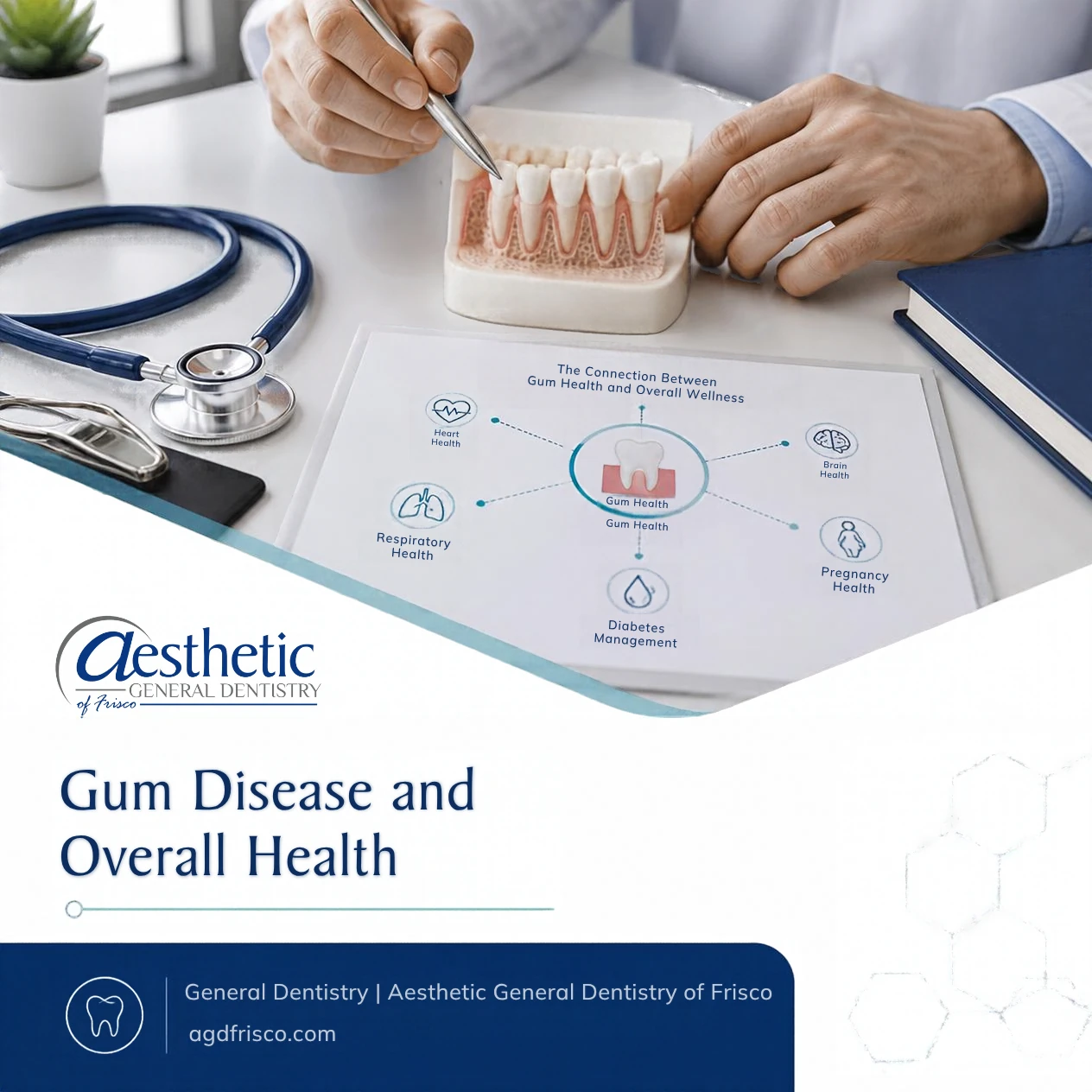
Can Gum Disease Affect Pregnancy or Other Health Conditions?
Periodontal disease has also been studied in relation to pregnancy outcomes.
Research has found associations between periodontitis during pregnancy and outcomes such as preterm birth, low birth weight, and preeclampsia. However, evidence has not established that periodontal disease directly causes these complications.
Gum Changes During Pregnancy
Hormonal changes during pregnancy can make gum tissues more responsive to plaque.
Some patients notice:
- Gum swelling
- Redness
- Tenderness
- Bleeding during brushing or flossing
Good daily oral hygiene and appropriate professional dental care remain important during pregnancy.
The ADA notes that periodontal treatment such as scaling and root planing can be performed safely during pregnancy when clinically indicated.
Other Conditions Are Still Being Studied
Researchers have also explored possible associations between periodontal disease and conditions including:
- Respiratory disease
- Rheumatoid arthritis
- Chronic kidney disease
- Certain neurological conditions
These relationships are complex, and associations should not be interpreted as proof that gum disease causes these conditions.
For patients, the practical message remains simple: gum disease deserves treatment because it can damage the tissues and bone supporting the teeth, regardless of what researchers eventually determine about broader systemic effects.
How Can You Reduce Your Risk of Gum Disease?
Preventing gum disease starts with controlling plaque consistently.
Brush Twice a Day
Brush with fluoride toothpaste twice daily.
Use a soft-bristled toothbrush and clean gently along the gumline rather than scrubbing aggressively.
Clean Between Your Teeth
A toothbrush cannot effectively clean every surface between adjacent teeth.
Depending on your needs, your dental team may recommend:
- Dental floss
- Interdental brushes
- Water flossers
- Other interdental cleaning devices
NIDCR recommends regular cleaning between teeth to disrupt plaque before it hardens into tartar.
Avoid Tobacco
Smoking and other tobacco use are major risk factors for periodontal disease and can interfere with healing after treatment.
Manage Medical Conditions
If you have diabetes or another condition that may affect gum health, follow your medical treatment plan and keep your dentist informed.
Do Not Ignore Bleeding
Repeated gum bleeding is a reason to schedule an evaluation rather than simply brushing less around the area.
Avoiding the gums because they bleed can allow more plaque to remain.
Why Are Professional Teeth Cleanings Important?
Home care and professional dental care serve different purposes.
Brushing and interdental cleaning remove plaque before it hardens.
Once plaque becomes tartar, it cannot be effectively removed with a toothbrush or dental floss. Professional instruments are needed.
Professional Visits Also Allow Gum Monitoring
During dental visits, the dental team may evaluate:
- Gum inflammation
- Bleeding
- Recession
- Periodontal pocket depths
- Plaque and tartar
- Tooth mobility
- Bone levels on dental X-rays when appropriate
These findings help determine whether routine preventive cleaning is sufficient or periodontal treatment is needed.
Not Everyone Needs the Same Type of Cleaning
Someone with healthy gums may need a routine preventive cleaning.
A patient with periodontitis may require treatment such as scaling and root planing followed by periodontal maintenance.
The appropriate schedule and treatment depend on the condition of the gums rather than one standard timetable for everyone.
When Should You See a Dentist About Gum Symptoms?
Schedule a dental evaluation if you notice persistent changes in your gums or teeth.
These may include:
- Gums that repeatedly bleed
- Persistent redness or swelling
- Gum recession
- Bad breath that does not improve
- Tender gums
- Pus around a tooth
- Loose teeth
- Changes in how teeth fit together
- Increasing spaces between teeth
- Pain while chewing
You should also mention gum symptoms if you have diabetes, are pregnant, use tobacco, or have previously been diagnosed with periodontal disease.
Early Evaluation Can Help Limit Damage
Gingivitis is the earliest stage of plaque-related gum disease and can often be reversed with appropriate oral hygiene and professional care.
Periodontitis involves damage to the supporting structures and requires professional management.
The earlier changes are identified, the sooner the dental team can determine what type of care is appropriate.
Healthy Gums Are an Important Part of Overall Care
Research continues to clarify how periodontal disease relates to conditions elsewhere in the body.
Current evidence supports associations with conditions including diabetes and cardiovascular disease, while pregnancy research has also identified links with certain adverse outcomes. Those findings are important, but they should not be overstated as proof that gum disease directly causes these conditions.
What does not remain uncertain is the effect periodontal disease can have inside the mouth. Without appropriate care, it can damage gums, supporting bone, and eventually the stability of the teeth.
At Aesthetic General Dentistry, we encourage patients to pay attention to persistent bleeding, swelling, recession, bad breath, and other changes in their gums. Daily plaque control, professional cleanings, routine examinations, and timely periodontal treatment when necessary can help protect the tissues supporting your smile.
If your gums have started bleeding regularly or you have noticed other changes, a dental evaluation can help determine whether gingivitis, periodontitis, or another issue is responsible.
FAQs
Can gum disease cause heart disease?
Research shows an association between periodontal disease and cardiovascular disease, but current evidence does not establish that gum disease directly causes heart disease. Both conditions also share several risk factors.
Can treating gum disease prevent a heart attack?
There is not enough evidence to claim that periodontal treatment prevents heart attacks or other cardiovascular events. Gum disease should still be treated to protect oral health.
Is gum disease more common in people with diabetes?
Yes. Diabetes is associated with an increased risk of periodontal disease, particularly when blood sugar is poorly controlled. Gum disease may also be more severe or slower to heal in people with diabetes.
Can gum disease make diabetes harder to manage?
There is evidence of a two-way relationship between diabetes and periodontal disease. The CDC notes that gum disease may make diabetes more difficult to manage, although diabetes treatment should continue to be directed by the patient’s medical care team.
Is bleeding when brushing always a sign of gum disease?
Not necessarily, but frequent bleeding can be a sign of gingivitis or periodontal disease and should be evaluated, especially if it persists.
Can gum disease be reversed?
Plaque-related gingivitis can often be reversed with effective oral hygiene and professional care. Periodontitis causes damage to supporting structures that generally requires ongoing professional management rather than simply being reversed at home.
Can pregnancy make gums bleed more easily?
Yes. Hormonal changes during pregnancy can increase susceptibility to gingival inflammation. Good oral hygiene and regular dental care are particularly important during this time.
Does gum disease always hurt?
No. Gum disease can progress without significant pain. Bleeding, swelling, recession, bad breath, or changes in tooth stability may be present even when the gums are not painful.
How often should you have professional teeth cleanings?
The appropriate interval depends on your gum health, plaque and tartar levels, periodontal history, medical risk factors, and other individual needs. Your dentist or hygienist can recommend a schedule based on your examination.
When should bleeding gums be checked by a dentist?
Schedule an evaluation when bleeding is persistent, frequent, or accompanied by swelling, recession, bad breath, tenderness, or loose teeth.