

Tooth pain at night can feel more noticeable because lying down may increase pressure and blood flow around an already irritated tooth, while the lack of daytime distractions makes discomfort harder to ignore. Nighttime pain can come from tooth decay, infection, grinding, cracked teeth, gum problems, or other dental conditions.
If the pain keeps returning, wakes you from sleep, or becomes severe, it is worth having the tooth evaluated. Pain that seems manageable during the day can still signal a problem that needs treatment.
Why Does My Tooth Hurt Only at Night?
A tooth does not usually develop a problem only after dark. More often, the underlying issue is present throughout the day but becomes easier to notice at night.
Common reasons include:
- Tooth decay
- Inflamed or infected dental pulp
- Teeth grinding or clenching
- A cracked tooth
- Gum inflammation
- An exposed tooth root
- Sinus pressure
- Food trapped between teeth
- A damaged filling or crown
Nighttime can amplify discomfort because you are lying still with fewer distractions.
During the day, talking, working, driving, eating, and other activities can temporarily take attention away from mild dental pain. At night, that same discomfort may suddenly feel much stronger.
The pattern of the pain can provide useful clues.
For example, throbbing pain may suggest something different from sharp pain when biting or sensitivity triggered by cold.
Why Can Tooth Pain Feel Worse When Lying Down?
Lying flat can sometimes make tooth pain feel more intense.
When you recline, blood flow and pressure around the head may change. If tissue inside or around a tooth is already inflamed, that additional pressure may make throbbing or pulsing sensations more noticeable.
This does not mean lying down caused the dental problem.
It simply makes an existing problem easier to feel.
Some people notice that elevating their head slightly makes the discomfort more manageable until they can see a dentist.
Other factors also contribute.
At bedtime, you are no longer distracted by:
- Conversation
- Work
- Physical activity
- Driving
- Television or background noise
- Eating and drinking
The brain has more opportunity to focus on the pain.
If nighttime pain happens repeatedly, however, changing your sleeping position should not replace a dental evaluation.
Can Tooth Decay Cause Nighttime Tooth Pain?
Yes.
Tooth decay can cause pain when it progresses through the enamel and reaches the softer dentin underneath.
Early cavities may cause no symptoms at all.
As decay advances, you may notice sensitivity to:
- Cold foods
- Hot drinks
- Sweets
- Biting pressure
If decay gets closer to the pulp, which contains nerves and blood vessels, the pain may become stronger or linger after the trigger is removed.
Nighttime pain can become particularly noticeable when the pulp is irritated.
You may experience:
- Dull aching
- Throbbing
- Pain that lingers after hot or cold exposure
- Pain that seems difficult to pinpoint
- Discomfort that wakes you from sleep
Decay does not improve on its own once a cavity has formed.
The earlier it is treated, the more likely the tooth can be restored conservatively.
Can an Infected Tooth Hurt More at Night?
Yes.
An infected tooth can produce persistent or throbbing pain that becomes especially noticeable at night.
Dental infections may develop when bacteria reach the pulp through:
- Deep decay
- A crack
- Trauma
- A leaking restoration
- Previous damage to the tooth
As infection and inflammation develop inside the tooth or surrounding tissues, pressure can build.
Symptoms may include:
- Severe throbbing pain
- Pain when biting
- Sensitivity to temperature
- Gum swelling
- A pimple-like bump on the gum
- Bad taste in the mouth
- Facial swelling
- Fever
Dental infections should not be ignored.
Antibiotics alone do not always solve the source of the infection because the problem may be inside the tooth itself. Depending on the condition, treatment may involve root canal therapy, drainage, extraction, or another dental procedure.
Can Teeth Grinding Cause Tooth Pain While Sleeping?
Yes.
Teeth grinding, also called bruxism, can cause tooth discomfort that appears overnight or is worse first thing in the morning.
Many people grind or clench their teeth without realizing it.
Signs may include:
- Aching teeth in the morning
- Jaw soreness
- Headaches near the temples
- Worn tooth surfaces
- Small chips or cracks
- Tooth sensitivity
- Tight facial muscles
Grinding places repeated pressure on the teeth and supporting structures.
Even when there is no cavity or infection, that pressure can irritate the tissues around the teeth and make them feel sore.
Over time, severe grinding can also contribute to cracks and tooth wear.
A dentist can examine the bite and teeth for signs of bruxism and discuss whether a night guard or another approach may be appropriate.
What Other Problems Can Cause Nighttime Tooth Pain?
Several conditions besides cavities and infections can cause pain that becomes noticeable at night.
Cracked Teeth
A crack may cause sharp pain when biting or releasing pressure.
Some cracks also create temperature sensitivity.
Gum Problems
Inflamed gums, periodontal disease, or food trapped beneath the gumline can create localized soreness.
Exposed Tooth Roots
Gum recession can expose sensitive root surfaces.
These areas may react strongly to cold, sweets, or brushing.
Sinus Pressure
The roots of the upper back teeth sit close to the sinus cavities.
Sinus inflammation can sometimes create pressure that feels like a toothache, particularly across several upper teeth.
Damaged Fillings or Crowns
A loose, cracked, or leaking restoration may allow bacteria or temperature changes to irritate the tooth underneath.
Impacted Wisdom Teeth
Partially erupted or impacted wisdom teeth can cause discomfort, swelling, and pressure near the back of the mouth.
Because many of these conditions feel similar, it can be difficult to diagnose the cause based on symptoms alone.
What Can You Do for Tooth Pain Until You See a Dentist?
Temporary measures may make you more comfortable, but they do not treat the underlying cause.
Until you can be evaluated, you can consider:
- Keeping your head slightly elevated while sleeping
- Gently brushing and flossing around the area
- Rinsing with warm salt water
- Avoiding very hot or cold foods
- Avoiding hard or sugary foods on the painful side
- Using an over-the-counter pain medication if it is safe for you
- Applying a cold compress outside the cheek if swelling is present
Follow the label directions for any medication and consider your medical history, allergies, and other medications.
Do not place aspirin directly against the tooth or gum.
That can irritate or burn the tissue.
Also avoid repeatedly delaying dental care because pain temporarily improves.
Tooth pain can come and go even when the underlying condition is becoming more serious.
When Does Nighttime Tooth Pain Need Root Canal Treatment?
Nighttime pain does not automatically mean you need a root canal.
Root canal treatment is generally considered when the pulp inside a tooth becomes irreversibly inflamed or infected.
Symptoms that may raise concern include:
- Spontaneous throbbing pain
- Pain that wakes you from sleep
- Heat or cold sensitivity that lingers
- Severe pain without an obvious trigger
- Pain when biting
- Swelling near the tooth
- A history of deep decay or trauma
However, symptoms alone cannot confirm whether a root canal is necessary.
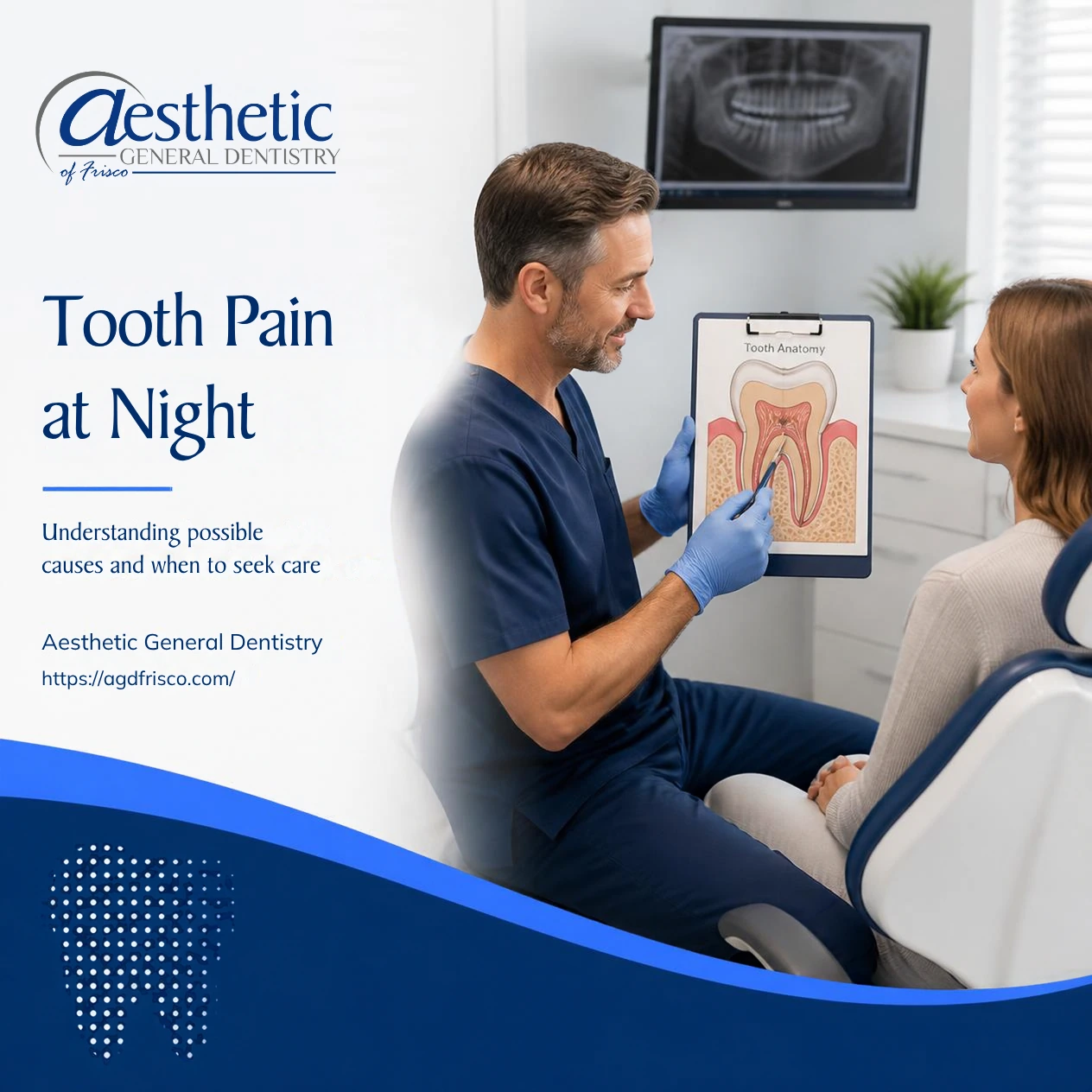
A dentist needs to examine the tooth and may perform tests involving temperature, tapping, biting pressure, or dental X-rays.
Some teeth with nighttime pain can still be treated with a filling, crown, bite adjustment, or another approach.
The diagnosis determines the treatment.
When Is Tooth Pain a Dental Emergency?
Severe tooth pain may require urgent dental care, especially when it is accompanied by signs of infection or spreading inflammation.
Contact a dentist promptly if you have:
- Severe or worsening pain
- Facial swelling
- Significant gum swelling
- Fever
- Pus or drainage
- Difficulty opening your mouth
- Pain that prevents you from sleeping
- A broken tooth with significant pain
- Trauma to the tooth
Seek urgent medical attention if swelling affects breathing, swallowing, or the area around the eye or neck.
Those symptoms can indicate a spreading infection and should not wait for a routine dental appointment.
Even without swelling, pain that continues for more than a day or two should be evaluated.
Dental pain is often easier to treat before it becomes an emergency.
How Dentists Diagnose Nighttime Tooth Pain
A dentist begins by asking about the pain.
Useful details include:
- When it started
- Whether it happens only at night
- What triggers it
- Whether cold or heat makes it worse
- How long the pain lasts
- Whether biting causes discomfort
- Whether one tooth or several teeth hurt
- Whether you grind your teeth
- Whether swelling is present
The dentist may then perform:
Visual Examination
The teeth and gums are checked for decay, cracks, swelling, damaged restorations, or gum problems.
Dental X-Rays
X-rays can help reveal deeper decay, bone changes, infection, or other problems that are not visible during a standard examination.
Temperature Testing
Cold or heat may be used to assess how the nerve inside a tooth responds.
Percussion Testing
The dentist may gently tap on individual teeth to determine whether one is especially sensitive.
Bite Testing
A bite test can help identify certain cracks or inflammation around the tooth.
Gum Evaluation
Periodontal probing may reveal gum disease or deeper problems around the root.
At Aesthetic General Dentistry, persistent nighttime tooth pain is something we recommend evaluating rather than simply masking with pain medication. Once the source is identified, treatment can focus on the actual problem, whether that involves decay, inflammation, grinding, a damaged restoration, or another dental condition.
FAQs
Why does my tooth throb when I lie down?
Lying down can make changes in pressure and blood flow around an inflamed tooth more noticeable. Throbbing pain can also occur with deep decay, pulp inflammation, or infection, so repeated nighttime symptoms should be evaluated.
Can a cavity hurt only at night?
Yes. A cavity may be present throughout the day but become more noticeable at night when you are lying down and have fewer distractions. Deeper decay is more likely to cause lingering or spontaneous pain.
Does nighttime tooth pain always mean an infection?
No. Grinding, cracks, gum problems, sinus pressure, exposed roots, and damaged restorations can also cause nighttime pain. A dental examination is needed to determine the cause.
Why does my tooth stop hurting in the morning?
Changes in position, activity, temperature exposure, and distraction can all affect how noticeable dental pain feels. Temporary improvement does not necessarily mean the underlying problem has resolved.
Can teeth grinding cause severe tooth pain at night?
Yes. Heavy clenching or grinding can put significant pressure on teeth and surrounding tissues. It can also contribute to cracks, wear, and sensitivity over time.
How long should I wait before seeing a dentist for nighttime tooth pain?
Persistent, recurring, or worsening pain should be evaluated promptly. Seek care sooner if the pain is severe, wakes you from sleep, or is accompanied by swelling, fever, drainage, or difficulty swallowing.