

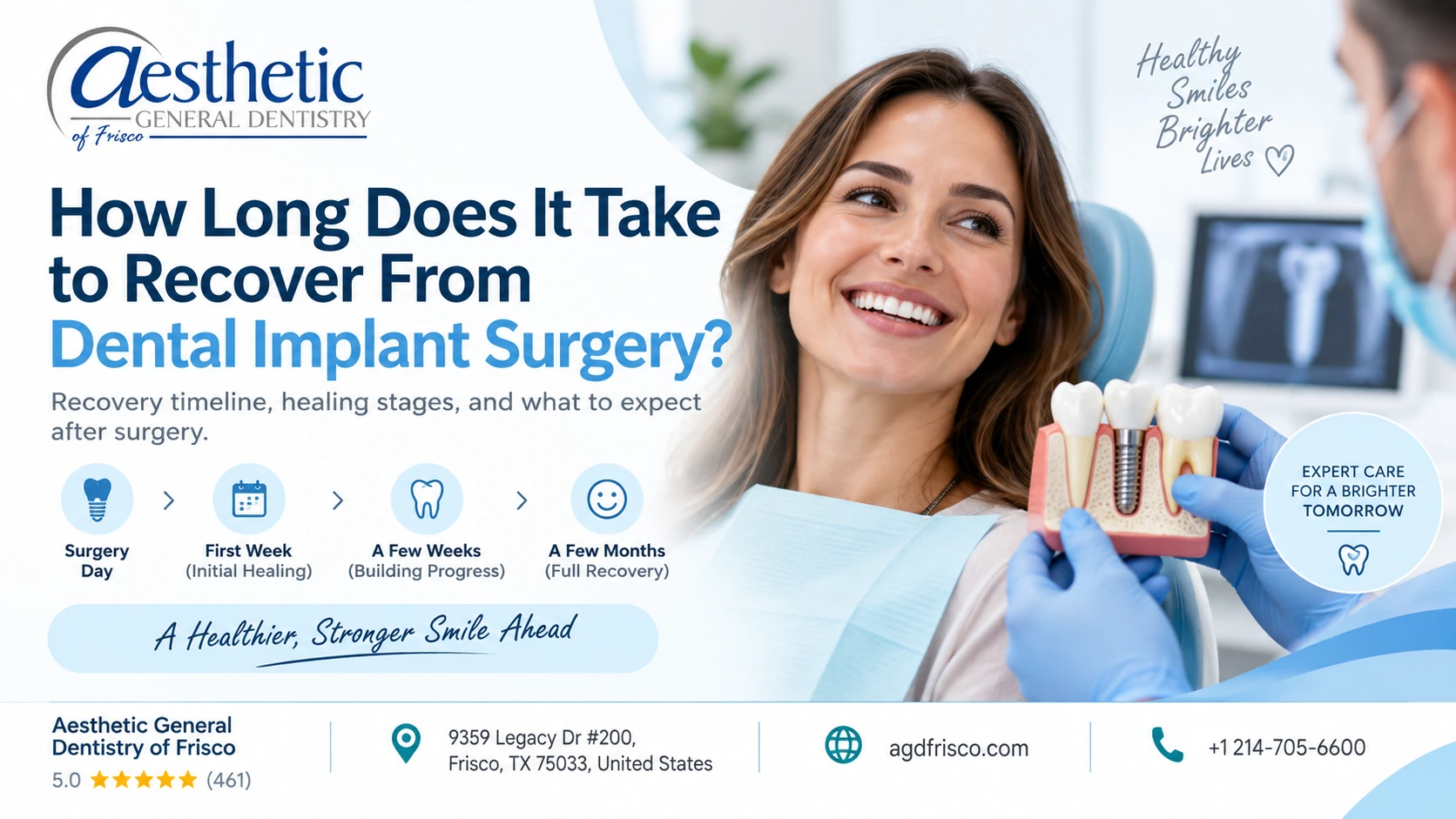
Dental implant surgery recovery time varies from person to person, but the initial recovery period is often about a week. During this time, swelling, tenderness, minor bleeding, and some difficulty chewing can be expected. Many patients begin feeling more comfortable within several days, even though healing beneath the gums continues much longer.
The implant itself typically needs several months to integrate with the jawbone before the final restoration can be completed. At Aesthetic General Dentistry, we encourage patients to follow their specific aftercare instructions closely because recovery can depend on the number of implants placed, bone health, whether grafting was performed, and individual healing factors.
How Long Does Dental Implant Surgery Recovery Take?
The most noticeable part of recovery after dental implant surgery generally happens during the first several days to one week. During this early stage, patients may experience soreness, swelling, bruising, and minor bleeding around the surgical area.
Many people feel relatively normal again within about a week. However, this does not mean the implant has completely healed. The jawbone must gradually grow around and bond with the implant through a process called osseointegration.
Osseointegration commonly takes several months. Cleveland Clinic notes that this process can take approximately three to nine months, depending partly on how quickly the individual heals.
Your overall treatment timeline may therefore include:
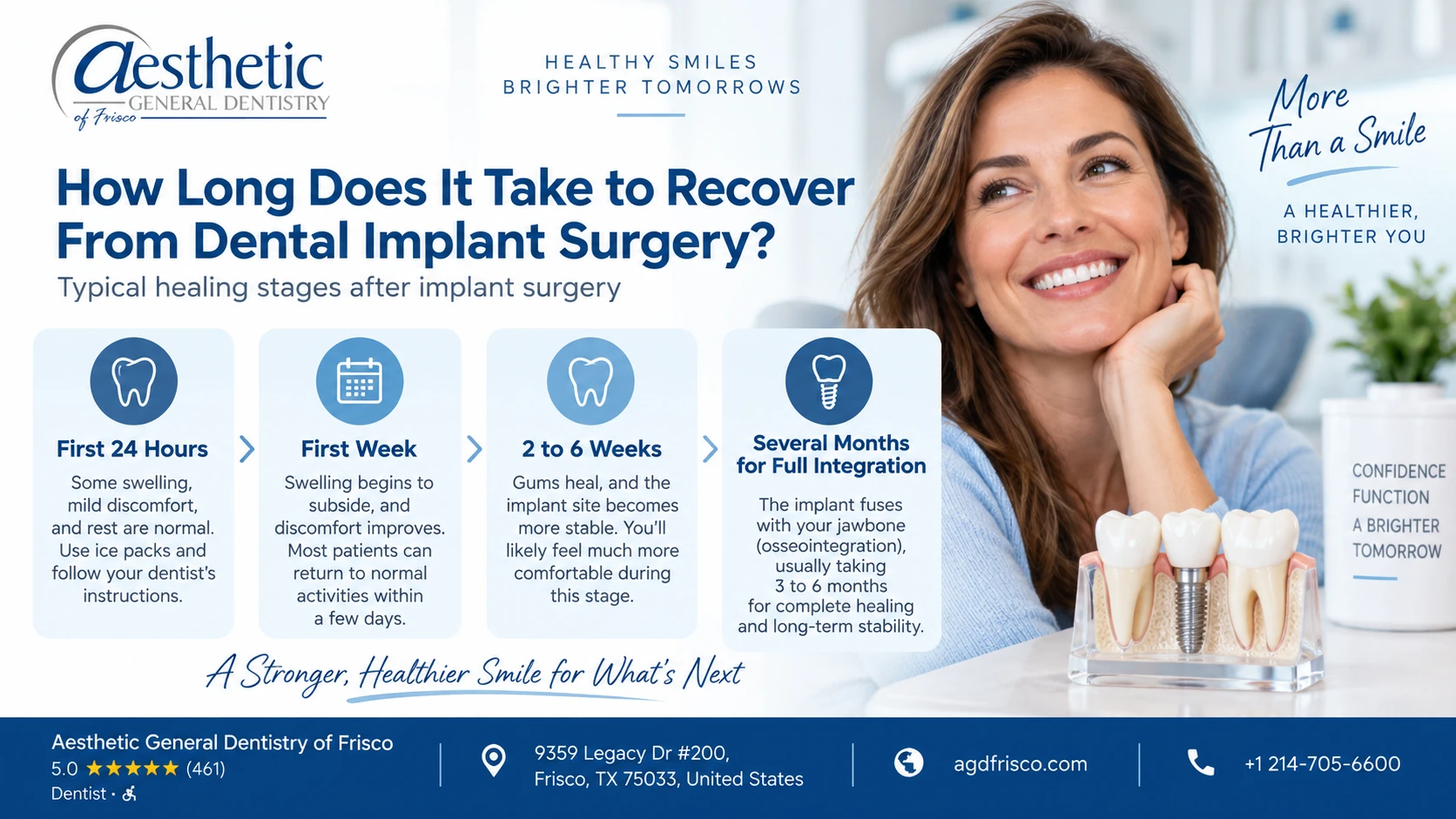
- The first 24 hours of early healing
- Several days of swelling and tenderness
- About a week for initial soft-tissue recovery
- Several months for the implant to integrate with the jawbone
- Placement of the final crown or other restoration after sufficient healing
Your dentist will monitor the implant throughout this process and determine when it is ready for the next stage of treatment.
What to Expect During the First 24 Hours
The first day after implant surgery is an important part of the healing process. Some bleeding, soreness, and swelling around the surgical site can be normal.
Your dental team will provide specific instructions based on your procedure. These may include recommendations for managing discomfort, protecting the surgical site, eating appropriate foods, and keeping your mouth clean.
During the first 24 hours, you may be advised to:
- Rest and limit physical activity
- Avoid touching or disturbing the surgical area
- Use medications exactly as directed
- Eat softer foods that require minimal chewing
- Avoid very hot foods or drinks until numbness has completely worn off
- Avoid smoking and tobacco products
- Follow any instructions regarding rinsing or oral hygiene
Oral and maxillofacial surgery guidance recommends reducing strenuous activity during the early recovery period so the surgical area has an opportunity to heal.
If you received sedation, you may also receive additional restrictions concerning driving, work, and other activities.
What Happens During the First Week of Recovery?
During the first week, the tissues around the dental implant begin repairing themselves. Tenderness and swelling should generally start settling as recovery progresses.
You may notice that the implant area feels sensitive when eating or brushing nearby. Follow the cleaning instructions provided by your dentist rather than automatically returning to your usual brushing routine directly over the surgical site.
One NHS dental implant aftercare guide notes that soreness, swelling, bleeding, or bruising can occur after implant placement and that discomfort generally resolves within about a week.
Your first week may look something like this:
Days 1–2: Soreness and swelling may be most noticeable, and eating may require some adjustments.
Days 3–4: Swelling and tenderness may begin improving, although the area can still feel sensitive.
Days 5–7: Many patients feel considerably more comfortable and begin returning to their usual routines.
These are general patterns rather than deadlines. Someone having one straightforward implant placed may recover differently from a patient who receives several implants, an extraction, or bone grafting during the same procedure.
When Does Swelling and Discomfort Usually Improve?
Some swelling and discomfort are expected after oral surgery because they are part of the body’s normal healing response.
Symptoms usually become easier to manage during the first several days and should gradually improve rather than continually worsen. Minor bruising may also develop around the cheek or jaw.
Your dentist may recommend appropriate methods for managing discomfort based on your health history and procedure. Take any prescribed or recommended medications only as directed.
Contact your dental team if pain becomes significantly worse instead of better, particularly after the initial recovery period. Increasing swelling, severe pain, or other unusual symptoms can warrant an examination.
What Can You Eat After Dental Implant Surgery?
Eating appropriately can help keep you comfortable and reduce unnecessary pressure around the implant during early healing.
Soft, easy-to-chew foods are often preferable immediately after surgery. Depending on your dentist’s instructions, options may include:
- Yogurt
- Applesauce
- Scrambled eggs
- Mashed potatoes
- Oatmeal
- Soft pasta
- Smooth soups that are not excessively hot
- Soft cooked vegetables
- Cottage cheese
- Smoothies eaten with a spoon if appropriate
Try to chew away from the surgical area when possible.
As tenderness improves, foods can gradually become more substantial. Avoid rushing back to hard, crunchy, sticky, or difficult-to-chew foods if the implant site remains sensitive.
Foods such as nuts, popcorn, hard chips, tough meat, and crunchy crusts can place unnecessary pressure on the healing area. Follow your dentist’s specific instructions because dietary restrictions may differ depending on the location and extent of surgery.
When Can You Return to Work and Normal Activities?
Many patients can return to relatively normal daily activities within a few days of straightforward implant placement.
The appropriate amount of time away from work depends on factors such as:
- How many implants were placed
- Whether additional procedures were performed
- Whether sedation was used
- How physically demanding your job is
- How much swelling or discomfort you experience
- Your dentist’s individual recommendations
Some patients may feel ready to return to desk work quickly. People with physically demanding jobs may need additional recovery time.
Strenuous exercise and heavy lifting may also need to be temporarily avoided because increased physical activity can contribute to discomfort or bleeding during early healing. Cleveland Clinic notes that routine activities may be possible within two to three days in many implant cases, while strenuous exercise should generally be avoided during the immediate postoperative period.
Always follow the activity restrictions provided after your specific procedure.
How Long Does It Take for a Dental Implant to Fully Heal?
Although your gums may feel significantly better after the first week, the implant beneath them is still healing.
A dental implant depends on a biological process known as osseointegration. During this stage, the jawbone gradually forms a strong connection with the implant surface.
This process often takes several months. Cleveland Clinic gives a general range of about three to nine months for osseointegration, although individual timelines vary.
Once enough integration has occurred, the dentist can determine whether the implant is ready to support its final restoration, such as a crown, bridge, or implant-supported prosthesis.
It is therefore useful to think of implant recovery as two different timelines:
Feeling recovered: Often measured in days or approximately a week.
Biological healing of the implant: Usually measured in months.
Feeling comfortable does not mean the implant has finished integrating with the bone. Continue following your dentist’s instructions even after the soreness has disappeared.
How Bone Grafting Can Affect the Healing Timeline
Some patients do not initially have enough healthy jawbone to provide adequate support for an implant. In these cases, bone grafting may be recommended.
A graft adds or encourages the development of bone in an area where additional support is needed. Depending on the situation, grafting may occur before implant placement or during the implant procedure.
When a bone graft must heal before an implant is placed, it can add several months to the overall treatment timeline. Cleveland Clinic notes that some patients may need to allow a graft to heal for approximately three months before implant placement, although the exact timeline depends on the type and extent of grafting.
More extensive bone grafting can require a longer recovery period.
Having bone grafting does not automatically mean something has gone wrong. It can simply be one part of preparing the jaw to provide the support needed for implant treatment.
Your dentist will explain whether grafting is necessary and how it changes your expected treatment schedule.
What Can Slow Down Dental Implant Recovery?
Several factors may affect how quickly the gums and bone heal after implant surgery.
These can include:
Smoking or Tobacco Use
Smoking can interfere with normal healing and is associated with poorer outcomes following dental implant treatment. Patients who smoke should discuss this with their dentist before and after surgery. Dental implant aftercare guidance commonly recommends stopping smoking as part of supporting healing.
Poor Oral Hygiene
Plaque and bacteria around a healing implant can interfere with gum health. Follow the cleaning instructions provided by your dental team carefully.
Health Conditions
Certain medical conditions may influence healing. Your dentist should know about your medical history, medications, and any changes in your health before treatment.
Multiple or More Complex Procedures
Recovery may take longer when several implants are placed or when treatment also includes tooth extraction or bone grafting.
Putting Too Much Pressure on the Area
Chewing hard foods directly over the implant or returning to strenuous activities too quickly can irritate the surgical area.
Not Following Aftercare Instructions
Instructions can vary considerably between patients. Recommendations regarding brushing, rinsing, medications, diet, dentures, and physical activity should therefore come from the dentist who performed or coordinated your treatment.
When Should You Contact Your Dentist During Recovery?
Some soreness and swelling are normal after implant surgery, but symptoms should generally move toward improvement as healing progresses.
Contact your dentist if you experience symptoms that concern you, especially:
- Pain that becomes severe or continues to worsen
- Swelling that increases rather than improves
- Persistent or heavy bleeding
- Pus or drainage around the implant area
- Fever
- An unpleasant taste or odor associated with the surgical site
- A feeling that the implant or another component is loose
- Persistent numbness or unusual sensation
- Difficulty swallowing or other significant symptoms
- Any reaction to medication
After dental bone grafting, warning signs such as increasing swelling, pus, severe pain, or fever are also reasons to contact the healthcare provider.
Do not wait for a scheduled follow-up appointment if something feels significantly different from the recovery expectations your dentist gave you.
At Aesthetic General Dentistry, we encourage patients to contact our office when they have questions about their healing or are unsure whether a postoperative symptom is expected. Individual evaluation is more reliable than trying to determine the cause of a symptom on your own.
FAQs
How Many Days Does It Hurt After Getting a Dental Implant?
Some discomfort is expected during the first several days after implant surgery. It should generally become more manageable as the first week progresses. The amount and duration of discomfort vary based on the extent of surgery and individual healing. Contact your dentist if pain is severe, worsening, or does not follow the recovery pattern they discussed with you.
How Long Should I Eat Soft Foods After Dental Implant Surgery?
Your dentist may recommend softer foods during the early healing period, particularly while the surgical area is tender. How quickly you can return to a regular diet depends on the procedure and how the area is healing. Gradually introduce more substantial foods and avoid placing unnecessary chewing pressure directly on the implant site until your dentist says it is appropriate.
Can I Go Back to Work the Day After Getting an Implant?
Some people can return to non-strenuous work relatively quickly after straightforward implant surgery. Others prefer to take a day or several days off, particularly after multiple implants, bone grafting, or sedation. Your type of work also matters because physically demanding jobs may require a longer break.
How Long Does Swelling Last After a Dental Implant?
Swelling is a common part of early healing and usually begins improving during the first several days. Some patients may experience swelling or bruising for longer. Contact your dentist if swelling continues increasing, becomes severe, or occurs with other concerning symptoms.
Why Does a Dental Implant Take Months to Heal?
The gums can recover relatively quickly, but the implant needs time to bond with the surrounding jawbone. This process, called osseointegration, creates the stable foundation needed for the implant to support a crown or another restoration. It generally takes several months.
Does Bone Grafting Make Dental Implant Recovery Longer?
It can. If additional bone is needed before implant placement, the graft may need several months to heal before the implant procedure can move forward. Smaller grafts may sometimes be performed at the same time as implant placement. The exact timeline depends on the amount of bone needed, the grafting technique, and how your body heals.
When Can I Exercise After Dental Implant Surgery?
Strenuous exercise is usually limited during the early postoperative period because it may contribute to bleeding or discomfort. The right time to resume exercise depends on the extent of your procedure and how your recovery is progressing. Follow the activity restrictions provided by your dentist rather than relying on a universal timeline.
How Do I Know If My Dental Implant Is Healing Properly?
Discomfort, swelling, and tenderness should generally improve as the first several days pass. Your dentist will also monitor the implant at follow-up visits to evaluate the gums and the progress of healing. If you notice worsening pain, increasing swelling, drainage, persistent bleeding, fever, or anything else that concerns you, contact your dental team.
Dental implant recovery involves more than waiting for soreness to disappear. Protecting the surgical area, choosing appropriate foods, following activity restrictions, maintaining good oral hygiene, and attending follow-up visits all contribute to the healing process. At Aesthetic General Dentistry, we can provide aftercare instructions based on your individual implant procedure and monitor your progress as the implant heals.