

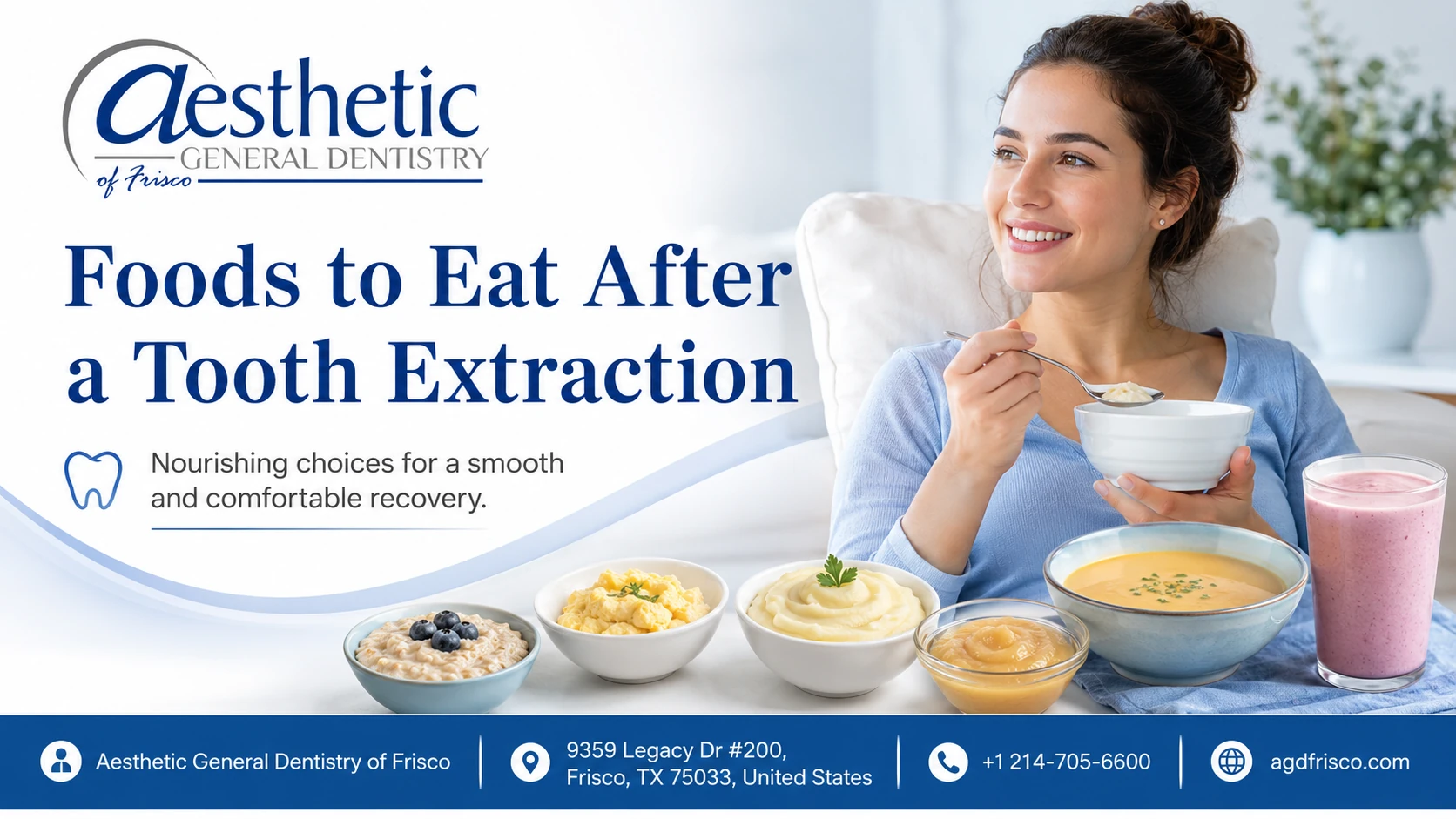
The best foods to eat after a tooth extraction are generally soft, easy to swallow, and unlikely to disturb the healing socket. During the first day, foods such as yogurt, applesauce, pudding, smooth soups, and mashed foods can provide nutrition without requiring much chewing.
As healing progresses, most patients can gradually introduce more substantial foods based on comfort and their dentist’s instructions. The exact timeline varies depending on the tooth removed, the complexity of the extraction, whether multiple teeth were removed, and how quickly the area is healing. Protecting the blood clot that forms in the socket is particularly important during the early recovery period because disturbing it can contribute to dry socket.
What Can You Eat After a Tooth Extraction?
After a tooth extraction, choose foods that require minimal chewing and are unlikely to scrape, irritate, or become trapped in the extraction site.
Good early choices generally include foods that are:
- Soft
- Smooth
- Moist
- Easy to swallow
- Cool or lukewarm rather than very hot
- Nutritionally balanced when possible
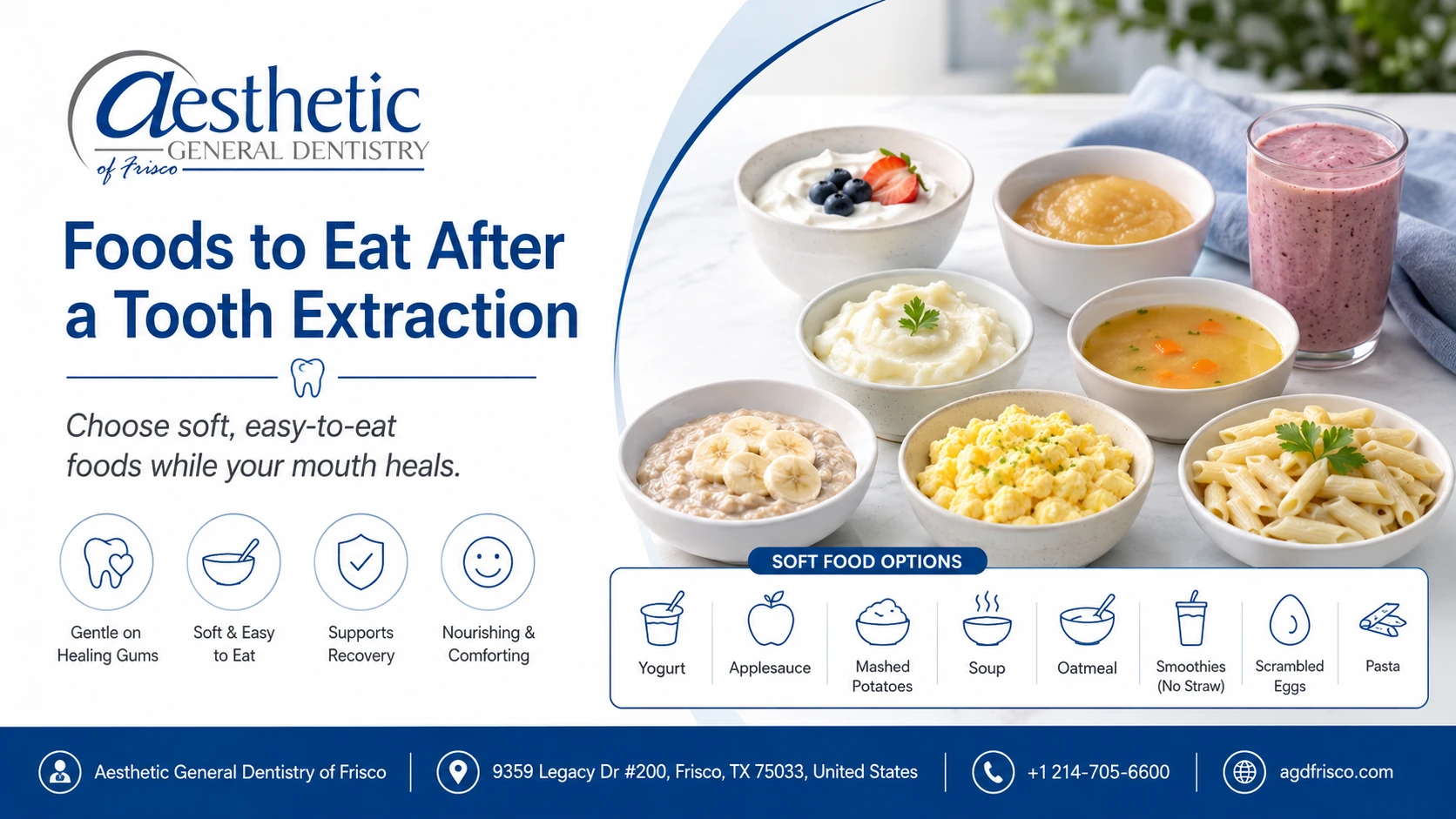
Examples include yogurt, applesauce, mashed potatoes, pudding, scrambled eggs, soft pasta, smoothies eaten with a spoon, and blended or smooth soups.
Cleveland Clinic recommends focusing on soft foods following tooth extraction and avoiding foods that are hard, crunchy, or chewy while the area is healing.
Your dentist’s instructions should always take priority.
A straightforward extraction of one tooth may involve a different eating timeline from surgical removal of several teeth. If stitches were placed or the extraction was complex, your dentist or oral surgeon may recommend staying with softer foods longer.
Best Foods to Eat During the First 24 Hours
The first 24 hours are especially important because a blood clot is forming over the extraction socket.
That clot protects the underlying bone and nerves and supports normal healing. Activities that disturb it can increase the risk of dry socket.
During this first day, choose foods that require little or no chewing.
Good options may include:
Yogurt
Smooth yogurt is easy to eat and requires minimal chewing.
Avoid varieties containing granola, seeds, nuts, or other crunchy additions that could irritate or become trapped near the extraction site.
Applesauce
Applesauce has a soft texture and can be eaten without much jaw movement.
Smooth varieties may be easier than chunky versions during the first day.
Pudding
Pudding is another easy-to-swallow option that generally requires no chewing.
Mashed Potatoes
Soft, smooth mashed potatoes can provide a more filling option.
Allow them to cool before eating rather than serving them very hot.
Smooth Soups
Blended soups can provide both fluids and nutrients.
Choose lukewarm rather than steaming-hot soup, and avoid soups with hard vegetables, seeds, crunchy toppings, or large pieces that require chewing.
Smoothies
Smoothies can be useful when appetite is limited.
However, use a spoon rather than a straw. Suction from a straw can disturb the protective blood clot in the extraction socket.
Mashed Bananas
A ripe banana can be mashed into a smooth consistency that requires very little chewing.
During the first 24 hours, concentrate more on comfort and protecting the extraction site than on returning to your normal diet as quickly as possible.
Soft Foods to Eat During Tooth Extraction Recovery
After the first day, you may be able to expand your food choices as soreness and swelling begin to improve.
Soft-food options can include:
- Scrambled eggs
- Cottage cheese
- Yogurt
- Applesauce
- Mashed potatoes
- Mashed sweet potatoes
- Soft pasta
- Macaroni and cheese
- Pureed vegetables
- Smooth oatmeal once comfortably tolerated
- Soft cooked vegetables
- Soft fish
- Mashed avocado
- Hummus
- Soft bananas
- Smooth soups
- Pudding
- Soft cheeses
Cleveland Clinic recommends foods such as eggs, yogurt, pasta, mashed potatoes, applesauce, and other soft choices during oral surgery recovery.
You can also modify ordinary foods to make them easier to eat.
For example:
- Cook vegetables until very soft.
- Cut food into small pieces.
- Mash foods with a fork.
- Blend soups.
- Choose tender proteins rather than chewy meats.
Try chewing away from the extraction site whenever practical, especially during the early stages of healing.
When Can You Start Eating Solid Foods Again?
There is no single day that applies to every patient.
For many uncomplicated extractions, more substantial foods can gradually be added over several days as comfort improves. Wisdom tooth surgery may require a soft-food diet for approximately three to five days before gradually adding more solid foods, according to Cleveland Clinic.
The key word is gradually.
You may be ready to add firmer foods when:
- Bleeding has stopped
- Swelling is improving
- Chewing is comfortable
- The extraction area is less tender
- You can open your mouth comfortably
- Your dentist has not given you additional restrictions
Rather than jumping from yogurt directly to steak or tortilla chips, progress through texture levels.
For example:
Early recovery: yogurt, applesauce, mashed potatoes
Next stage: scrambled eggs, pasta, soft vegetables
Later: tender meats and other normal foods as comfort permits
More complicated extractions may require additional time.
If chewing causes pain or food repeatedly enters the extraction site, return to softer foods and contact your dental office if you are concerned.
What Foods Should You Avoid After a Tooth Extraction?
Some foods can irritate the surgical area, become trapped in the socket, or require excessive chewing.
During early healing, avoid foods such as:
Hard and Crunchy Foods
Examples include:
- Chips
- Nuts
- Popcorn
- Crackers
- Hard pretzels
- Raw vegetables
- Hard candy
These foods can scrape or disturb healing tissue.
Very Chewy Foods
Tough meats, chewy candy, and similar foods may place unnecessary pressure on the healing area.
Small Seeds and Particles
Small pieces of food can become lodged in extraction sites.
Be cautious with foods containing:
- Seeds
- Nuts
- Popcorn kernels
- Crunchy crumbs
Cleveland Clinic specifically recommends avoiding small foods such as seeds that can become trapped in the extraction socket.
Spicy Foods
Hot sauce, spicy salsa, heavily seasoned foods, and similar items can sting or irritate sensitive tissue during recovery.
Acidic Foods and Drinks
Orange juice, lemonade, vinegar-heavy foods, and some tomato products may irritate a fresh extraction site.
Very Hot Foods and Drinks
Avoid steaming-hot soup, coffee, tea, and other foods that could irritate the area or interfere with the early blood clot. Lukewarm or cool options are generally more comfortable during early recovery.
Alcohol
Alcohol can interfere with healing and may interact with medications commonly prescribed after dental procedures. Follow your dentist’s instructions about when it is safe to drink alcohol again.
Why Should You Avoid Straws After an Extraction?
Drinking through a straw creates suction inside the mouth.
That suction may dislodge the blood clot protecting the extraction socket. If the clot is lost too early, the underlying bone and nerves may become exposed, resulting in a painful condition called dry socket.
This is why patients are commonly advised to drink directly from a cup during early recovery.
The same principle applies to other behaviors that can disturb the clot.
During the early healing period, your dentist may also advise avoiding:
- Vigorous rinsing
- Forceful spitting
- Smoking
- Vaping
- Poking the socket with your tongue or fingers
Cleveland Clinic specifically advises avoiding straws, aggressive rinsing, smoking, and vaping following extraction because these behaviors can interfere with normal healing.
If you want a smoothie or milkshake, eat it with a spoon unless your dentist tells you otherwise.
How Temperature and Texture Affect Healing
Food temperature and texture both matter during extraction recovery.
Very Hot Foods
A fresh extraction site can be sensitive.
Very hot foods and drinks may irritate the area and can interfere with the early clotting process. Allow soup, coffee, tea, mashed potatoes, and similar foods to cool before eating them.
Cool Foods
Cool foods such as yogurt or smooth chilled foods may feel soothing during early recovery.
Avoid anything so cold that it causes uncomfortable tooth sensitivity.
Rough Foods
Sharp chips, crackers, crusty bread, and raw vegetables may scrape healing tissue.
Sticky Foods
Sticky foods can cling to the teeth and extraction area, making the mouth harder to keep clean.
Small Particles
Rice, seeds, popcorn fragments, nuts, and similar particles may enter the socket.
Food texture should become gradually firmer as healing progresses.
If a food hurts, requires forceful chewing, or repeatedly irritates the area, it is probably too early for that food.
What to Eat If You Have Multiple Teeth Extracted
Eating may require more planning when several teeth are removed at the same appointment.
With one extraction, you may be able to chew comfortably on the opposite side. With multiple extractions, there may be fewer comfortable chewing areas.
Early options may include:
- Smooth yogurt
- Applesauce
- Pudding
- Mashed potatoes
- Smooth soups
- Pureed vegetables
- Smoothies eaten with a spoon
- Mashed avocado
- Mashed banana
- Scrambled eggs when comfortably tolerated
- Soft cottage cheese
- Other blended or mashed meals
Focus on foods that provide useful nutrition without requiring significant chewing.
If you have had multiple or surgical extractions, your dentist or oral surgeon may give you a longer soft-food timeline than someone who had one uncomplicated tooth removed.
Do not rush simply because the mouth begins feeling slightly better.
Follow your postoperative instructions regarding foods, rinsing, brushing, physical activity, and cleaning around the extraction sites.
How to Support Healing Through Your Diet
No specific food can make an extraction socket heal instantly.
However, eating enough nutritious food can support the body during recovery.
Try to include a balance of:
Protein
Protein supports normal tissue repair.
Soft sources may include:
- Eggs
- Yogurt
- Cottage cheese
- Soft fish
- Pureed beans
- Smooth hummus
Fruits and Vegetables
Soft or blended fruits and vegetables can provide vitamins and other nutrients without requiring hard chewing.
Examples include:
- Mashed bananas
- Applesauce
- Pureed vegetables
- Soft cooked vegetables
- Smooth fruit blends
Avoid seeds, hard skins, and acidic ingredients when they irritate the extraction site.
Fluids
Staying adequately hydrated is important.
Drink water directly from a cup instead of using a straw during the period your dentist recommends.
Adequate Calories
Some patients eat very little because they are uncomfortable after the procedure.
While appetite may be reduced temporarily, try to consume enough food to support normal recovery, particularly if you are taking medication that is meant to be taken with food.
Follow Medication Instructions
If your dentist prescribes medication or recommends over-the-counter pain relief, follow the directions provided.
Some medications may have specific food or alcohol precautions.
Diet is only one part of extraction recovery. Rest, oral hygiene, medication use, and protecting the surgical site are also important.
When to Contact Your Dentist During Recovery
Some soreness, swelling, and minor bleeding are expected after many tooth extractions.
Symptoms should generally begin improving as recovery progresses.
Contact your dentist if you experience:
- Heavy or persistent bleeding
- Pain that becomes severe
- Pain that improves and then suddenly worsens
- Significant swelling that continues to increase
- Fever
- Pus or drainage
- A persistent foul taste or odor
- Difficulty eating or drinking because of worsening pain
- Concerns that the extraction site is not healing normally
Worsening pain several days after an extraction can sometimes indicate dry socket or another complication. The American Dental Association describes dry socket as occurring when the blood clot over the socket is displaced, leaving underlying bone and nerves exposed.
Cleveland Clinic also advises contacting a dental provider for worsening pain, new or worsening swelling, fever, discharge, or a foul taste or odor during oral surgery recovery.
If you have concerns after an extraction, contact your dental office rather than trying to treat the socket yourself.
At Aesthetic General Dentistry, postoperative instructions are based on the type of extraction and each patient’s individual recovery needs. Following those instructions closely can help you know when to progress from liquids and soft foods toward your normal diet.
FAQs
What can I eat immediately after a tooth extraction?
Soft foods requiring little or no chewing are usually easiest. Examples include yogurt, applesauce, pudding, mashed potatoes, smooth soups, and smoothies eaten with a spoon. Follow your dentist’s specific instructions regarding when to begin eating after your procedure.
Can I eat scrambled eggs after a tooth extraction?
Yes, scrambled eggs are commonly recommended as a soft food during extraction recovery. They are easier to chew than many solid protein sources and can usually be introduced when comfortable.
Can I eat ice cream after getting a tooth pulled?
Plain, smooth ice cream may be comfortable for some patients during early recovery. Avoid varieties containing nuts, candy pieces, cookies, or other hard additions. Ice cream should not be the main source of nutrition during recovery.
When can I eat normally after an extraction?
The timeline varies. Many patients gradually add more solid foods over several days as comfort improves, but complex or multiple extractions may require a longer period of soft foods. Follow the timeline given by your dentist or oral surgeon.
Can I drink coffee after a tooth extraction?
Avoid very hot beverages during early recovery. If your dentist permits coffee, allow it to cool to a comfortable temperature and drink from a cup rather than through a straw. Your dentist may provide additional restrictions based on your procedure.
Can I eat rice after a tooth extraction?
Rice may be soft, but individual grains can become trapped in an extraction site. It may be better to wait until the socket has progressed further in healing or follow your dentist’s specific recommendation.
Why can’t I use a straw after getting a tooth pulled?
Straw use creates suction that may disturb the blood clot protecting the extraction site. Loss of that clot can contribute to dry socket.
How long should I stay on soft foods?
The answer depends on the extraction. Following wisdom tooth removal, Cleveland Clinic recommends soft foods for approximately three to five days before gradually adding more solid foods as comfort permits. Other extractions may have different recommendations.
What foods can cause dry socket?
Dry socket is primarily related to disruption or loss of the protective blood clot rather than one particular food. Hard, crunchy foods, aggressive chewing, straw use, smoking, vigorous rinsing, and other actions that disturb the extraction site may increase problems during healing.
What should I do if eating causes my extraction site to bleed?
Stop chewing on the area and follow the bleeding-control instructions your dentist provided. A small amount of bleeding or oozing can occur early in recovery, but persistent or heavy bleeding should be reported to your dental office.