

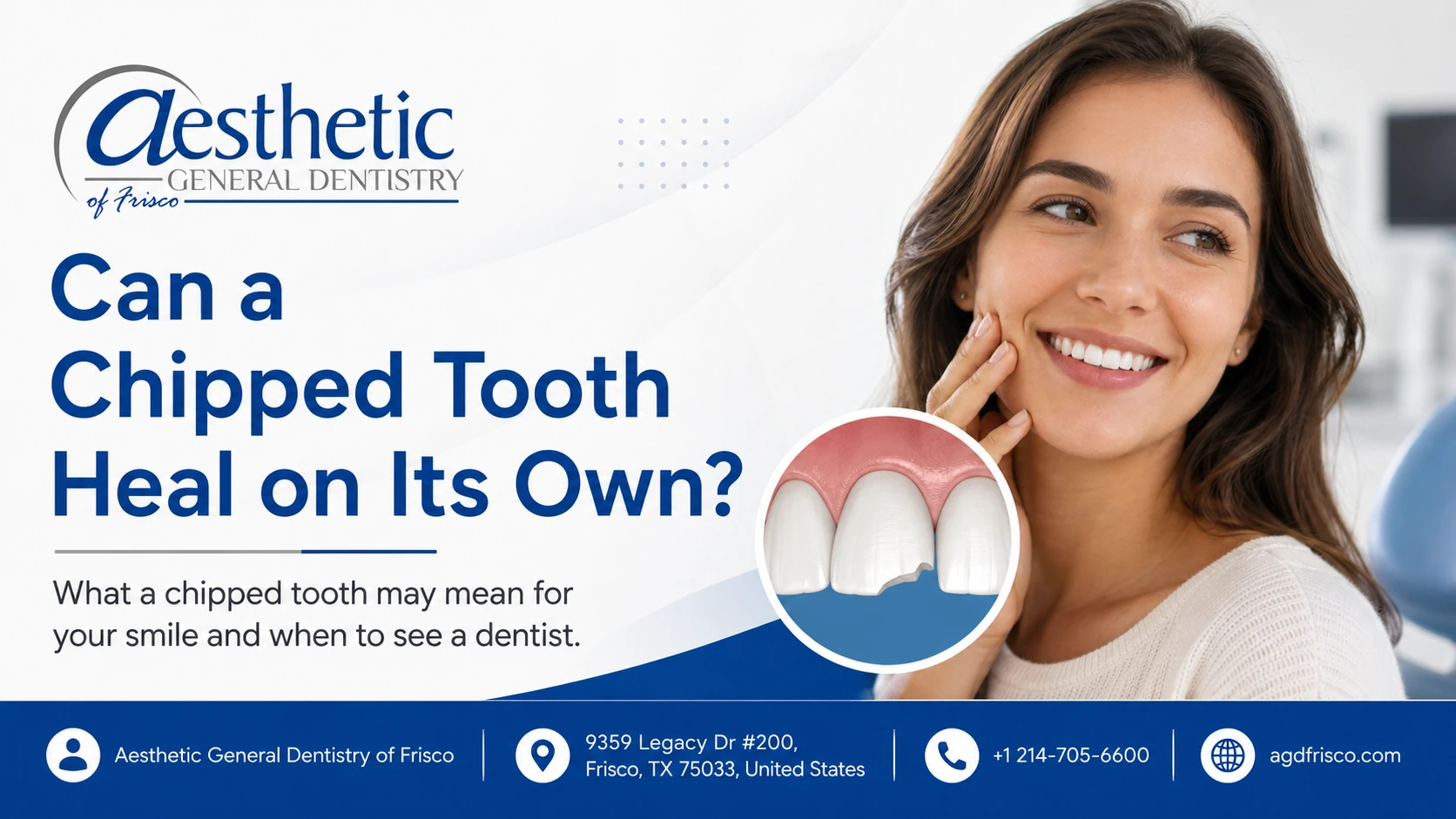
No, a chipped tooth cannot grow back or fully heal on its own because lost tooth enamel does not regenerate. A very small chip may cause little or no discomfort and may require only smoothing, monitoring, or a simple cosmetic repair, but a dentist should evaluate the tooth to determine how deep the damage extends.
The seriousness of a chipped tooth depends on how much tooth structure was lost and whether the damage reaches the dentin or pulp beneath the enamel. Some chips are mainly cosmetic, while larger fractures can lead to sensitivity, pain, infection, or additional breakage if they are not treated.
Can a Chipped Tooth Heal on Its Own?
A chipped tooth does not regenerate the missing piece of enamel.
Unlike bone, tooth enamel does not contain living cells that can rebuild damaged tissue. Once part of the enamel breaks away, the body cannot replace that missing portion naturally.
That does not mean every tiny chip requires extensive dental treatment.
If only a very small amount of enamel has been lost and the tooth is otherwise healthy, a dentist may determine that the chip can simply be polished or smoothed. Small chips may not create significant functional problems, particularly if there is no sensitivity, pain, sharp edge, or deeper crack.
A dental examination is still worthwhile because what appears to be a small chip in the mirror does not always show the full extent of the damage.
The tooth may also contain a crack that is difficult to see without a professional examination.
What Are the Different Types of Chipped Teeth?
Not every chipped or fractured tooth looks or behaves the same way.
Minor Enamel Chip
This involves losing a small piece of the outer enamel.
The tooth may feel rough or sharp when touched with the tongue but may not hurt at all. Depending on its location, a dentist may smooth the edge or repair it with bonding.
Larger Enamel or Dentin Chip
A deeper chip may expose dentin, the layer beneath the enamel.
Because dentin is more sensitive than enamel, the tooth may begin reacting to:
- Cold foods or beverages
- Hot temperatures
- Sweet foods
- Air
- Pressure while chewing
Larger chips usually deserve more prompt evaluation because the tooth has lost more of its protective structure.
Fractured Cusp
A fractured cusp occurs when part of a tooth’s chewing surface breaks away, often around an existing filling.
According to the American Association of Endodontists, fractured cusps often do not damage the pulp and may cause relatively little pain. A filling or crown may be used to protect the remaining tooth depending on the extent of the fracture.
Chip With Pulp Exposure
A severe fracture can extend through the enamel and dentin into the pulp, where the tooth’s nerves and blood vessels are located.
This type of injury can cause significant pain and sensitivity and requires prompt dental attention.
Cracked Tooth
A cracked tooth is different from a simple chip.
Instead of a small piece breaking away, a crack may extend vertically through the tooth. Cracks can cause intermittent pain when chewing or sensitivity to hot and cold temperatures. Some cracks can gradually spread if they are not treated.
What Causes a Tooth to Chip?
Teeth are strong, but they are not indestructible.
A chip may happen suddenly after an accident or develop because the tooth was already weakened.
Common causes include biting or chewing hard foods, chewing ice, sports injuries, falls, accidents, teeth grinding, nail biting, or using the teeth to open packages or other objects.
Existing dental problems can also make a tooth more vulnerable.
For example, decay can weaken tooth structure. Large fillings may leave less natural tooth material surrounding the restoration, and years of grinding can place repeated stress on the teeth.
Acid exposure can also contribute to enamel wear. Frequent acidic foods and beverages or conditions that repeatedly expose the teeth to stomach acid may gradually weaken enamel.
Sometimes a patient chips a tooth while eating something that does not seem particularly hard. In these situations, the tooth may have already been weakened before the final piece broke away.
What Happens If You Leave a Chipped Tooth Untreated?
The answer depends heavily on the size and depth of the chip.
A tiny enamel chip may remain primarily a cosmetic concern. A dentist may even decide that extensive treatment is unnecessary.
Deeper damage is different.
If enough enamel is lost, the tooth may become more sensitive because the underlying dentin has less protection. A rough or weakened area may also be more vulnerable to additional damage during biting and chewing.
When a severe chip exposes or damages the pulp, bacteria may eventually reach the inside of the tooth. Cleveland Clinic notes that major chips exposing sensitive internal tissue can increase the risk of infection. In these situations, dental infection treatment through restorative dentistry may be needed to address infection and protect the damaged tooth.
Possible problems associated with a more significant untreated chip can include:
- Increasing sensitivity
- Pain while chewing
- Further fracture
- Irritation of the tongue or cheek from a sharp edge
- Pulp damage
- Infection
- Need for more extensive restorative treatment
A chipped tooth that does not hurt should therefore not automatically be assumed to be harmless.
Can a Small Tooth Chip Get Worse Over Time?
It can.
A very superficial chip may remain stable for years, especially when the surrounding tooth structure is healthy. However, a weakened tooth can sometimes lose additional enamel or develop a larger fracture under continued biting pressure.
Risk may be greater when the tooth is exposed to:
- Teeth grinding or clenching
- Hard foods
- Large existing restorations
- Tooth decay
- Repeated trauma
- Significant wear
Cracks deserve particular attention because they do not heal naturally and can sometimes extend farther into the tooth. The American Association of Endodontists advises early evaluation of suspected cracked teeth because the type, location, and extent of a crack affect whether the tooth can be preserved.
If a chip changes in size or begins causing new sensitivity or pain, schedule a dental examination.
When Does a Chipped Tooth Need Dental Treatment?
Treatment becomes more likely as the amount of missing tooth structure increases.
A dentist may recommend treatment when:
- The tooth has a sharp or uncomfortable edge
- The chip is visibly affecting the smile
- Dentin is exposed
- The tooth is sensitive
- There is pain when biting
- A significant portion of the tooth is missing
- A filling or restoration has fractured with the tooth
- The tooth has an associated crack
- The pulp is exposed or damaged
- The tooth appears structurally weakened
A very minor chip may need only polishing.
More noticeable chips might be restored with bonding, a filling, veneer, or crown depending on location and severity. Severe damage involving the pulp may require additional treatment to preserve the tooth.
Can a Chipped Tooth Heal on Its Own?
Can a Chipped Tooth Heal on Its Own? 2
The important point is that treatment should match the damage. A tiny enamel imperfection and a deeply fractured molar should not automatically receive the same treatment.
Dental Bonding for Minor Tooth Chips
Dental bonding is commonly used for smaller chips, especially when the damage affects a visible front tooth.
During bonding, tooth-colored composite resin is shaped and attached to the tooth to replace the missing area.
Bonding can help:
- Restore the shape of the tooth
- Cover an uneven or chipped edge
- Improve appearance
- Protect a small area of exposed tooth structure
Cleveland Clinic identifies dental bonding as one of the common repair options for minor chipped teeth.
Bonding does have limitations.
A large fracture or a tooth that has lost substantial structural support may need a stronger restoration. Teeth exposed to heavy biting forces or grinding may also require a different treatment approach.
Your dentist will consider both appearance and function before deciding whether bonding provides enough support.
When Is a Dental Crown Needed for a Chipped Tooth?
A dental crown covers the visible portion of a damaged tooth and can help protect weakened tooth structure.
Crowns are more commonly considered when a substantial portion of the tooth has broken away or when the remaining tooth would benefit from greater structural coverage.
Cleveland Clinic notes that crowns may be recommended when a tooth has experienced major damage or lost a large fragment.
A crown may be considered when:
- A large piece of the tooth is missing
- The remaining tooth is weakened
- A fractured cusp affects a substantial portion of a molar
- A large existing filling is involved
- The tooth is at risk of breaking further
- Additional treatment has left the tooth requiring greater protection
Not every chipped tooth needs a crown.
Using a crown for a tiny enamel chip would generally be much more treatment than the situation requires. The dentist’s goal is to choose a restoration appropriate to the amount and location of damage.
How Dentists Determine the Right Treatment
The size of the visible chip is only one part of the evaluation.
A dentist may examine the tooth for:
- Location of the damage
- Amount of enamel lost
- Dentin exposure
- Pulp involvement
- Cracks
- Tooth sensitivity
- Pain with biting
- Existing fillings or crowns
- Tooth decay
- Bite forces
- Grinding or clenching
- Overall condition of the tooth
Dental X-rays may also be recommended depending on the injury and suspected depth of the damage.
The final treatment could range from doing very little to providing a more protective restoration.
Possible approaches include smoothing, dental bonding, a filling, veneer, or crown. When damage extends deeply into the tooth and affects the pulp, additional treatment may be necessary before the tooth is restored.
At Aesthetic General Dentistry, evaluating the entire tooth rather than simply looking at the missing piece helps determine which approach is appropriate.
A conservative repair may be enough for one patient, while another chipped tooth may require stronger protection to preserve normal biting and chewing.
When Is a Chipped Tooth a Dental Emergency?
Not every chipped tooth requires emergency treatment.
A small, painless enamel chip can usually be evaluated through a dental appointment without going to a hospital emergency department.
More significant symptoms should receive prompt attention.
Contact a dentist urgently if a chipped or fractured tooth causes severe pain, significant sensitivity, pain when biting, visible internal tooth tissue, substantial bleeding, or swelling.
A chipped or cracked tooth can sometimes provide a pathway for bacteria to reach the pulp and cause infection. Warning signs of a dental abscess may include severe throbbing pain, fever, swelling, sensitivity, pain when chewing, or a bad taste or drainage in the mouth.
Some situations go beyond an ordinary dental emergency.
Seek emergency medical care if facial or neck swelling is making it difficult to breathe or swallow. Mayo Clinic identifies difficulty breathing or swallowing with facial or neck swelling as a reason to seek emergency hospital care because infection may have spread beyond the tooth.
Major facial trauma, uncontrolled bleeding, loss of consciousness, or other serious injuries should also be evaluated urgently.
For an uncomplicated chip, contact your dentist and describe what happened. They can help determine how quickly the tooth needs to be examined.
FAQs
Will a chipped tooth grow back?
No. Lost enamel does not grow back. Tooth enamel cannot regenerate once a piece has broken away. A dentist may smooth a very minor chip or rebuild the missing portion using a restorative material.
Can I leave a tiny chipped tooth alone?
Possibly, but have a dentist examine it first. Some very small enamel chips may require little more than smoothing or monitoring. Only an examination can determine whether the damage is limited to the surface.
Why does my chipped tooth not hurt?
A small chip involving only enamel may not affect sensitive internal tooth structures. Pain becomes more likely when damage reaches dentin, irritates the pulp, or is associated with a deeper crack.
Why is my chipped tooth sensitive to cold?
Loss of enamel can expose dentin, making the tooth more sensitive to temperature. Significant or lingering sensitivity can also suggest deeper irritation and should be evaluated.
Can a chipped tooth suddenly break more?
Yes. Some damaged teeth can fracture further, particularly when underlying decay, a crack, heavy biting forces, grinding, or a large restoration has weakened the remaining tooth.
Is dental bonding enough for a chipped tooth?
Bonding can be appropriate for many minor chips, particularly on visible teeth. Larger fractures or structurally weakened teeth may require a filling, crown, or another treatment.
Does a chipped tooth always need a crown?
No. Minor chips may need only smoothing or bonding. Crowns are generally considered when more tooth structure has been lost or when the remaining tooth needs additional protection.
What should I do immediately after chipping a tooth?
Contact your dentist for an evaluation. If you can locate a larger broken fragment, Cleveland Clinic recommends placing it in milk and bringing it to the dental appointment because reattachment may sometimes be possible. Avoid chewing on the injured tooth while waiting to be evaluated.
Is a chipped tooth an emergency if there is no pain?
Usually not a hospital emergency, but it should still be evaluated by a dentist. Lack of pain does not confirm that the damage is completely superficial.
When should I be worried about a chipped tooth?
Seek prompt dental attention if the tooth develops significant pain, temperature sensitivity, pain when biting, bleeding, swelling, or signs of infection. Facial or neck swelling accompanied by difficulty breathing or swallowing requires emergency medical care.