

A dental crown is designed to strengthen and protect a tooth that has been weakened by decay, damage, a large filling, or previous dental treatment. Although crowns are made from durable materials, they are not considered permanent restorations.
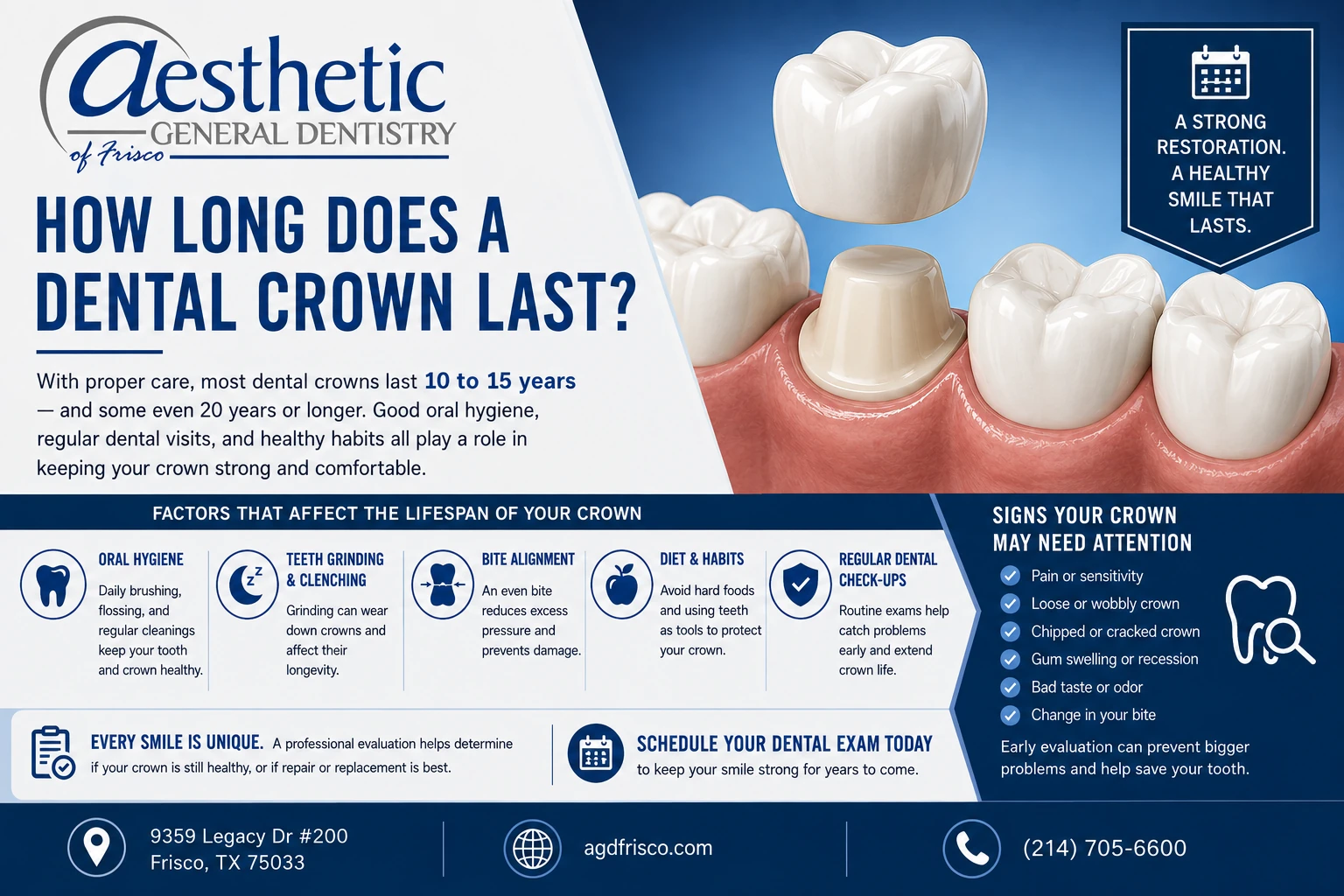
Many dental crowns last approximately 10 to 15 years. Some remain functional for 20 years or longer when the supporting tooth stays healthy and the restoration receives proper care. Others may need attention sooner because of decay, teeth grinding, bite pressure, gum changes, accidental damage, or normal wear. For patients looking to restore their smile’s functionality with dental crowns, understanding how long these restorations can last is an important part of treatment planning.
The age of a crown alone does not determine whether it needs to be replaced. An older crown may continue working well, while a newer restoration may require evaluation if it becomes loose, chipped, painful, or difficult to clean around.
Regular dental examinations allow a dentist to monitor both the crown and the natural tooth underneath it. This is important because problems can sometimes develop at the crown’s edge without producing immediate discomfort.
How Long Does a Dental Crown Typically Last?
A commonly discussed lifespan for a dental crown is about 10 to 15 years, but this is only a general estimate. There is no exact expiration date that applies to every crown.
A crown may last considerably longer when:
- The supporting tooth remains free of decay
- The gums surrounding the crown stay healthy
- The crown fits securely
- The patient brushes and cleans between the teeth consistently
- Bite pressure is distributed appropriately
- Teeth grinding is managed
- The crown is not exposed to repeated hard or sticky foods
- Routine dental examinations are maintained
A crown’s longevity also depends on why it was originally placed. A crown covering a tooth with substantial remaining natural structure may have different long-term considerations from one placed on a severely weakened or heavily restored tooth. Understanding when a dental crown is necessary can help patients see why the condition of the original tooth influences the restoration’s long-term outlook.
The American Dental Association explains that crowns are commonly used to protect weak teeth, restore broken teeth, support bridges, cover implants, and improve the shape or appearance of certain teeth. The condition being treated and the forces placed on the restoration can therefore influence how it performs over time.
Some dental benefit plans use replacement intervals when determining coverage, but an insurance policy’s timeline is not the same as a clinical recommendation. A crown should generally be repaired or replaced based on its condition, the health of the supporting tooth, and the dentist’s findings rather than age alone.
What Factors Affect the Lifespan of a Dental Crown?
Several factors can influence whether a crown lasts for many years or develops problems sooner.
Crown Material
Dental crowns may be made from ceramic, porcelain, zirconia, metal alloys, porcelain fused to metal, or other materials. Each option has different strengths, appearance characteristics, and wear patterns. Advances in materials have also made natural-looking dental crowns an increasingly important option for patients who want restorations that blend with their surrounding teeth.
For example, some materials are selected for their natural appearance in visible areas, while others may be chosen for their ability to withstand significant chewing pressure. The best material depends on factors such as the tooth’s location, available space, bite forces, cosmetic goals, and the condition of the supporting tooth.
Material strength is only one part of longevity. Even a highly durable crown can fail if decay develops underneath it or if the supporting tooth fractures.
Oral Hygiene
A crown itself cannot develop a cavity, but the natural tooth underneath and around it can still decay. The area where the crown meets the tooth, known as the margin, is particularly important to keep clean.
Plaque that remains around this edge can contribute to tooth decay and gum inflammation. Over time, decay may extend beneath the crown, weakening its support or allowing bacteria to reach deeper portions of the tooth.
The ADA recommends brushing twice a day with fluoride toothpaste, cleaning between the teeth daily, and receiving regular dental care as part of a healthy oral hygiene routine.
Teeth Grinding and Clenching
Bruxism is the habit of grinding or clenching the teeth, often during sleep. It can place substantial repeated pressure on both natural teeth and dental restorations.
Over time, grinding may contribute to:
- Cracks or chips in crown material
- Flattened or worn chewing surfaces
- Loosening of the crown
- Fracture of the supporting tooth
- Jaw soreness
- Headaches
- Increased tooth sensitivity
A dentist may recommend a custom night guard when signs of grinding are present. A guard does not necessarily stop the habit, but it may help reduce direct contact and distribute pressure more evenly.
Bite Alignment
A crown must fit comfortably within the patient’s bite. If it contacts the opposing tooth too heavily, it may be exposed to excessive force every time the patient chews or closes their mouth.
A high or uneven bite can cause discomfort, tenderness when biting, wear, or damage to the restoration. Bite relationships may also change over time because of tooth movement, missing teeth, wear, or other dental treatment.
Small bite adjustments can sometimes correct the problem before the crown or supporting tooth develops more extensive damage.
Diet and Chewing Habits
Frequently chewing ice, hard candy, popcorn kernels, pens, or other hard objects can damage a crown. Sticky foods may also place pulling pressure on a restoration, especially if the cement seal has weakened.
Patients should also avoid using crowned teeth to:
- Open packages
- Tear plastic
- Hold objects
- Crack nuts
- Bite fishing line or thread
- Remove bottle caps
These habits can fracture both crowns and natural teeth. The American Association of Endodontists similarly advises avoiding habits such as chewing ice or using teeth as tools because they can increase fracture risk.
Amount of Remaining Tooth Structure
A crown depends on the natural tooth underneath it for support. When a tooth has been severely damaged by decay, fractures, repeated dental procedures, or a very large filling, less healthy structure may remain.
The amount and location of the remaining tooth structure can affect how securely the crown stays in place and how well the tooth tolerates chewing forces. In some cases, a buildup or post may be used to help support the restoration, particularly after root canal treatment.
However, a crown cannot make every damaged tooth indefinitely strong. The condition of the root, surrounding bone, gums, and remaining tooth all contribute to its long-term outlook.
Gum Health and Gum Recession
Healthy gums help protect the edges of a crown. Gum disease or recession may expose part of the tooth or crown margin, making the area more sensitive and harder to keep clean.
Recession can also create a visible line between the crown and natural tooth. This does not always mean the crown has failed, but it should be evaluated for decay, leakage, fit, and cosmetic concerns.
Age of the Restoration
Dental materials and cement can experience normal wear over time. The crown’s surface may become rougher, its edges may wear, or the cement holding it in place may weaken.
Age should be considered alongside the crown’s actual condition. A crown that is 15 years old but stable, comfortable, and free of decay may not require immediate replacement. A younger crown that moves or causes pain should be checked promptly.
What Are the Signs That a Crown May Need to Be Repaired or Replaced?
Crowns do not always cause symptoms when a problem first begins. This is one reason routine dental examinations are important.
Possible warning signs include the following.
Pain When Biting
Pain or pressure when chewing may indicate that the bite is uneven, the crown is loose, the supporting tooth is cracked, or inflammation has developed around the tooth.
Discomfort that occurs only when pressure is released may also be associated with a crack. Because several conditions can create similar symptoms, an examination is needed to determine the cause.
Increased Sensitivity
Sensitivity to cold, heat, sweetness, or pressure may develop if the crown’s edge is no longer sealing properly, the gums have receded, or decay is affecting the natural tooth.
Brief sensitivity does not always mean a crown needs replacement. Persistent, worsening, or spontaneous pain should be evaluated.
Visible Cracks or Chips
Small areas of porcelain or ceramic may chip without affecting the entire crown. Larger cracks can weaken the restoration or create a rough edge that irritates the tongue or cheek.
Even a minor chip should be examined. The dentist can determine whether it is cosmetic, repairable, or a sign that the crown is under excessive force.
A Loose or Moving Crown
A crown should not move when touched, flossed, or used for chewing. Movement may mean the cement has weakened, the crown has fractured, or the underlying tooth has changed.
Avoid chewing on a loose crown. Do not attempt to secure it with household glue or other non-dental products.
Worn Edges or Changes in the Bite
A crown may gradually wear, especially in someone who grinds their teeth. A patient may notice that the bite feels different, the crown feels flatter, or the opposing teeth contact differently.
A changing bite may also reflect movement in nearby teeth or damage elsewhere in the mouth.
Gum Recession or Inflammation
Redness, bleeding, tenderness, or recession around a crown may be related to plaque buildup, gum disease, crown shape, or an edge that is difficult to clean.
A dark line near the gum may sometimes be part of a metal-based crown rather than decay. Because visual appearance alone cannot confirm the cause, the area should be examined.
Bad Taste or Odor Around the Crown
A recurring unpleasant taste or odor may indicate trapped food, plaque buildup, gum inflammation, decay, or leakage around the restoration.
Persistent symptoms should not be managed only with mouthwash. The underlying area may need professional cleaning or further evaluation.
Recurring Decay Beneath the Crown
Decay can develop where the crown meets the natural tooth and may spread underneath the restoration. It may not be visible without dental X-rays or a close clinical examination.
If the decay is extensive, the crown may need to be removed so the tooth can be assessed and treated.
the life of a dental crown
How Long Does a Dental Crown Last? 2
Can a Dental Crown Be Repaired Instead of Replaced?
Not every problem with a dental crown requires complete replacement. Whether repair is possible depends on the location and severity of the damage, the crown material, the condition of the cement, and the health of the supporting tooth.
A dentist may be able to address certain problems by:
- Smoothing a small rough area
- Repairing a minor chip with dental material
- Adjusting an uneven bite
- Recementing a crown that has come loose
- Improving cleaning around the crown
- Treating nearby gum inflammation
Recementing is only appropriate when the crown and supporting tooth remain in suitable condition. If decay, fracture, contamination, or an inadequate fit is present, simply placing the old crown back may not provide a reliable solution.
Replacement may be recommended when:
- The crown has a significant crack
- A large portion has broken away
- Decay extends underneath the restoration
- The fit or seal has deteriorated
- The supporting tooth has changed
- The crown can no longer provide adequate protection
- Repeated loosening occurs
- The restoration interferes with the bite
- The appearance can no longer be predictably corrected
The decision should be based on an examination and, when appropriate, dental X-rays.
How to Help Your Dental Crown Last Longer
Good daily habits can support the longevity of both the crown and the tooth underneath it.
Brush Thoroughly Twice a Day
Use a fluoride toothpaste and clean along the gumline where the crown meets the natural tooth. A soft-bristled toothbrush can remove plaque without unnecessarily irritating the gums.
Clean Between the Teeth Daily
Floss, interdental brushes, or a water flosser may help remove plaque and food from areas a toothbrush cannot reach.
When flossing around a temporary crown, a dentist may recommend sliding the floss out from the side rather than pulling it upward. A permanent crown should normally tolerate careful flossing, and floss that repeatedly catches or shreds should be discussed with the dental team.
Avoid Very Hard Foods and Nonfood Objects
Do not chew ice or use the crowned tooth as a tool. These habits can create sudden forces that chip a crown or fracture the tooth beneath it.
Address Teeth Grinding
Tell the dentist about jaw soreness, morning headaches, worn teeth, or a partner reporting nighttime grinding. A custom night guard may be recommended when bruxism threatens the crown or other teeth.
Maintain Regular Dental Visits
A dentist can inspect the crown’s margins, check the bite, evaluate the gums, and use X-rays when needed to look for problems that are not visible above the gumline.
Regular visits may allow a small issue to be adjusted or repaired before it becomes a larger problem.
Do Not Ignore a Loose Crown
A loose crown can allow bacteria and food debris to enter underneath it. Continued chewing may also damage the remaining tooth.
Contact a dental office rather than waiting for the restoration to fall off completely.
When Should You Schedule a Dental Evaluation?
A dental evaluation should be scheduled when a crowned tooth begins feeling different, even if the discomfort is mild.
Contact a dentist if you notice:
- Pain when biting or chewing
- New or persistent sensitivity
- A visible crack or chip
- A loose or moving crown
- Swelling around the tooth
- Bleeding or receding gums
- A bad taste or odor near the crown
- Food repeatedly becoming trapped
- Floss catching or shredding at the crown’s edge
- A change in the way the teeth meet
- A crown that has fallen off
More urgent evaluation may be needed for significant swelling, severe pain, facial swelling, fever, trauma, or signs of infection.
Patients should not wait for discomfort before having crowns examined. Decay and changes around a restoration may initially produce few or no noticeable symptoms.
How Our Frisco Dental Team Can Help
Our Frisco dental team can evaluate an existing crown to determine whether it is still protecting the tooth effectively.
An examination may include checking:
- The crown’s stability
- Its edges and seal
- The surrounding gums
- The patient’s bite
- Signs of grinding or wear
- Sensitivity or tenderness
- The health of the supporting tooth
- Possible decay beneath or around the crown
Dental X-rays may be recommended when the dentist needs to examine areas that cannot be seen directly. The findings can help determine whether the crown should be monitored, adjusted, repaired, recemented, or replaced. Patients who need a new restoration may also want to understand same-day vs traditional crowns and how differences in fabrication, timing, and treatment planning may affect their options.
The purpose of an evaluation is not to replace every older restoration. It is to determine whether the crown remains healthy, comfortable, cleanable, and structurally sound.
Crowns Following Root Canal Treatment
A crown is often placed after root canal treatment to protect a tooth that has lost significant structure or must withstand substantial chewing pressure. Root canal treatment removes inflamed or infected tissue from inside the tooth, after which the tooth is sealed and restored.
The American Association of Endodontists notes that timely placement of an appropriate permanent restoration, good oral hygiene, regular dental examinations, and avoiding fracture-producing habits can influence the long-term survival of a root canal-treated tooth.
A crown on a root canal-treated tooth still requires routine monitoring. Although the tooth may no longer respond to temperature in the same way, decay, cracks, gum problems, or infection can still develop.
Patients experiencing pain, swelling, drainage, or pressure around a previously treated tooth should schedule an evaluation. In some cases, additional root canal treatment may be considered, and accessing the canals can require removal or alteration of the existing crown.
Patients who want to learn more about how infected or damaged teeth are treated can also review the practice’s related root canal treatment page.
FAQs
How long does a dental crown last on average?
Many crowns last approximately 10 to 15 years, while some remain functional for 20 years or longer. The actual lifespan depends on the crown material, oral hygiene, bite forces, grinding habits, diet, and health of the supporting tooth.
Does a crown have to be replaced after 10 years?
No. Ten years is not an automatic replacement deadline. A crown that remains stable, comfortable, and free of decay may continue functioning. A dentist should evaluate its condition rather than relying only on its age.
Can a dental crown get a cavity?
The crown material cannot decay, but the natural tooth beneath it can. Decay often begins near the edge where the crown meets the tooth and may spread underneath the restoration.
How do I know whether my crown is failing?
Possible signs include movement, pain when biting, persistent sensitivity, visible cracks, gum inflammation, trapped food, an unusual taste, or a change in the bite. Some problems have no early symptoms and are found during routine examinations.
Can a chipped crown be repaired?
A small chip may sometimes be smoothed or repaired. A larger fracture, weakened structure, poor fit, or decay underneath the crown may make replacement more appropriate.
Can a loose crown be cemented back into place?
Sometimes. Recementing may be possible if the crown is intact and the underlying tooth remains healthy. The dentist must first determine why it became loose.
What should I do if my crown falls off?
Keep the crown in a clean container and contact a dentist. Avoid chewing on the exposed tooth, and do not use household glue to reattach the restoration.
Can teeth grinding shorten a crown’s lifespan?
Yes. Grinding and clenching repeatedly place heavy forces on crowns and supporting teeth. This can contribute to chips, cracks, wear, loosening, or tooth fracture.
Will a crown last longer if it is made from zirconia?
Zirconia is known for strength, but material alone does not determine longevity. Fit, bite pressure, oral hygiene, crown location, gum health, and the supporting tooth are also important.
Can a crown last for the rest of my life?
It is possible for a crown to last for several decades, but no restoration can be guaranteed to last a lifetime. Changes in the tooth, gums, bite, or crown material may eventually require treatment.
Why does my old crown suddenly hurt?
Pain may be related to decay, a crack, a loose crown, gum inflammation, bite pressure, or a problem with the tissue around the root. A dental examination is needed to determine the source.
How often should a dental crown be checked?
Crowns should be reviewed during routine dental examinations. The appropriate visit schedule depends on the patient’s oral health, history of decay, gum condition, grinding habits, and other individual risk factors.
Protecting Your Crown and the Tooth Beneath It
Dental crowns are durable restorations, but they do not last forever. Many function for 10 to 15 years, and some remain healthy for much longer with consistent oral hygiene and professional monitoring.
The best way to extend the life of a crown is to protect the tooth supporting it. Brush with fluoride toothpaste, clean between the teeth, avoid chewing hard objects, manage grinding, and attend regular dental examinations.
An older crown does not automatically need replacement. However, pain, sensitivity, movement, visible damage, gum changes, or a different bite should be evaluated before the problem becomes more extensive.
A professional dental examination is the most reliable way to determine whether a crown is still functioning properly or whether repair, adjustment, or replacement should be considered.